
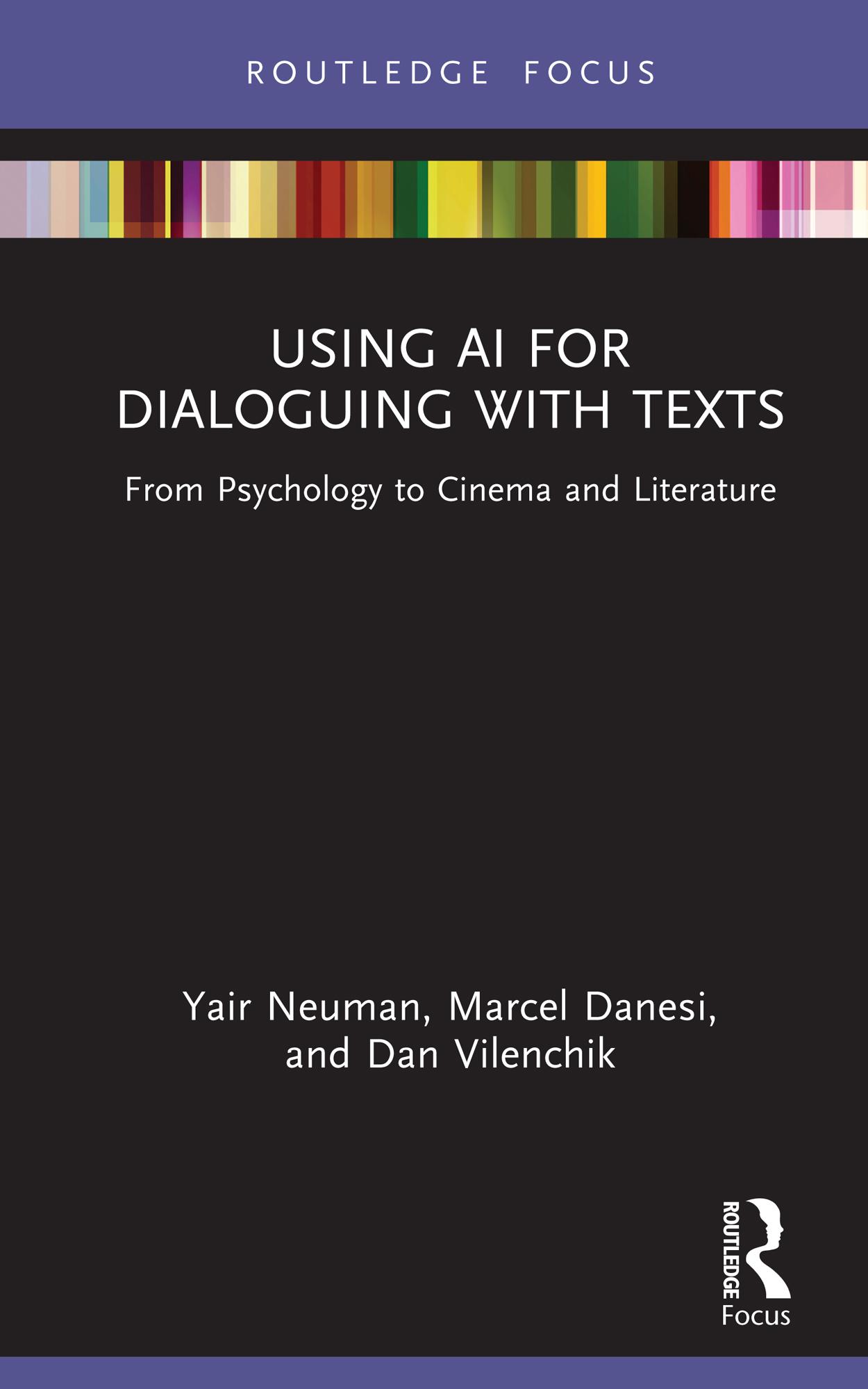
This concise volume offers an accessible introduction to state-of-the-art artificial intelligence (AI) language models, providing a platform for their use in textual interpretation across the humanities and social sciences.
The book outlines the affordances of new technologies for textual analysis, which has historically employed established approaches within the humanities. Neuman, Danesi, and Vilenchik argue that these different forms of analysis are indeed complementary, demonstrating the ways in which AI-based perspectives echo similar theoretical and methodological currents in traditional approaches while also offering new directions for research. The volume showcases examples from a wide range of texts, including novels, television shows, and films to illustrate the ways in which the latest AI technologies can be used for "dialoguing" with textual characters and examining textual meaning coherence.
Illuminating the potential of AI language models to both enhance and extend research on the interpretation of texts, this book will appeal to scholars interested in cognitive approaches to the humanities in such fields as literary studies, discourse analysis, media studies, film studies, psychology, and artificial intelligence.
Paga facilmente con carta, Klarna, Apple Pay o Google Pay. Non sei soddisfatto? Hai sempre 14 giorni per il rimborso. Leggi di più nei nostri termini. Per qualsiasi domanda, scrivici a hello@memmo.org.
Memmo rende lo studio più facile, ovunque tu sia nel mondo. Qui trovi i tuoi libri di testo e strumenti di studio intelligenti, tutto in un unico posto: riassunti, quiz, podcast e flashcard. E poi c'è Ted, il tuo compagno di studio che risponde a ogni tua domanda. Oltre 50.000 studenti studiano già qui: è stato creato per aiutarti a imparare più velocemente e a stressarti meno.