
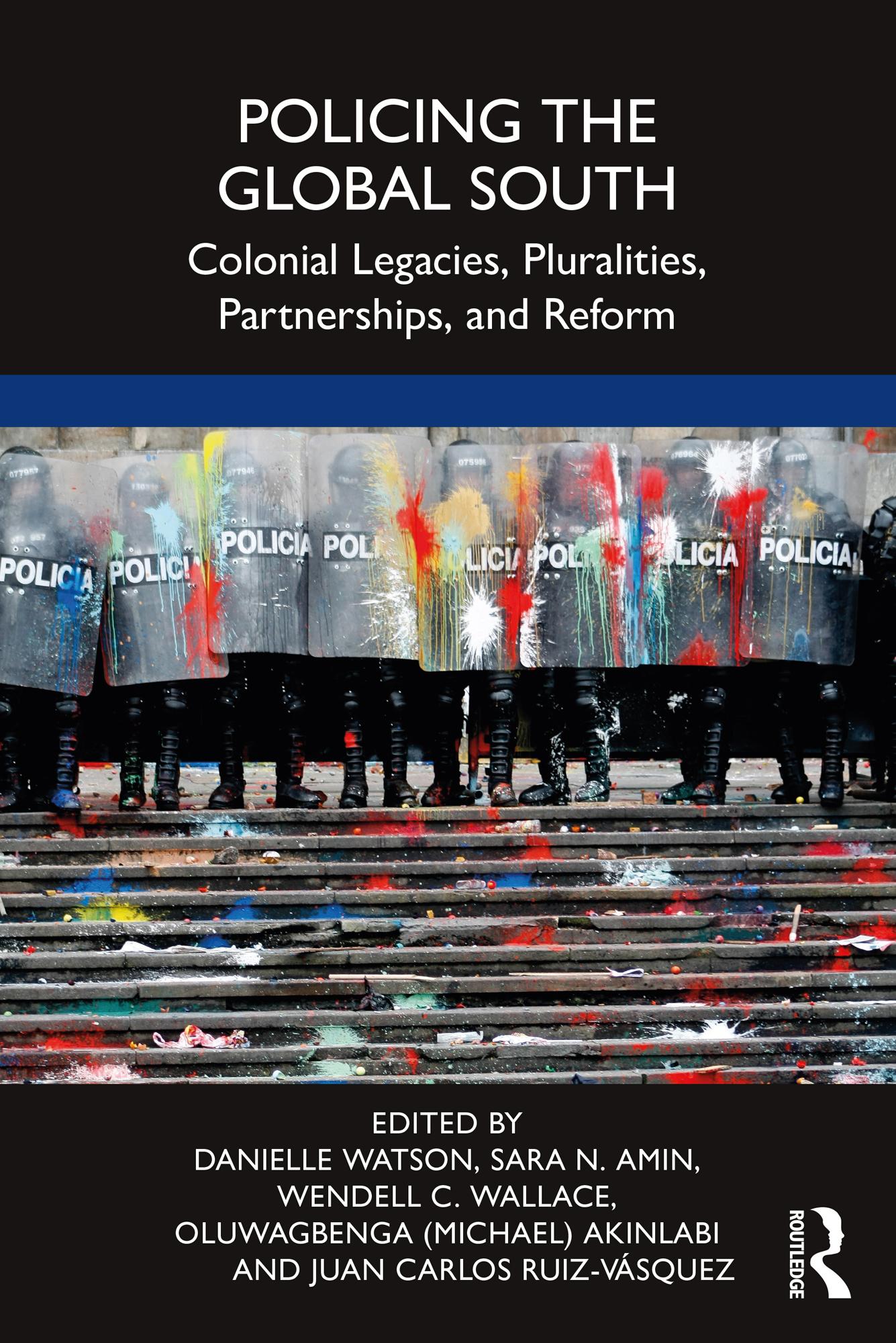
Policing the Global South provides scholarship which further transnationalises and democratises ideas about policing practices and philosophies, highlighting renovations in approaches to policing studies, and injecting innovative perspectives into the study of policing from scholars positioned on the ‘periphery’.
Criminological knowledge depolarisation underscores a conscious effort by scholars from the Global South to increase intellectual knowledge focused on developing context-specific responses to issues not aligned to Northern ideological positions and specific to the non-Northern context. Such shifts draw attention to the expanse of spaces beyond Northern centres rife with challenges unlike any specific to those experienced or conceptualised by scholars from the Global North with an applied Northern criminological lens. Applying a postcolonial lens to empirical knowledge from country-specific cases in former colonies in Africa, Asia, the Caribbean, the Pacific, and Latin America, this book examines how policing issues not aligned to Northern ideological positions and specific to non-Northern contexts are addressed. The primary purpose is to share innovations in the field of policing – service provision, threats to security, crime responses, justice and international trends – developed in postcolonial developing-country contexts. Given the aim of the book and the contributors’ own research on issues of policing across the globe, it discusses themes including but not limited to the colonial legacies and their impact on policing; how plural regulatory systems and partnerships are navigated by the police; the linkages between access to justice, community perceptions, and police legitimacy; innovations and challenges in organisational reform, crime prevention, and community partnerships; and the expanding roles of police organisations in the Global South. While each chapter presents a policing issue in a country within a specific part of the Global South, the book highlights how important it is to frame responses based on contextual realities informed by an awareness of the past and present, with a goal of informing the future.
Delivering a much-needed introduction to those specialising in policing in developing countries, this book is invaluable reading for academics and students of criminology, criminal justice, governance, policy, and IR, as well as professionals in policing organizations across the globe.
Paga facilmente con carta, Klarna, Apple Pay o Google Pay. Non sei soddisfatto? Hai sempre 14 giorni per il rimborso. Leggi di più nei nostri termini. Per qualsiasi domanda, scrivici a hello@memmo.org.
Memmo rende lo studio più facile, ovunque tu sia nel mondo. Qui trovi i tuoi libri di testo e strumenti di studio intelligenti, tutto in un unico posto: riassunti, quiz, podcast e flashcard. E poi c'è Ted, il tuo compagno di studio che risponde a ogni tua domanda. Oltre 50.000 studenti studiano già qui: è stato creato per aiutarti a imparare più velocemente e a stressarti meno.