
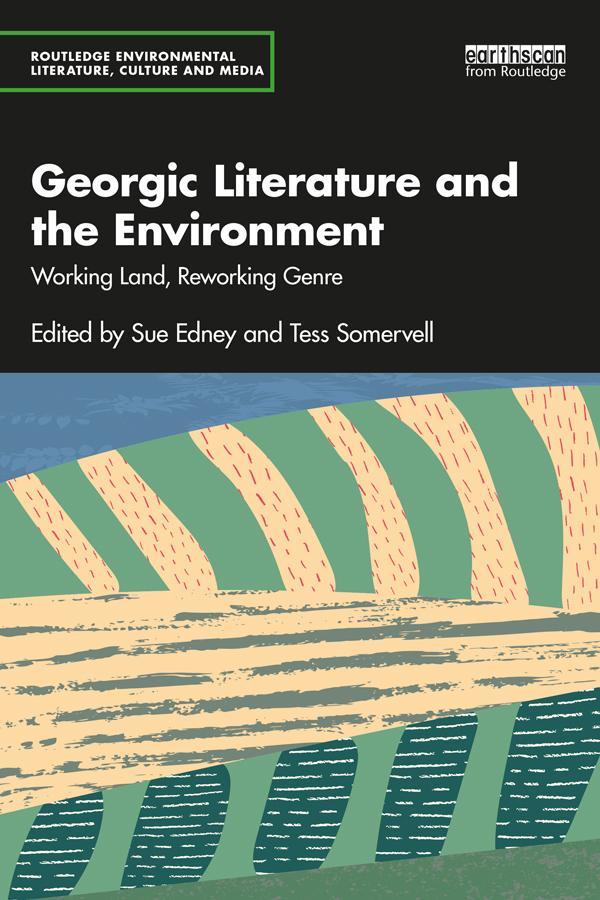
This expansive edited collection explores in depth the georgic genre and its connections to the natural world. Together, its chapters demonstrate that georgic—a genre based primarily on two classical poems about farming, Virgil’s Georgics and Hesiod’s Works and Days—has been reworked by writers throughout modern and early modern English-language literary history as a way of thinking about humans’ relationships with the environment.
The book is divided into three sections: Defining Georgic, Managing Nature and Eco-Georgic for the Anthropocene. It centres the georgic genre in the ecocritical conversation, giving it equal prominence with pastoral, elegy and lyric as an example of ‘nature writing’ that can speak to urgent environmental questions throughout literary history and up to the present day. It provides an overview of the myriad ways georgic has been reworked in order to address human relationships with the environment, through focused case studies on individual texts and authors, including James Grainger, William Wordsworth, Henry David Thoreau, George Eliot, Thomas Hardy, Seamus Heaney, Judith Wright and Rachel Blau DuPlessis.
This is a much-needed volume for literary critics, academics and students engaged in ecocritical studies, environmental humanities and literature, addressing a significantly overlooked environmental literary genre.
Paga facilmente con carta, Klarna, Apple Pay o Google Pay. Non sei soddisfatto? Hai sempre 14 giorni per il rimborso. Leggi di più nei nostri termini. Per qualsiasi domanda, scrivici a hello@memmo.org.
Memmo rende lo studio più facile, ovunque tu sia nel mondo. Qui trovi i tuoi libri di testo e strumenti di studio intelligenti, tutto in un unico posto: riassunti, quiz, podcast e flashcard. E poi c'è Ted, il tuo compagno di studio che risponde a ogni tua domanda. Oltre 50.000 studenti studiano già qui: è stato creato per aiutarti a imparare più velocemente e a stressarti meno.