
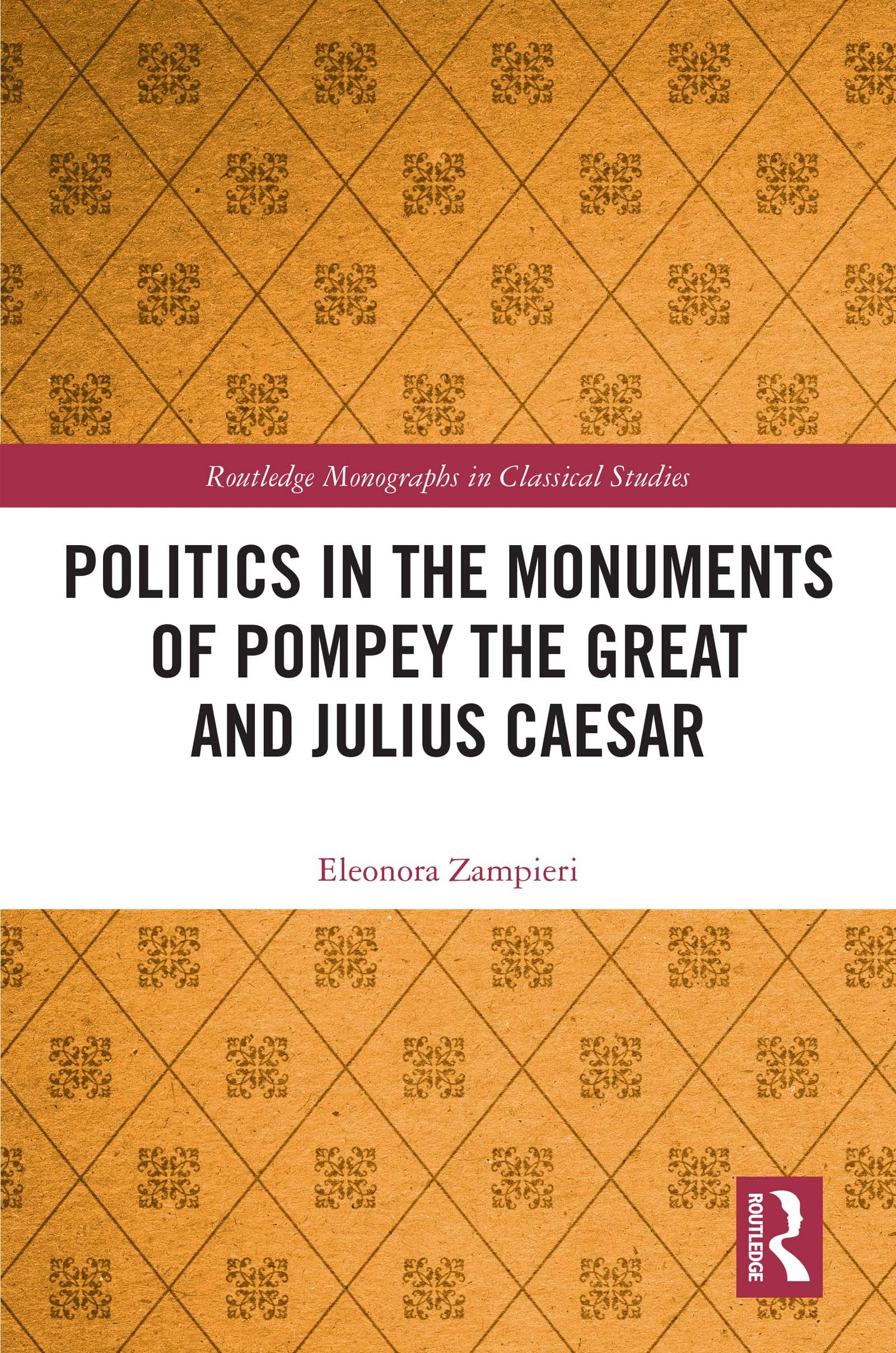
This book explores the diachronic development of the ideological content of Pompey and Caesar’s monuments in Rome, emphasising the importance of the late Republican period as a precursor to imperial propaganda through architecture.
In the final years of the Roman Republic, individuals such as Pompey the Great and Julius Caesar exploited the communicative power of architecture. The former promoted the first and largest stone theatre in Rome; the latter started comprehensive town-planning projects that arguably verged on the utopian. Yet the study of the politics expressed by these monuments and how complex late Republican politics shaped the monuments themselves has attracted less attention than that of subsequent imperial architecture. Zampieri addresses this imbalance, exploring the ideological meaning of late Republican monuments and highlighting that monuments were fluid, adaptable entities, even in the lifespan of a single individual. Accompanied by detailed maps and images, this volume shows how late Republican architecture should be considered an important source for understanding politics of this period.
Politics in the Monuments of Pompey the Great and Julius Caesar will be of use to anyone working on the politics and social world of the late Roman Republic, and on Roman architecture and patronage.
Paga facilmente con carta, Klarna, Apple Pay o Google Pay. Non sei soddisfatto? Hai sempre 14 giorni per il rimborso. Leggi di più nei nostri termini. Per qualsiasi domanda, scrivici a hello@memmo.org.
Memmo rende lo studio più facile, ovunque tu sia nel mondo. Qui trovi i tuoi libri di testo e strumenti di studio intelligenti, tutto in un unico posto: riassunti, quiz, podcast e flashcard. E poi c'è Ted, il tuo compagno di studio che risponde a ogni tua domanda. Oltre 50.000 studenti studiano già qui: è stato creato per aiutarti a imparare più velocemente e a stressarti meno.