
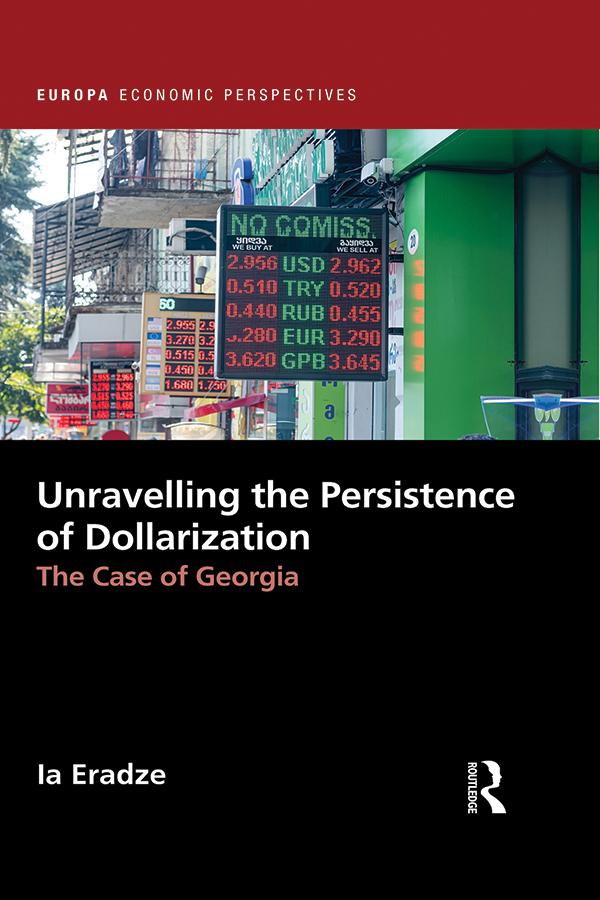
This volume engages with the roots, dimensions, and implications of foreign currency domination in states with a national currency. Referred to as unofficial dollarization in literature, this is a worldwide phenomenon among developing countries and has a long history.
This monograph provides a political economic analysis of dollarization in Georgia and is structured around three themes: the genesis of dollarization (1991–2003), the persistence of dollarization (2003–12) and the politicization of dollarization (2012–19). The case of Georgia is especially representative of the post-socialist transition states, but also has wider applicability.
A high level of dollarization is a significant barrier to economic growth, macroeconomic and political stability, functional monetary policy, as well as social welfare. The Covid-19 crisis and the increasing debt of developing countries in foreign currency exacerbate dollarization-related vulnerabilities for these economies.
This book will be of interest to postgraduate students in global/comparative political economy, development economics or transition economies, researchers in monetary sovereignty, central banking, exchange rate policies, currency hierarchy, money, financialization, and policy makers in dollarized countries and global institutions.
Paga facilmente con carta, Klarna, Apple Pay o Google Pay. Non sei soddisfatto? Hai sempre 14 giorni per il rimborso. Leggi di più nei nostri termini. Per qualsiasi domanda, scrivici a hello@memmo.org.
Memmo rende lo studio più facile, ovunque tu sia nel mondo. Qui trovi i tuoi libri di testo e strumenti di studio intelligenti, tutto in un unico posto: riassunti, quiz, podcast e flashcard. E poi c'è Ted, il tuo compagno di studio che risponde a ogni tua domanda. Oltre 50.000 studenti studiano già qui: è stato creato per aiutarti a imparare più velocemente e a stressarti meno.