
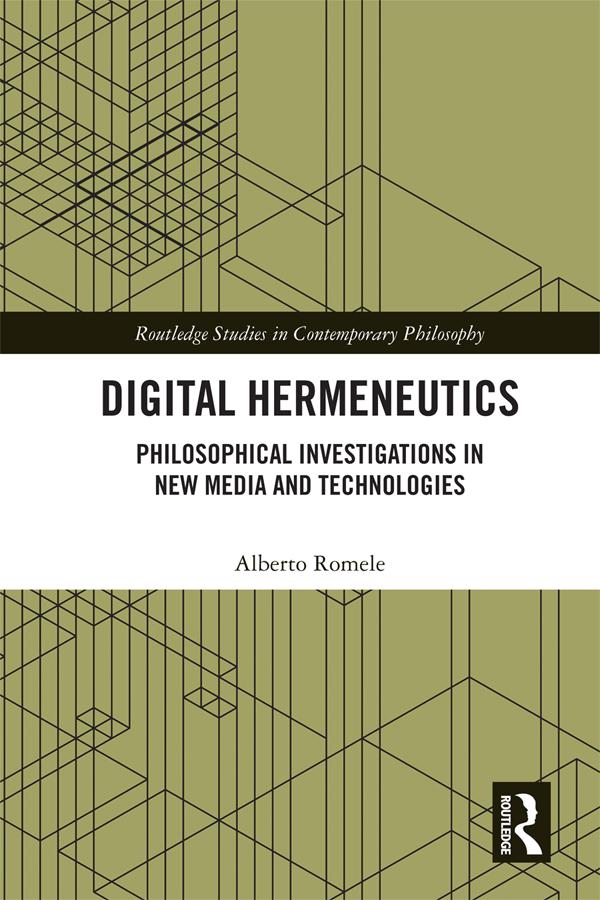
This is the first monograph to develop a hermeneutic approach to the digital—as both a technological milieu and a cultural phenomenon. While philosophical in its orientation, the book covers a wide body of literature across science and technology studies, media studies, digital humanities, digital sociology, cognitive science, and the study of artificial intelligence.
In the first part of the book, the author formulates an epistemological thesis according to which the “virtual never ended.” Although the frontiers between the real and the virtual are certainly more porous today, they still exist and endure. In the book’s second part, the author offers an ontological reflection on emerging digital technologies as “imaginative machines.” He introduces the concept of emagination, arguing that human schematizations are always externalized into technologies, and that human imagination has its analog in the digital dynamics of articulation between databases and algorithms. The author takes an ethical and political stance in the concluding chapter. He resorts to the notion of "digital habitus" for claiming that within the digital we are repeatedly being reconducted to an oversimplified image and understanding of ourselves.
Digital Hermeneutics will be of interest to scholars across a wide range of disciplines, including those working on philosophy of technology, hermeneutics, science and technology studies, media studies, and the digital humanities.
Paga facilmente con carta, Klarna, Apple Pay o Google Pay. Non sei soddisfatto? Hai sempre 14 giorni per il rimborso. Leggi di più nei nostri termini. Per qualsiasi domanda, scrivici a hello@memmo.org.
Memmo rende lo studio più facile, ovunque tu sia nel mondo. Qui trovi i tuoi libri di testo e strumenti di studio intelligenti, tutto in un unico posto: riassunti, quiz, podcast e flashcard. E poi c'è Ted, il tuo compagno di studio che risponde a ogni tua domanda. Oltre 50.000 studenti studiano già qui: è stato creato per aiutarti a imparare più velocemente e a stressarti meno.