
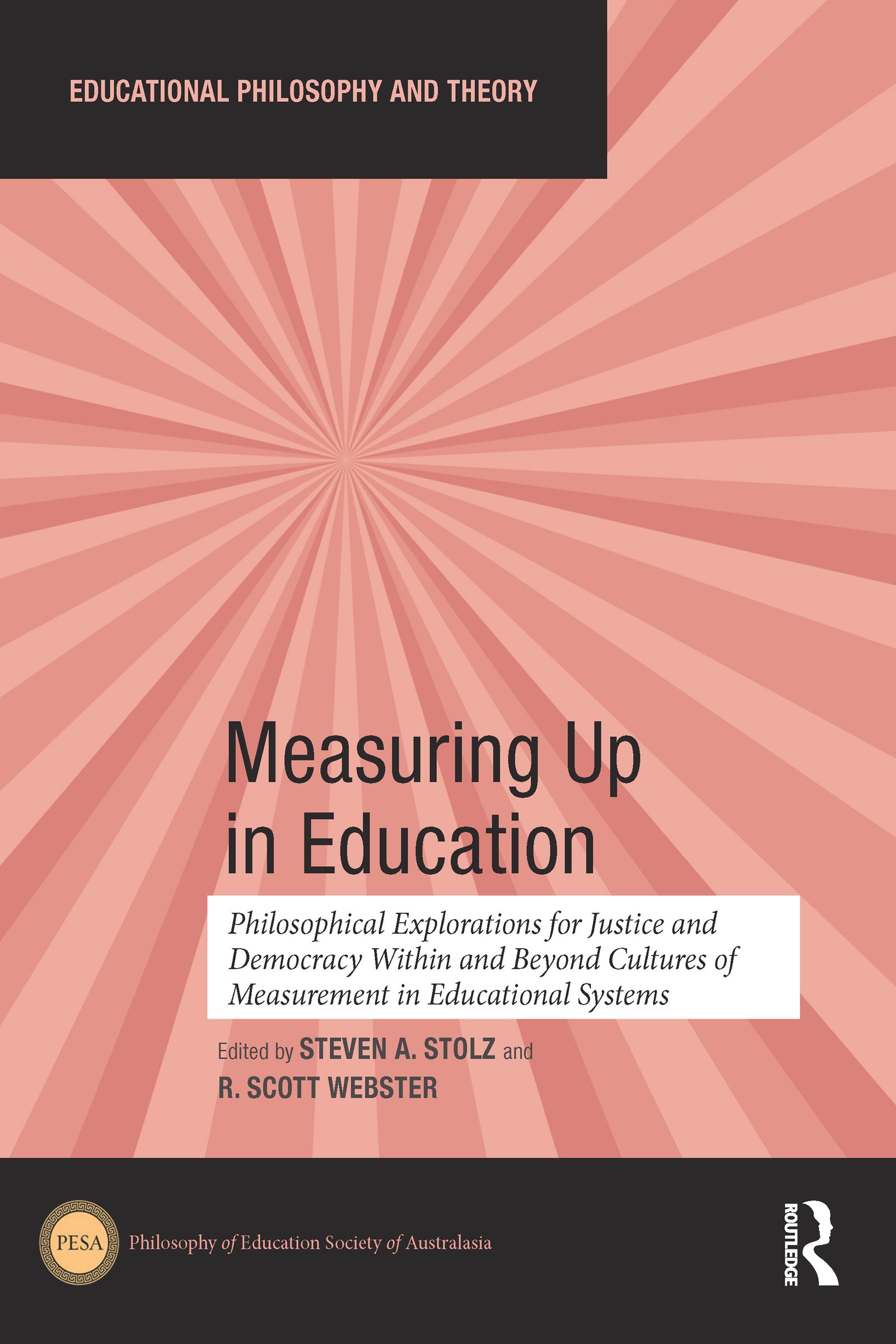
Cultures of measurement are often considered to dominate educational practices, to the degree that, as Biesta (2010) has identified in Good Education in an Age of Measurement we no longer measure what we value, but rather we have become conditioned to value what is measured. A clear example of this occurs when institutions and staff "teach to the test" by emphasising narrow conceptions of learning and of knowledge, simply because the consequences of high-stakes assessments have important implications regarding funding, resources, and even tenure.
This collection explores, via various philosophical means, how valuable educational practices can occur within and beyond cultures of measurement. What seems to be required is for practitioners in education to regain their relationship to the overall purposes of education, such as the furthering of justice and democracy for both individual students and societies as a whole. Such a reconnection has the potential to re-humanise curricular experiences for students, which may have become dehumanised through particular cultures of measurement. It is argued that certain legitimate measures can advance justice and democracy, and so careful attention must be assigned to their validity and value.
This book was originally published as a special issue of Educational Philosophy and Theory.
Paga facilmente con carta, Klarna, Apple Pay o Google Pay. Non sei soddisfatto? Hai sempre 14 giorni per il rimborso. Leggi di più nei nostri termini. Per qualsiasi domanda, scrivici a hello@memmo.org.
Memmo rende lo studio più facile, ovunque tu sia nel mondo. Qui trovi i tuoi libri di testo e strumenti di studio intelligenti, tutto in un unico posto: riassunti, quiz, podcast e flashcard. E poi c'è Ted, il tuo compagno di studio che risponde a ogni tua domanda. Oltre 50.000 studenti studiano già qui: è stato creato per aiutarti a imparare più velocemente e a stressarti meno.