
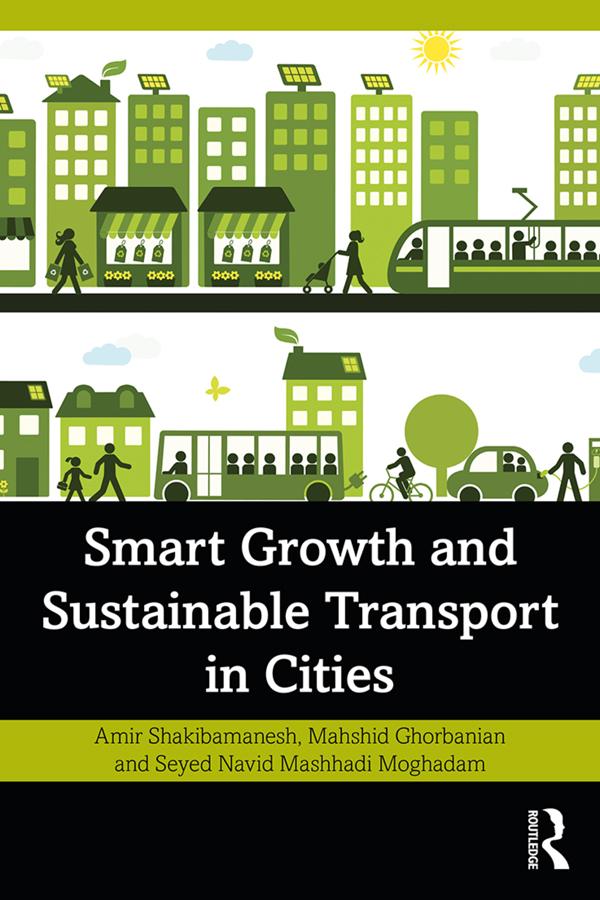
This book delves into the urban planning theory of “smart growth” to encourage the creation of smart cities, where compact urban spaces are optimized to create transit-oriented, pedestrian- and bicycle-friendly areas, with a clear focus on developing a sustainable, humanistic transport system.
Over the last century, increased demographic changes and use of motor vehicles in the wake of “urbanization” led to the rapid expansion of cities, giving rise to economic, social and environmental problems. Sprawls and extension into natural areas caused a scattered urban context replete with empty spaces. This book provides an effective solution to this with an overview of the historical application of smart growth principles as a response to the issue of sprawling cityscapes, and sheds light on the theoretical information and methodologies used by cities to re-develop the urban landscape. It also encloses a checklist for practitioners and decision makers to inform the developmental process and integrate smart growth strategies into land use planning.
This book effectively engages with the global problem of urban sprawl in cities and hence will be an asset to both urban planning professionals, and graduate and postgraduate students of urban studies and the related disciplines.
Paga facilmente con carta, Klarna, Apple Pay o Google Pay. Non sei soddisfatto? Hai sempre 14 giorni per il rimborso. Leggi di più nei nostri termini. Per qualsiasi domanda, scrivici a hello@memmo.org.
Memmo rende lo studio più facile, ovunque tu sia nel mondo. Qui trovi i tuoi libri di testo e strumenti di studio intelligenti, tutto in un unico posto: riassunti, quiz, podcast e flashcard. E poi c'è Ted, il tuo compagno di studio che risponde a ogni tua domanda. Oltre 50.000 studenti studiano già qui: è stato creato per aiutarti a imparare più velocemente e a stressarti meno.