
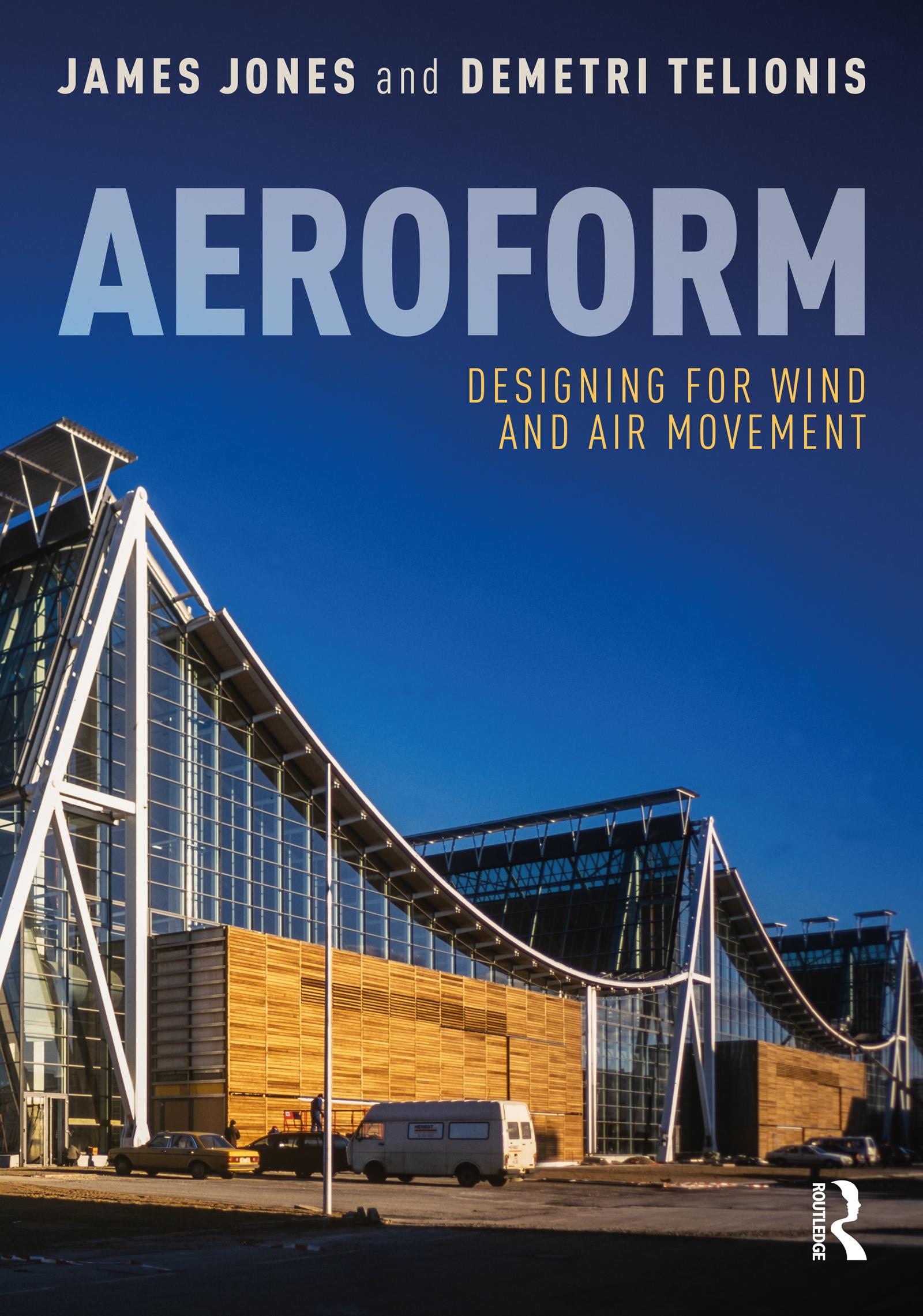
Aeroform: Designing for Wind and Air Movement provides a comprehensive introduction to applying aerodynamic principles to architectural design. It presents a challenge to architects and architectural engineers to give shape to the wind and express its influence on architectural form.
The wind pushes and pulls on our buildings, infiltrates and exfiltrates through cracks and openings, and lifts roofs during storm events. It can also offer opportunities for resource conservation through natural ventilation or a biophilic connection between indoors and out. This book provides basic concepts in fluid mechanics such as materials, forces, equilibrium, pressure, and hydrostatics; introduces the reader to the concept of airflow; and provides strategies for designing for wind resistance, especially in preventing uplift. Natural ventilation and forced airflow are explored using examples such as Thomas Herzog’s Hall 26 in Hanover, RWE Ag building in Essen Germany, and the Kimbell Art Museum in Texas. Finally, issues of wind and airflow measurement are addressed.
A reference for students and practitioners of architecture and architectural engineering, this book is richly illustrated and presents complex concepts of aerodynamic engineering in easy-to-understand language. It prepares the architect or architectural engineer to design buildings that are visually expressive of a dialogue between wind and built form.
Paga facilmente con carta, Klarna, Apple Pay o Google Pay. Non sei soddisfatto? Hai sempre 14 giorni per il rimborso. Leggi di più nei nostri termini. Per qualsiasi domanda, scrivici a hello@memmo.org.
Memmo rende lo studio più facile, ovunque tu sia nel mondo. Qui trovi i tuoi libri di testo e strumenti di studio intelligenti, tutto in un unico posto: riassunti, quiz, podcast e flashcard. E poi c'è Ted, il tuo compagno di studio che risponde a ogni tua domanda. Oltre 50.000 studenti studiano già qui: è stato creato per aiutarti a imparare più velocemente e a stressarti meno.