
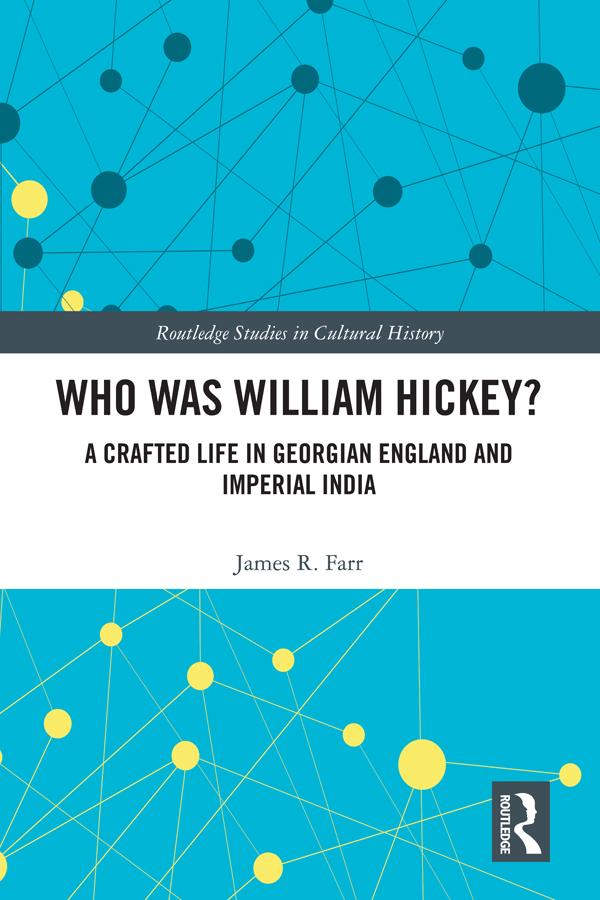
This book analyzes an example of life-writing, an autobiography that was written in the early nineteenth century and will appeal to readers of many disciplines who are interested in understanding the interconnectedness of memory, textual narrative, and ideas of selfhood. Moreover, this book reasserts the importance of the individual in history. It explains how personal narratives reveal the individual as a purposeful social actor pursuing particular objectives, but framed by cultural and social contexts, in this case by eighteenth-century London and Imperial India. The author of this autobiography, William Hickey, projects a sense of self formed by a combination of an interiorized self-consciousness (an awareness of himself as an autonomous individual, although not one prone to deep self-reflection) and a socially-turned self-fashioning. Like so many autobiographers of his time, Hickey’s self is realized through the production of a narrative, his self fixed and defined through the act of writing. As he wrote his memoirs, Hickey was engaged in purposeful textual representation to satisfy his perceived sense of place in that culture (above all, as a gentleman) while tacitly reflecting the constraints of that culture imposed upon the form and content of the text.
Paga facilmente con carta, Klarna, Apple Pay o Google Pay. Non sei soddisfatto? Hai sempre 14 giorni per il rimborso. Leggi di più nei nostri termini. Per qualsiasi domanda, scrivici a hello@memmo.org.
Memmo rende lo studio più facile, ovunque tu sia nel mondo. Qui trovi i tuoi libri di testo e strumenti di studio intelligenti, tutto in un unico posto: riassunti, quiz, podcast e flashcard. E poi c'è Ted, il tuo compagno di studio che risponde a ogni tua domanda. Oltre 50.000 studenti studiano già qui: è stato creato per aiutarti a imparare più velocemente e a stressarti meno.