
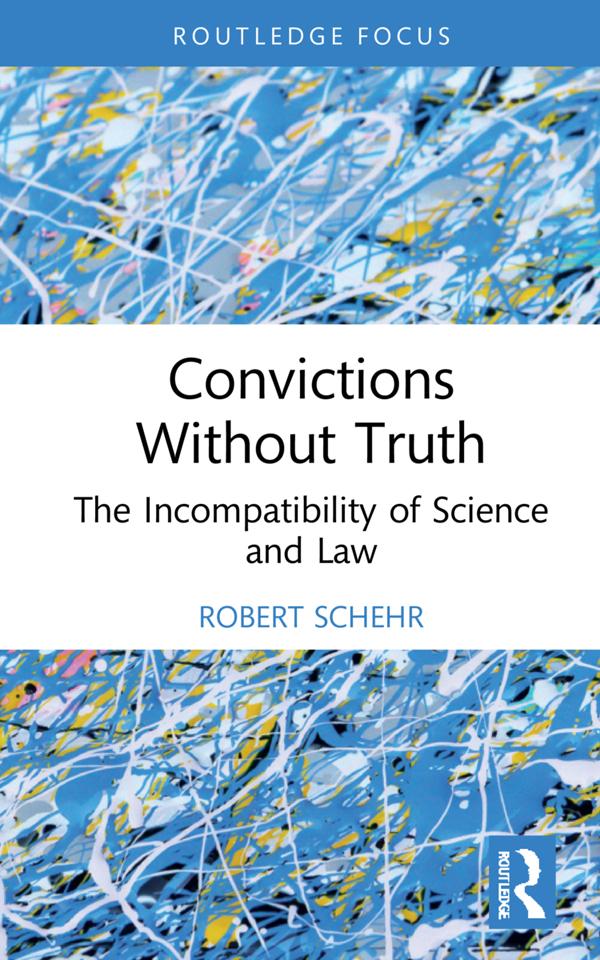
Convictions Without Truth sets out to determine whether and to what extent science and law may coexist in an institutional relationship that truthfully generates individualization through application of forensic testimony for charges relating to violations of criminal law.
In the first two chapters, readers are exposed to contemporary unscientific forensic practices as juxtaposed to the evidentiary standard announced by the United States Supreme Court in Daubert v. Merrill Dow Pharmaceuticals, as well as scientific requirements for validity and reliability of expert witness testimony. The remaining chapters provide an explanation for retention of existing, though faulty, forensic practices by way of analysis of path dependency, the fixation of belief, and neuro and cognitive psychology. Through immanent critique and unmasking, the book deconstructs prevailing forensic practices through application of existing published documentation. The final chapter addresses the fixation of belief from the perspective of neuropsychology and cognitive psychology. Readers will gain an understanding of the current concerns relating to application of contemporary forensic practices; current case law and federal rules guiding the introduction of expert witness testimony; and why it is that despite widely recognized concerns raised from within and outside of the criminal legal system, application of unscientific forensic practices continues. The book also shows how the criminal legal system is experiencing a paradigm shift due to dialectical juxtaposition of existing unscientific forensic practices with contemporary science. Readers are shown that because of its continued reliance upon unscientific forensic practices, the criminal legal system reveals its hegemonic commitment to social control through its willingness to accept "satisfying" as opposed to "truthful" results that generate wrongful convictions.
Convictions Without Truth will be of particular interest to students, academics, and practitioners working within the criminal legal field. It will also appeal to those wanting to know more about forensics and criminal law.
Paga facilmente con carta, Klarna, Apple Pay o Google Pay. Non sei soddisfatto? Hai sempre 14 giorni per il rimborso. Leggi di più nei nostri termini. Per qualsiasi domanda, scrivici a hello@memmo.org.
Memmo rende lo studio più facile, ovunque tu sia nel mondo. Qui trovi i tuoi libri di testo e strumenti di studio intelligenti, tutto in un unico posto: riassunti, quiz, podcast e flashcard. E poi c'è Ted, il tuo compagno di studio che risponde a ogni tua domanda. Oltre 50.000 studenti studiano già qui: è stato creato per aiutarti a imparare più velocemente e a stressarti meno.