
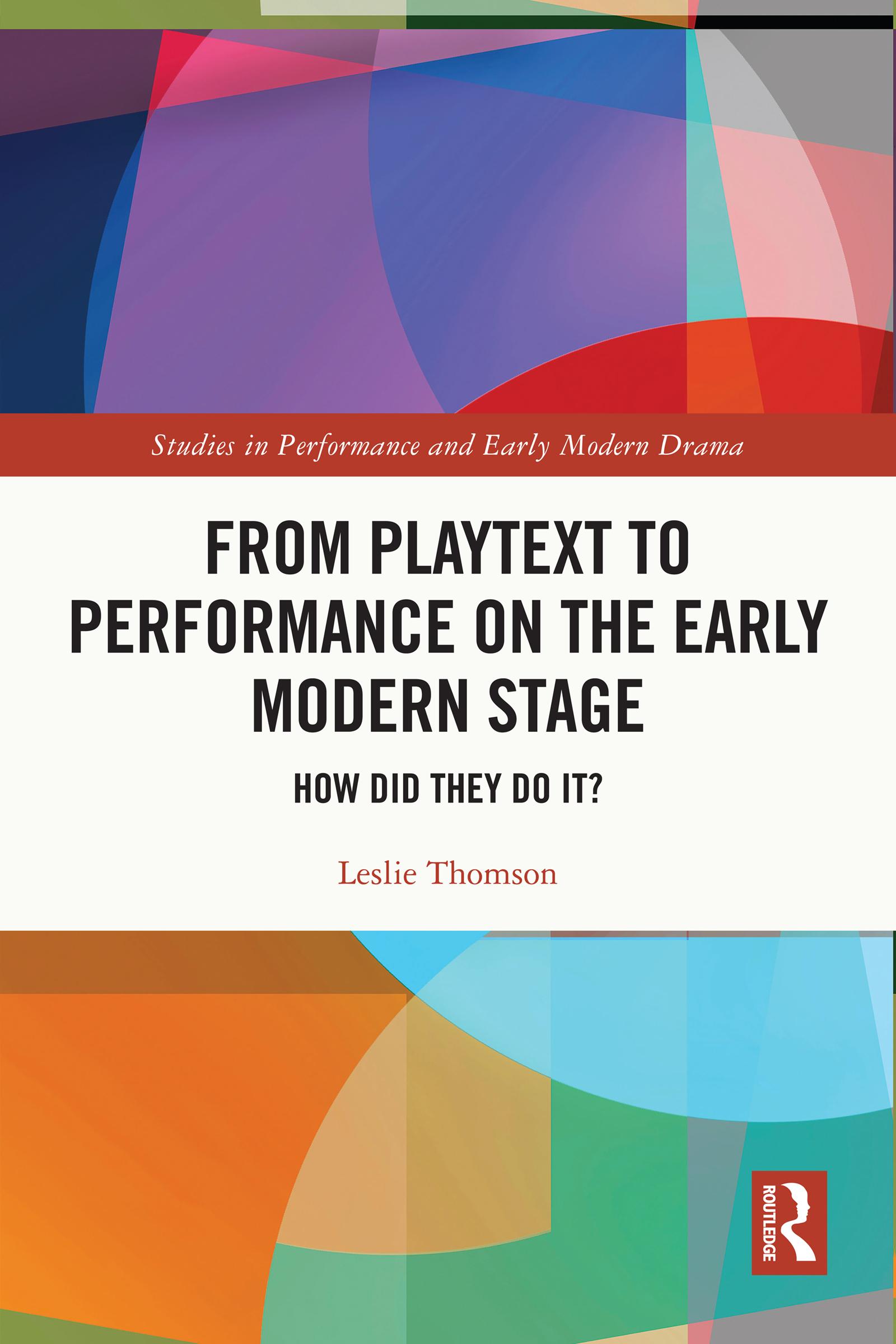
This book reconsiders the evidence for what we know (or think we know) about early modern performance conditions.
This study encourages a new recognition and treatment of certain aspects of the plays as evidence – and demonstrates the significance of the implications of that new information. This book is also an assessment of the competing narratives about the processes involved in early modern performance: about the status of manuscript playbooks, about the parts that players memorized, about the functions of the bookkeeper, about casting, about prompting, and about rehearsal practices. Leslie Thomson investigates the bases for the interdependent beliefs that an early modern player relied only on his part to prepare for a performance, that rehearsal was minimal, and that a bookkeeper compensated for these circumstances by prompting any player who was "out of his part." By focusing on often ignored (or downplayed) requirements and challenges of early modern play texts, Thomson provides evidence for answers that will foster a more nuanced and thorough understanding of original performance practices. That will, in turn, influence how we read, study, and edit the plays.
This exploration will be of great interest to theatre and performance researchers, graduate students, teachers of early modern drama at the undergraduate and graduate levels, performers, directors, editors.
Paga facilmente con carta, Klarna, Apple Pay o Google Pay. Non sei soddisfatto? Hai sempre 14 giorni per il rimborso. Leggi di più nei nostri termini. Per qualsiasi domanda, scrivici a hello@memmo.org.
Memmo rende lo studio più facile, ovunque tu sia nel mondo. Qui trovi i tuoi libri di testo e strumenti di studio intelligenti, tutto in un unico posto: riassunti, quiz, podcast e flashcard. E poi c'è Ted, il tuo compagno di studio che risponde a ogni tua domanda. Oltre 50.000 studenti studiano già qui: è stato creato per aiutarti a imparare più velocemente e a stressarti meno.