
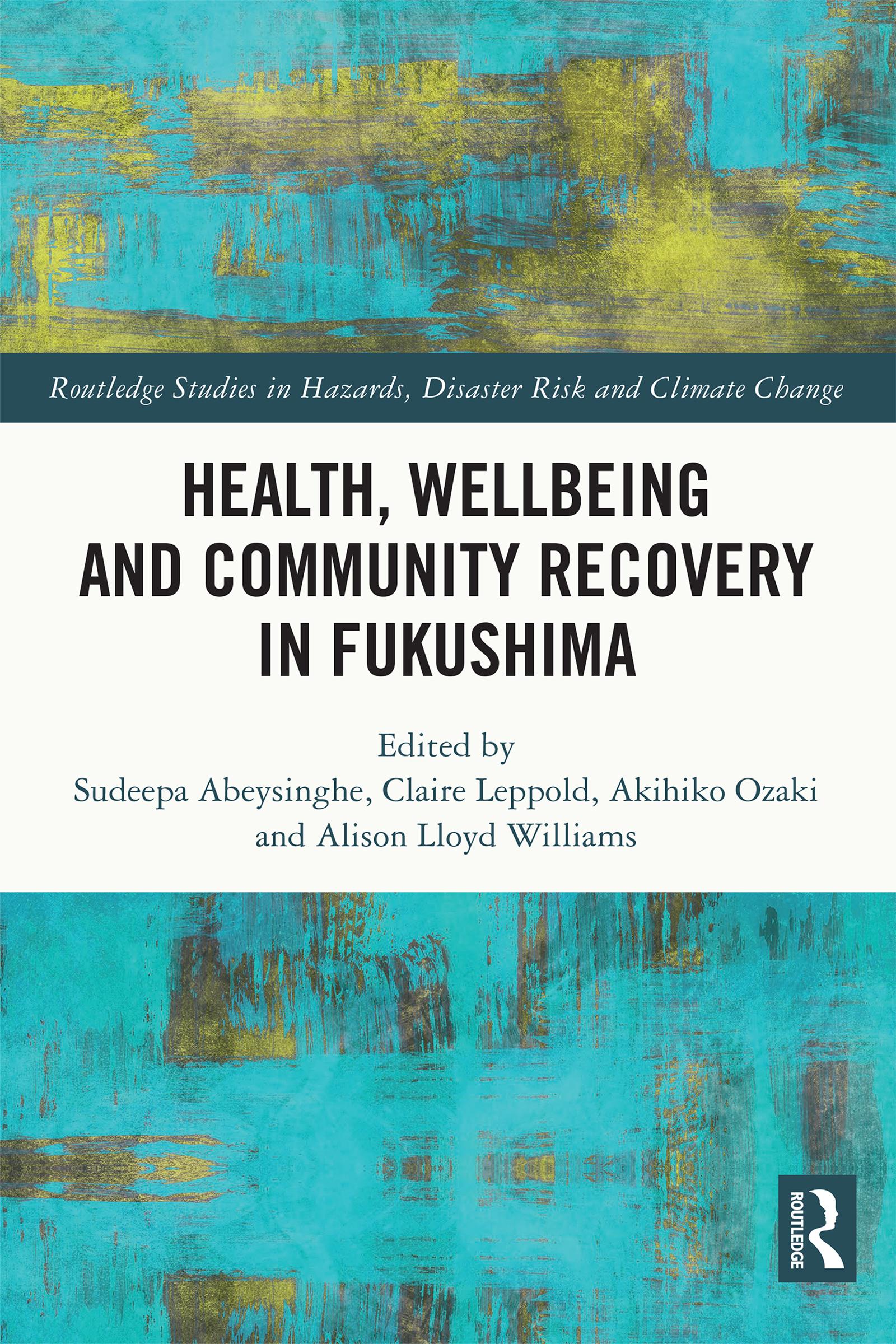
This book examines the issue of disaster recovery in relation to community wellbeing and resilience, exploring the social, political, demographic and environmental changes in the wake of the 2011 Fukushima disaster.
The contributors reflect on the Fukushima disaster of earthquake, tsunami and radiation contamination and its impacts on society from an interdisciplinary perspective of the social sciences, critical public health, and the humanities. It focuses on four aspects, which form the sections of the work:
- Living with Risk and Uncertainty
- Vulnerability and Inequality
- Community Action, Engagement and Wellbeing
- Notes from the Field
The first three sections present research on the long-term consequences of the disaster on community health and wellbeing. These findings are enhanced and developed in the ‘Notes from the Field’ section where local practitioners from medicine and community recovery reflect on their experiences in relation to concepts developed in the previous sections.
This work significantly extends the literature on long-term wellbeing following disaster. The case study of Fukushima is a multi-faceted process that illuminates wider issues around post-disaster regeneration in Fukushima. This problem takes on new importance in the context of Covid-19, including direct parallels in the issues of risk measurement, social inequality, and wider wellbeing impacts, which public health disciplines can draw from.
Paga facilmente con carta, Klarna, Apple Pay o Google Pay. Non sei soddisfatto? Hai sempre 14 giorni per il rimborso. Leggi di più nei nostri termini. Per qualsiasi domanda, scrivici a hello@memmo.org.
Memmo rende lo studio più facile, ovunque tu sia nel mondo. Qui trovi i tuoi libri di testo e strumenti di studio intelligenti, tutto in un unico posto: riassunti, quiz, podcast e flashcard. E poi c'è Ted, il tuo compagno di studio che risponde a ogni tua domanda. Oltre 50.000 studenti studiano già qui: è stato creato per aiutarti a imparare più velocemente e a stressarti meno.