
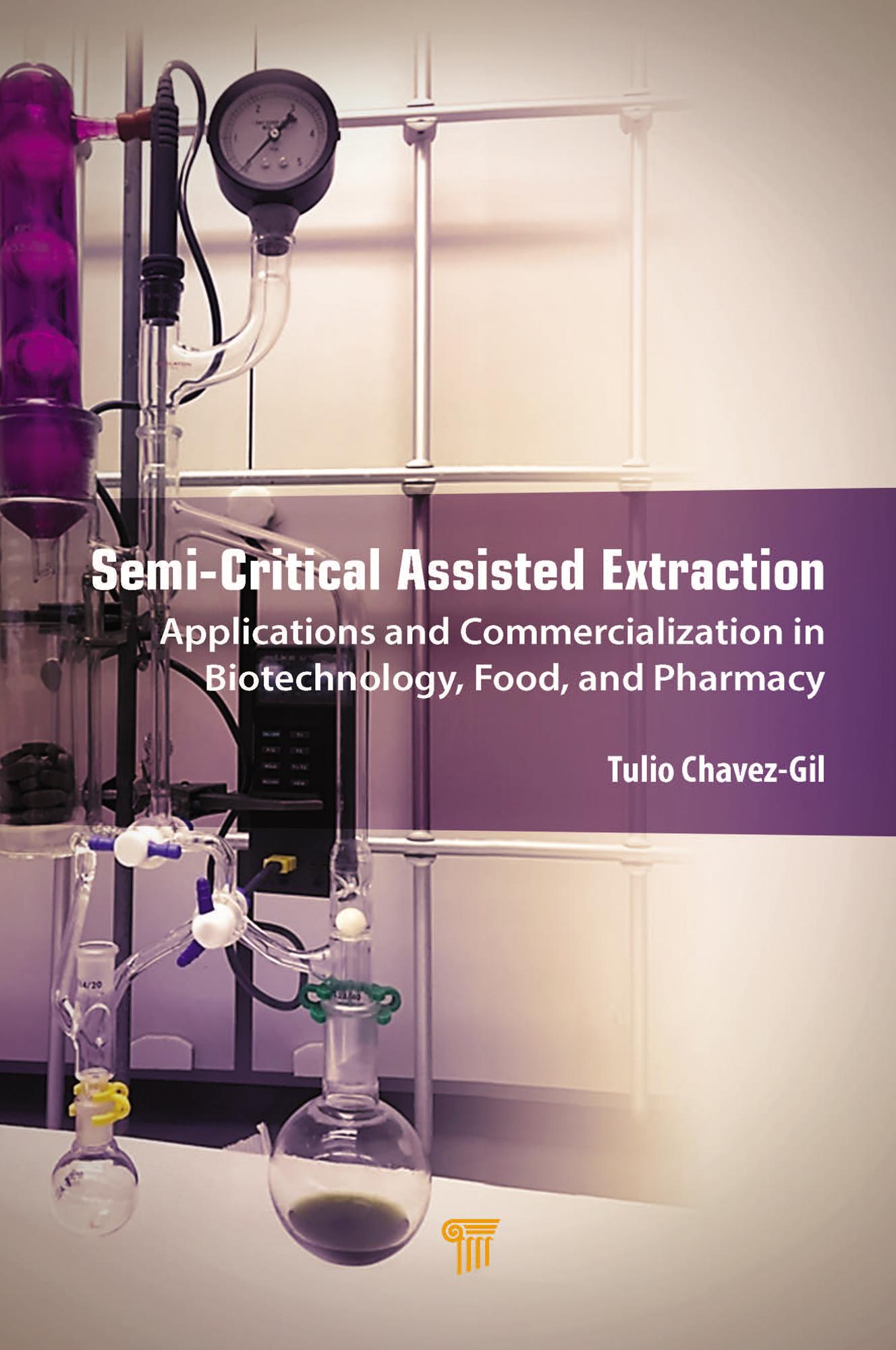
In the past three decades, great efforts have been made to develop new methods for the extraction of natural molecules. Improved extraction technologies have garnered scientific interest as they have helped in understanding how mass and energy transfer exhibited for a solvent and solute during a chemical extraction can be used as physical chemistry parameters, leading to the modeling and design of new advantageous equipment. In situ data collected during a chemically assisted experiment is useful in a variety of scientific and technological applications, especially in generating extractors that are safer, more efficient, and offer true opportunities to scale them up in a wide range of materials (among stainless steel).
This book compiles empirical and traditional extraction methods applied to cutting-edge critical extraction research in the areas of food science, phytochemistry, pharmacy, fragrance, cosmetology, and folk medicine. It presents extraction technology as an interdisciplinary area that applies the principles of physics and chemistry as tools to develop engineered models for the construction of more advanced extraction devices. It includes examples and problems related to data treatment in normal laboratory research work that will facilitate undergraduate- and graduate-level students, as well as operators working in the area, in solving real problems.
Paga facilmente con carta, Klarna, Apple Pay o Google Pay. Non sei soddisfatto? Hai sempre 14 giorni per il rimborso. Leggi di più nei nostri termini. Per qualsiasi domanda, scrivici a hello@memmo.org.
Memmo rende lo studio più facile, ovunque tu sia nel mondo. Qui trovi i tuoi libri di testo e strumenti di studio intelligenti, tutto in un unico posto: riassunti, quiz, podcast e flashcard. E poi c'è Ted, il tuo compagno di studio che risponde a ogni tua domanda. Oltre 50.000 studenti studiano già qui: è stato creato per aiutarti a imparare più velocemente e a stressarti meno.