
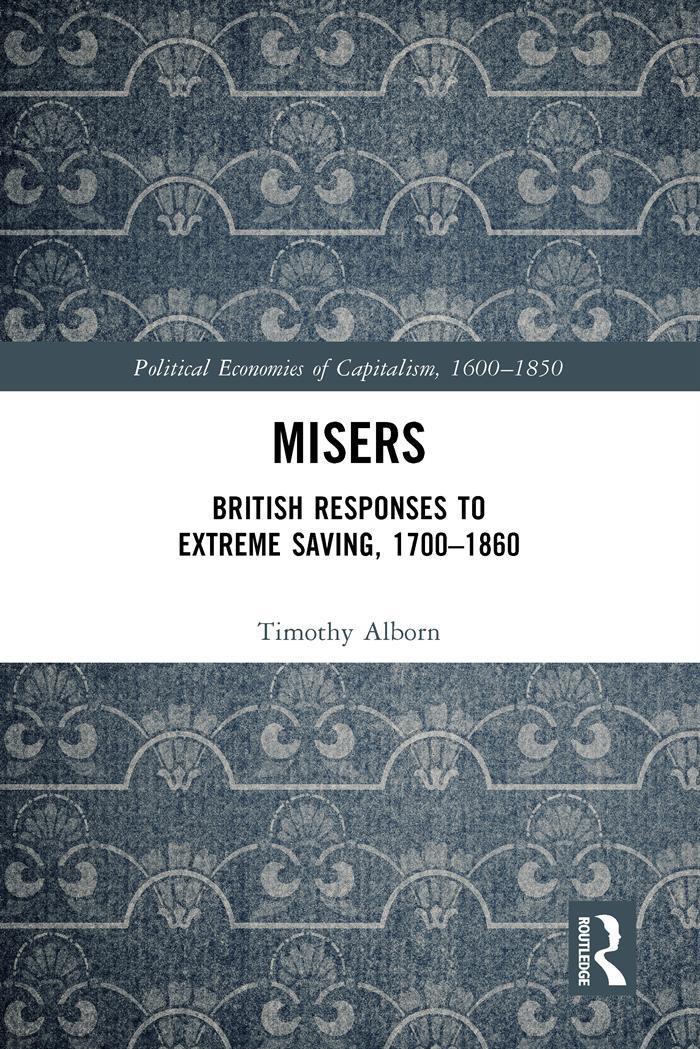
This volume uses the extreme case of misers to examine interlocking categories that undergirded the emergence of modern British society, including new perspectives on charity, morality, and marriage; new representations of passion and sympathy; and new modes of saving, spending, and investment.
Misers surveys this class of people—as invented and interpreted in sermons, poems, novels, and plays; analyzed by economists and philosophers; and profiled in obituaries and biographies—to explore how British attitudes about saving money shifted between 1700 and 1860. As opposed to the century before, the nineteenth century witnessed a new appreciation for misers, as economists credited them with adding to the nation's stock of capital and novelists newly imagined their capacity to empathize with fellow human beings. These characters shared the spotlight with real people who posthumously donned that label, populating into a cottage industry of miser biographies by the 1850s. By the time A Christmas Carol appeared in 1843, many Victorians had come to embrace misers as links that connected one generation’s extreme saving with the next generation’s virtuous spending.
With a broad chronological period, this volume is useful for students and scholars interested in representation of misers in eighteenth- and nineteenth-century Britain.
Paga facilmente con carta, Klarna, Apple Pay o Google Pay. Non sei soddisfatto? Hai sempre 14 giorni per il rimborso. Leggi di più nei nostri termini. Per qualsiasi domanda, scrivici a hello@memmo.org.
Memmo rende lo studio più facile, ovunque tu sia nel mondo. Qui trovi i tuoi libri di testo e strumenti di studio intelligenti, tutto in un unico posto: riassunti, quiz, podcast e flashcard. E poi c'è Ted, il tuo compagno di studio che risponde a ogni tua domanda. Oltre 50.000 studenti studiano già qui: è stato creato per aiutarti a imparare più velocemente e a stressarti meno.