
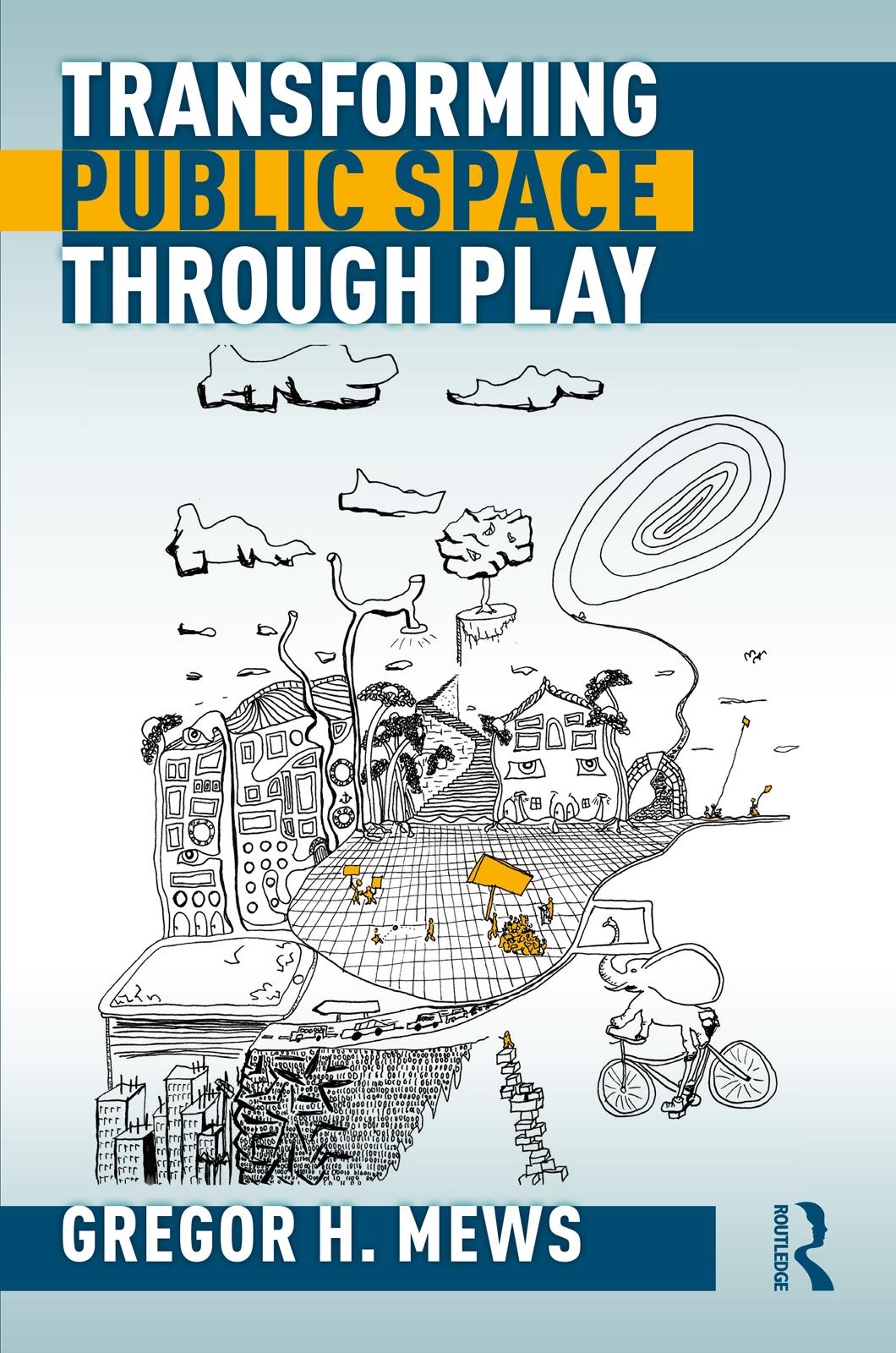
This book provides an empirical analysis of the concept of play as a form of spatial practice in urban public spaces. The introduced City–Play–Framework (CPF) is a practical urban analysis tool that allows urban designers, landscape architects and researchers to develop a shared awareness when opening up this window of possibility for adventure.
Two case studies substantiate and illustrate the development process and testing of the framework in Canberra, Australia, and Potsdam, Germany. The appropriation of public spaces that transcend boundaries can facilitate an intrinsic connection between people and their immediate environment, towards a more joyful ontological state of human existence in which imagination, co-creation and a sense of agency are key elements of the design approach. The framework presents an alternative understanding of public spaces and public life, reflecting on theory and its implications for practice in a post-pandemic world in dense urban centres.
A bridge between theory and practice, this book explores possibilities on what future design ought to be when openness and ambiguity are consciously integrated parts of practice and process. The book presents a valuable discussion on public space and play for academic audiences across a wide range of disciplines such as landscape architecture, urban design, planning, architecture and urban sociology, which is informative for future practice.
Paga facilmente con carta, Klarna, Apple Pay o Google Pay. Non sei soddisfatto? Hai sempre 14 giorni per il rimborso. Leggi di più nei nostri termini. Per qualsiasi domanda, scrivici a hello@memmo.org.
Memmo rende lo studio più facile, ovunque tu sia nel mondo. Qui trovi i tuoi libri di testo e strumenti di studio intelligenti, tutto in un unico posto: riassunti, quiz, podcast e flashcard. E poi c'è Ted, il tuo compagno di studio che risponde a ogni tua domanda. Oltre 50.000 studenti studiano già qui: è stato creato per aiutarti a imparare più velocemente e a stressarti meno.