
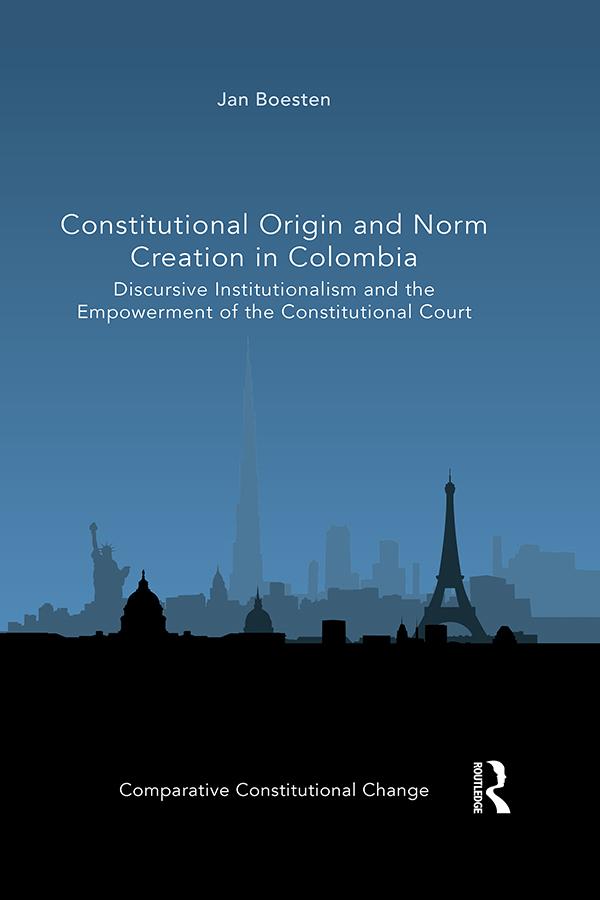
This book explains the growing empowerment of the Colombian Constitutional Court in the early years of the 21st century and develops the concept of the deliberative judge.
Taking the case of the Colombian Constitutional Court and drawing on neoinstitutional theory to explain the relationship between political crisis and institutional reforms, the book challenges the notion of rational choice institutionalism that agents act strategically. It indicates the limits of path dependence and argues instead that discursive institutionalism is the most appropriate method for analyzing processes of institutional learning. Combining theoretical and empirical research, it builds the argument that judicial independence promotes the case for deliberative democracy over rational choice or strategic action approaches. Finally, the book suggests that by introducing communicative and cognitive variables in our understanding of key actors and processes, we are more capable of bridging institutional origin and legacy.
The work will be a valuable resource for academics, researchers, and policy-makers in Constitutional Law, Constitutional Politics, and Constitutional History.
Paga facilmente con carta, Klarna, Apple Pay o Google Pay. Non sei soddisfatto? Hai sempre 14 giorni per il rimborso. Leggi di più nei nostri termini. Per qualsiasi domanda, scrivici a hello@memmo.org.
Memmo rende lo studio più facile, ovunque tu sia nel mondo. Qui trovi i tuoi libri di testo e strumenti di studio intelligenti, tutto in un unico posto: riassunti, quiz, podcast e flashcard. E poi c'è Ted, il tuo compagno di studio che risponde a ogni tua domanda. Oltre 50.000 studenti studiano già qui: è stato creato per aiutarti a imparare più velocemente e a stressarti meno.