
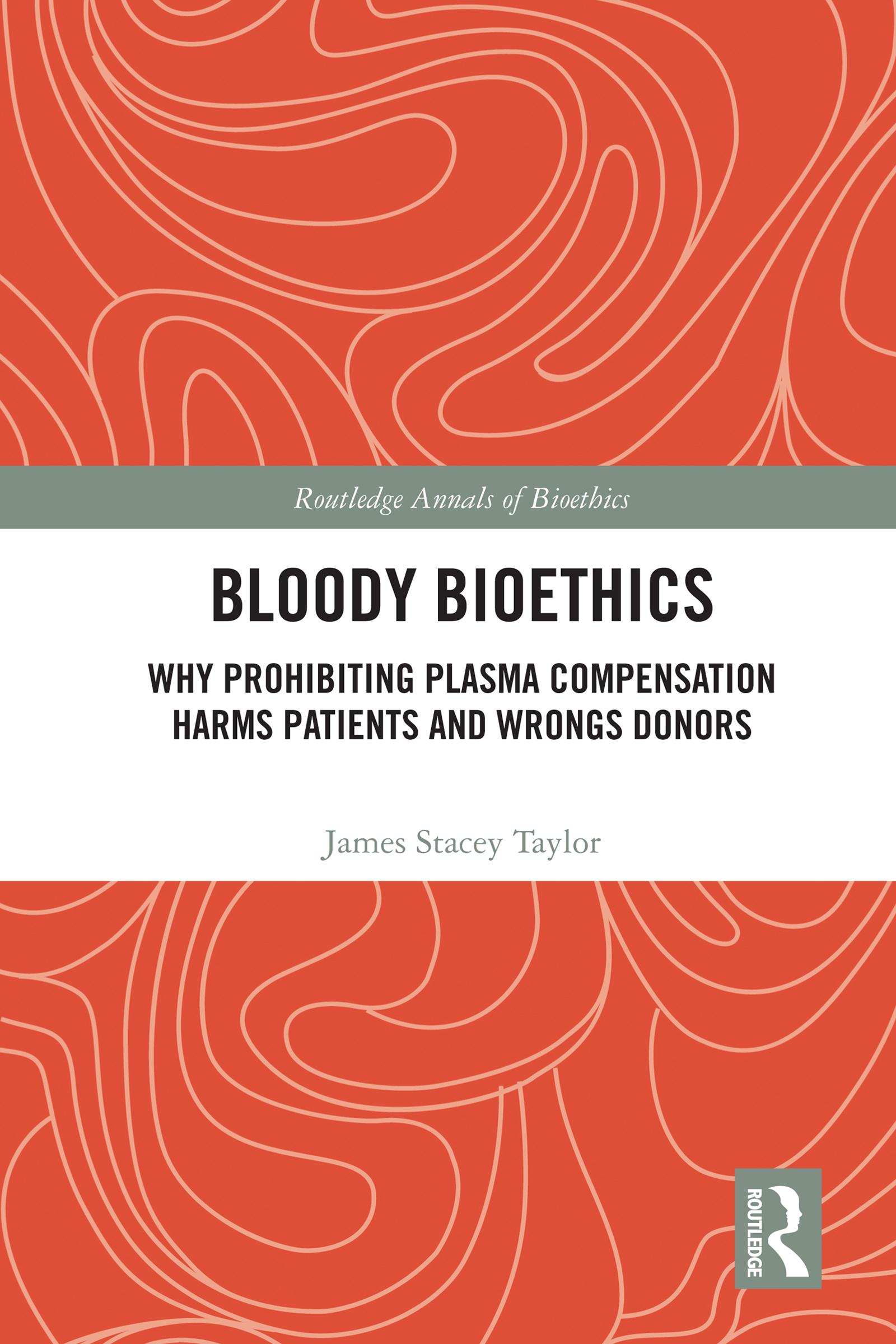
This is the first book to argue in favor of paying people for their blood plasma. It does not merely argue that offering compensation to plasma donors is morally permissible. It argues that prohibiting donor compensation is morally wrong—and that it is morally wrong for all of the reasons that are offered against allowing donor compensation.
Opponents of donor compensation claim that it will reduce the amount and quality of plasma obtained, exploit and coerce donors, and undermine social cohesion. James Stacey Taylor argues that empirical evidence demonstrates that compensating plasma donors greatly increases the amount of plasma obtained with no adverse effects on the quality of the pharmaceutical products that are manufactured from it. Prohibiting compensation thus harms patients by reducing their access to the medicines they need. He also argues that it is the prohibition of compensation—not its offer—that exploits donors, fails to respect the moral need to secure a person’s authoritative consent to her treatment, and prevents donors from giving their informed consent to donate. Prohibiting compensation thus not only harms patients but also wrongs donors.
Bloody Bioethics will appeal to researchers, advanced students, and medical professionals interested in bioethics, moral philosophy, and the moral limits of markets.
Paga facilmente con carta, Klarna, Apple Pay o Google Pay. Non sei soddisfatto? Hai sempre 14 giorni per il rimborso. Leggi di più nei nostri termini. Per qualsiasi domanda, scrivici a hello@memmo.org.
Memmo rende lo studio più facile, ovunque tu sia nel mondo. Qui trovi i tuoi libri di testo e strumenti di studio intelligenti, tutto in un unico posto: riassunti, quiz, podcast e flashcard. E poi c'è Ted, il tuo compagno di studio che risponde a ogni tua domanda. Oltre 50.000 studenti studiano già qui: è stato creato per aiutarti a imparare più velocemente e a stressarti meno.