
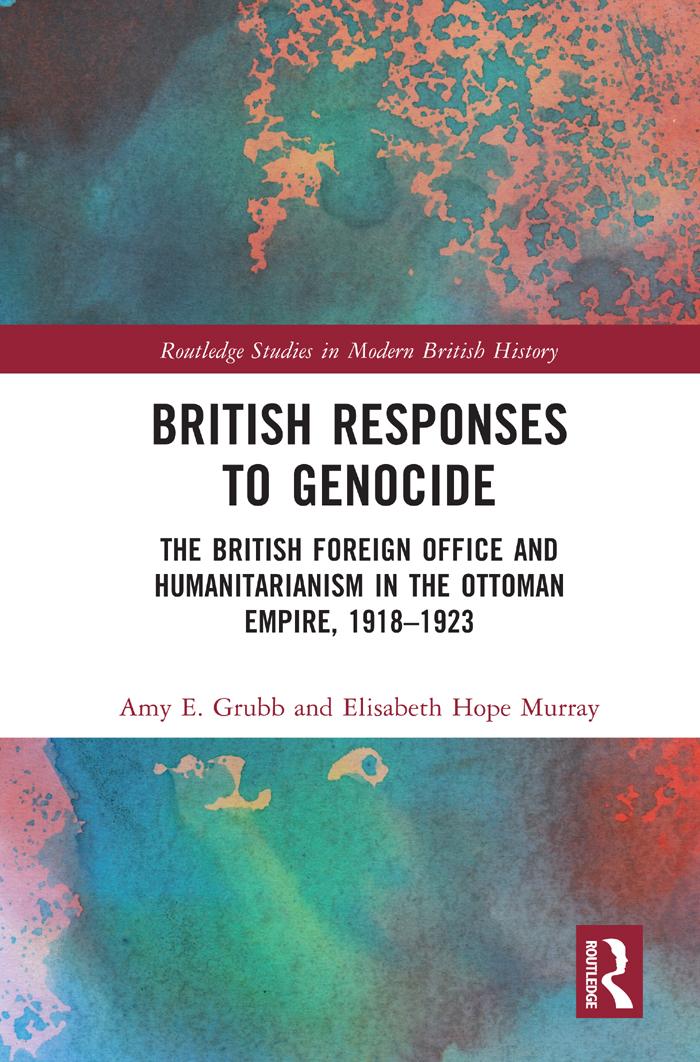
This book examines British responses to genocide and atrocity in the Ottoman Empire during the aftermath of World War I. The authors analyze British humanitarianism and humanitarian intervention through the advice and policies of the Foreign Office and British government in London and the actions of Foreign Officers in the field. British understandings of humanitarianism at the time revolved around three key elements: good government, atrocity, and the refugee crises; this ideology of humanitarianism, however, was challenged by disputed policies of post-war politics and goals regarding the Near East. This resulted in limited intervention methods available to those on the ground but did not necessarily result in the forfeiture of the belief in humanitarianism amongst the local British officials charged with upholding it. This study shows that the tension between altruism and political gain weakened British power in the region, influencing the continuation of violence and repression long after the date most perceive as the cessation of WWI.
The book is primarily aimed at scholars and researchers within the field; it is a research monograph and will be of greatest interest to scholars of genocide, British history, and refugee studies, as well as for activists and practitioners.
Paga facilmente con carta, Klarna, Apple Pay o Google Pay. Non sei soddisfatto? Hai sempre 14 giorni per il rimborso. Leggi di più nei nostri termini. Per qualsiasi domanda, scrivici a hello@memmo.org.
Memmo rende lo studio più facile, ovunque tu sia nel mondo. Qui trovi i tuoi libri di testo e strumenti di studio intelligenti, tutto in un unico posto: riassunti, quiz, podcast e flashcard. E poi c'è Ted, il tuo compagno di studio che risponde a ogni tua domanda. Oltre 50.000 studenti studiano già qui: è stato creato per aiutarti a imparare più velocemente e a stressarti meno.