
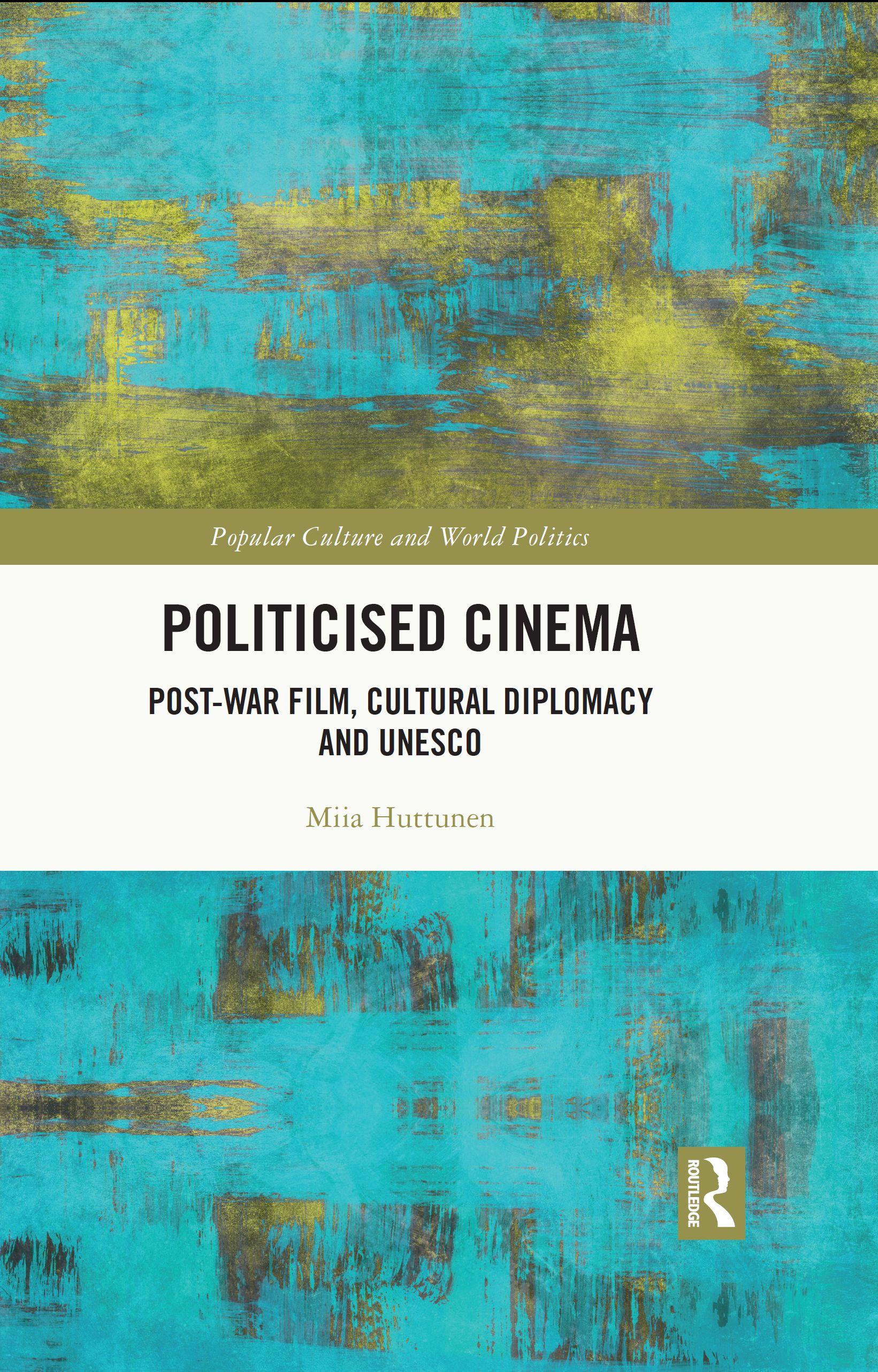
Politicised Cinema demonstrates how taking a collection of seemingly apolitical films and using them as an instrument for serving explicit political aims can be used as a force for good.
Through an analysis of Orient: A Survey of Films Produced in Countries of Arab and Asian Culture, a film catalogue published by UNESCO and the BFI in 1959 to promote intercultural understanding between the East and the West, this book argues for the importance of studying the ways the interpretation of films can be guided to serve a specific political agenda, even when the films themselves were originally produced with very different aims in mind. The author focuses on how the catalogue positions culture and its cinematic representations as a marker of difference between the Eastern and Western worlds, and shows that even major cultural conflicts such as the Cold War and the decolonisation process can be reframed in service of UNESCO’s cultural diplomatic agenda. The book explores the ways in which the catalogue of Eastern films deemed suitable for Western audiences became a weapon to fight against prejudice, intolerance, and bigotry in a politicised battle over dismantling the proclaimed link between difference and conflict.
This book will be of interest to students, researchers, and academics in visual politics, cinematic international relations, cultural diplomacy, global governance, and international cultural politics, as well as film studies, Asian studies, and cultural studies. In addition, policymakers and practitioners in the fields of cultural diplomacy and cultural policy will find the empirical case study to be of use in practical work.
Paga facilmente con carta, Klarna, Apple Pay o Google Pay. Non sei soddisfatto? Hai sempre 14 giorni per il rimborso. Leggi di più nei nostri termini. Per qualsiasi domanda, scrivici a hello@memmo.org.
Memmo rende lo studio più facile, ovunque tu sia nel mondo. Qui trovi i tuoi libri di testo e strumenti di studio intelligenti, tutto in un unico posto: riassunti, quiz, podcast e flashcard. E poi c'è Ted, il tuo compagno di studio che risponde a ogni tua domanda. Oltre 50.000 studenti studiano già qui: è stato creato per aiutarti a imparare più velocemente e a stressarti meno.