
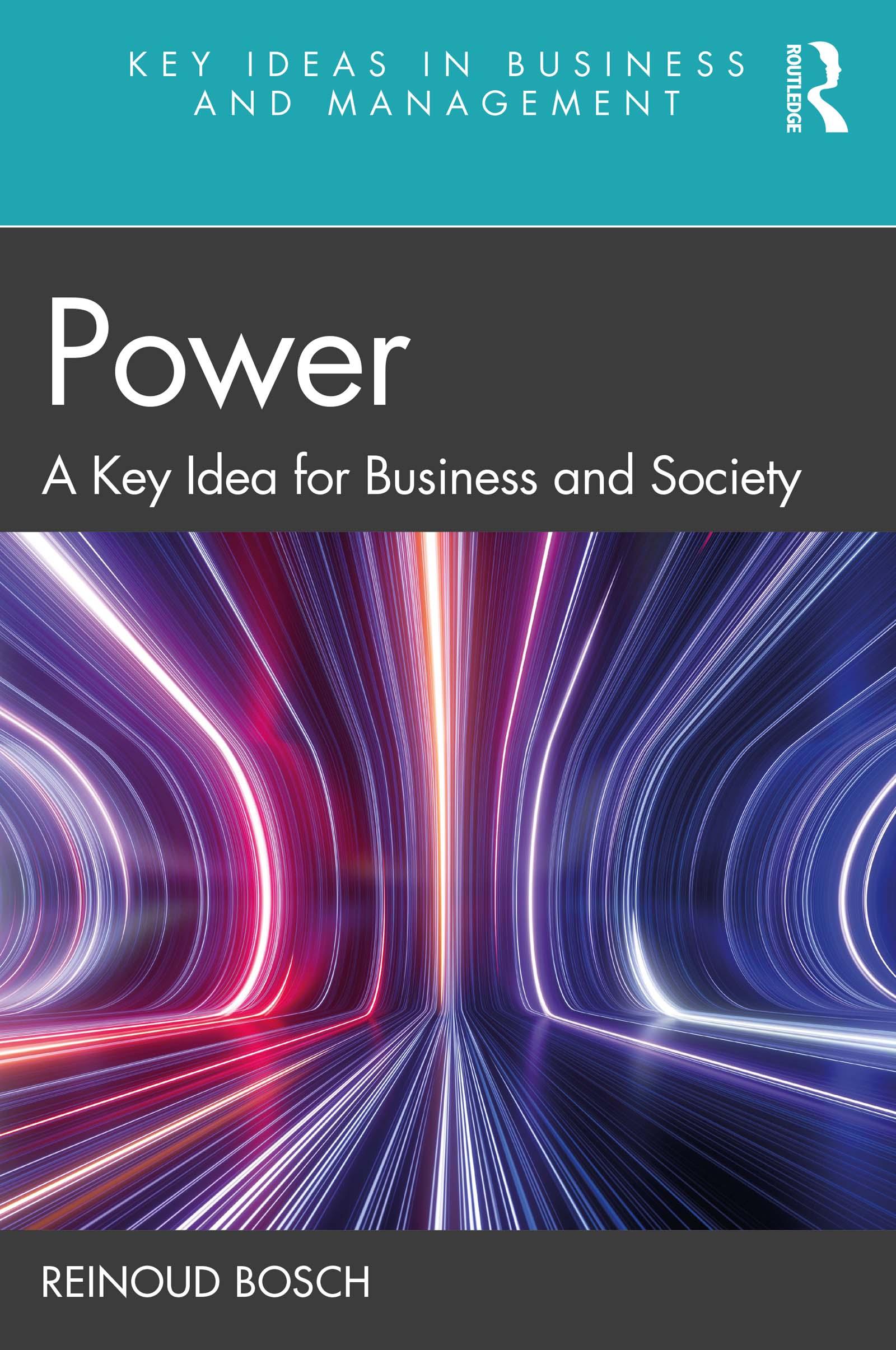
Power plays a central role in business and management. But what is power exactly, and what are key elements of this concept? Defining power as relative ability, this book discusses structures of power, individual power, the exercise of power, strategy, and collective power.
While discussing these key components, ideas of important thinkers about power, from Plato to Foucault, Weber to Lukes, Machiavelli to Kahneman, Sun to Kotter, and Barnard to Clegg, are discussed and interpretively categorized into a toolbox of conceptual elements – what Blumer referred to as sensitizing concepts. This toolbox of sensitizing concepts allows the selection of those elements of the concept of power that provide the most constructive and effective practical understanding in particular situations.
The core message behind the discussion is that knowledge of key components of the concept of power is empowering. It is empowering to learn about aspects of structures of power, individual power, the exercise of power, strategy, and collective power. Understanding such conceptual components empowers students, researchers, practitioners, and other readers to use their understanding in interpreting, theorizing about, and dealing with the complexities of power in their particular situations – without tying them to any preconceived general theories about power.
Paga facilmente con carta, Klarna, Apple Pay o Google Pay. Non sei soddisfatto? Hai sempre 14 giorni per il rimborso. Leggi di più nei nostri termini. Per qualsiasi domanda, scrivici a hello@memmo.org.
Memmo rende lo studio più facile, ovunque tu sia nel mondo. Qui trovi i tuoi libri di testo e strumenti di studio intelligenti, tutto in un unico posto: riassunti, quiz, podcast e flashcard. E poi c'è Ted, il tuo compagno di studio che risponde a ogni tua domanda. Oltre 50.000 studenti studiano già qui: è stato creato per aiutarti a imparare più velocemente e a stressarti meno.