
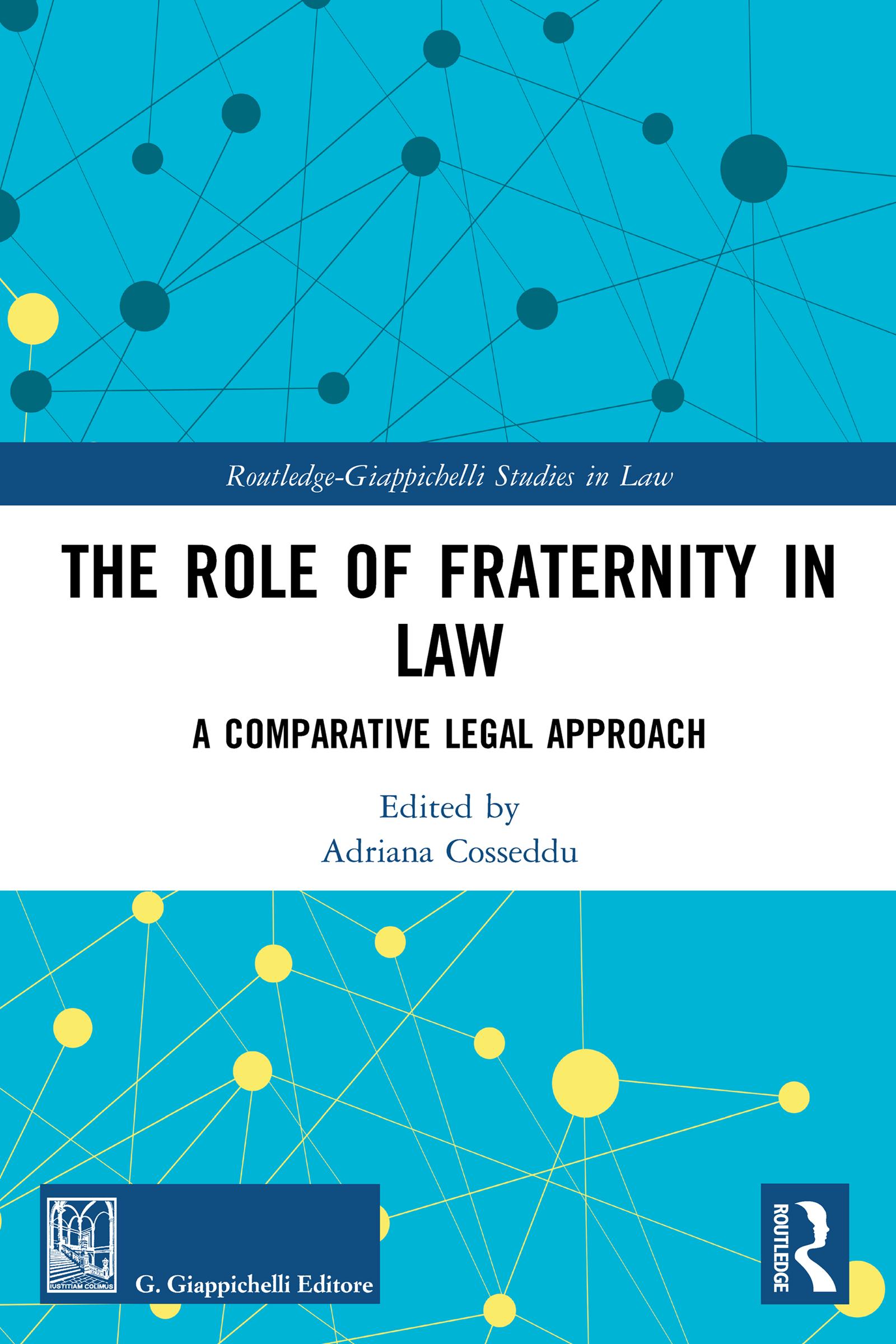
This collection discusses the concept of fraternity and examines the issue of its role in law.
Since the end of World War II, fraternity has been cited in several national constitutional charters, in addition to the United Nations Universal Declaration of Human Rights. But is there space for fraternity in law? The contributions to this book form an ideal “bridge” between the past and present to trace the different pathways taken to address the meaning of fraternity, and to identify its possible legal relevance. The book lays out paths that have placed fraternity in varied and challenging legal contexts in an age of globalization and conflict, where the multiplicity of national and supranational sources of law seems to show its inadequacy to govern complexity, and coexistence between diversities that appear irreconcilable. The purpose is not to recover fraternity as a forgotten principle, but to reimagine it today to address the aim and force of law within a plurality of cultures. The analysis considers a possible universal dimension that models unity within diversity, and aspires to serve as a prologue to a transition from research to dialogue between different legal systems and traditions.
The book will be of interest to academics and researchers working in the areas of Comparative Law, Legal History and Legal Philosophy.
Paga facilmente con carta, Klarna, Apple Pay o Google Pay. Non sei soddisfatto? Hai sempre 14 giorni per il rimborso. Leggi di più nei nostri termini. Per qualsiasi domanda, scrivici a hello@memmo.org.
Memmo rende lo studio più facile, ovunque tu sia nel mondo. Qui trovi i tuoi libri di testo e strumenti di studio intelligenti, tutto in un unico posto: riassunti, quiz, podcast e flashcard. E poi c'è Ted, il tuo compagno di studio che risponde a ogni tua domanda. Oltre 50.000 studenti studiano già qui: è stato creato per aiutarti a imparare più velocemente e a stressarti meno.