
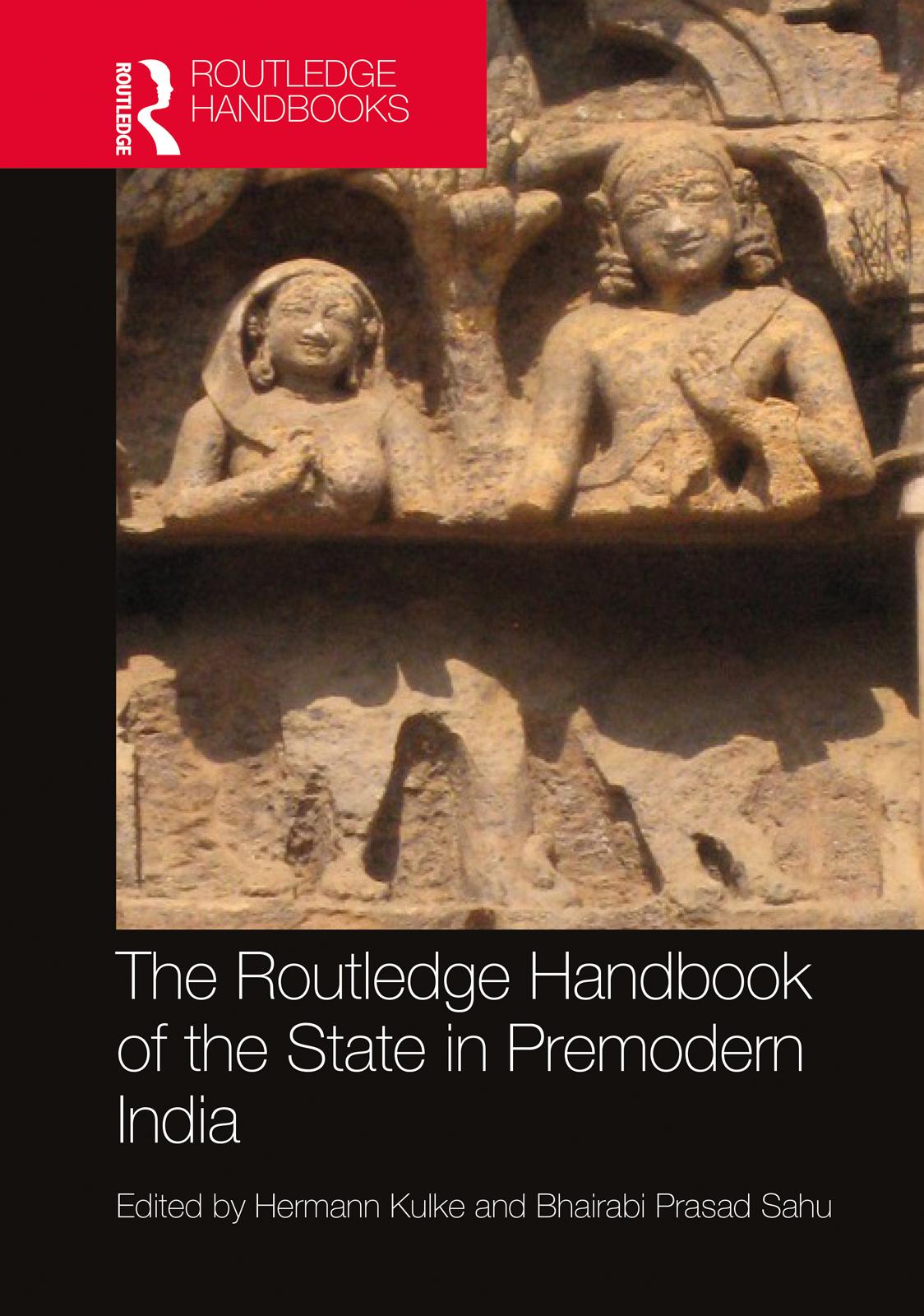
This handbook presents a multilayered and multidimensional history of state formation in premodern India.
It explores dense and rich local and subregional historiography from the mid-first millennium BC to the eighteenth century in South Asia. Shifting the focus away from economic and political factors, this handbook revises the conventional understanding of states and empires and locates them in their quotidian conduct and activity on socio-cultural and concomitant factors.
Comprehensive in scope, this handbook addresses a range of themes connected with the idea of state formation in the subcontinent. It includes discussions and debates on ritual practices and the Brahmanical order in early India; the Delhi Sultanate and role of Sultans among the Hindu kings; the cosmopolitan ‘Islamicate’ cultural influences on Puranic Hinduism; cultural background of the Mughal state.
The handbook examines new questions and ideologies of state formation, such as:
- facets of violence and resistance;
- the significance of the autonomous spaces and forests;
- regional elites, including ‘Little kings’; tribal background of some famous cults;
- trade and maritime commerce;
- royal patronage, courtly manners, lineage formation;
- imperial architecture, monuments, and temple, among others.
Featuring case studies from different part of the India subcontinent, and with contributions by renowned historians, this authoritative handbook will be an indispensable reading for teachers, scholars, and students of early India, medieval India, premodern India, South Asian history, Asian history, historiography, economic history, historical sociology, and South Asia studies.
Paga facilmente con carta, Klarna, Apple Pay o Google Pay. Non sei soddisfatto? Hai sempre 14 giorni per il rimborso. Leggi di più nei nostri termini. Per qualsiasi domanda, scrivici a hello@memmo.org.
Memmo rende lo studio più facile, ovunque tu sia nel mondo. Qui trovi i tuoi libri di testo e strumenti di studio intelligenti, tutto in un unico posto: riassunti, quiz, podcast e flashcard. E poi c'è Ted, il tuo compagno di studio che risponde a ogni tua domanda. Oltre 50.000 studenti studiano già qui: è stato creato per aiutarti a imparare più velocemente e a stressarti meno.