
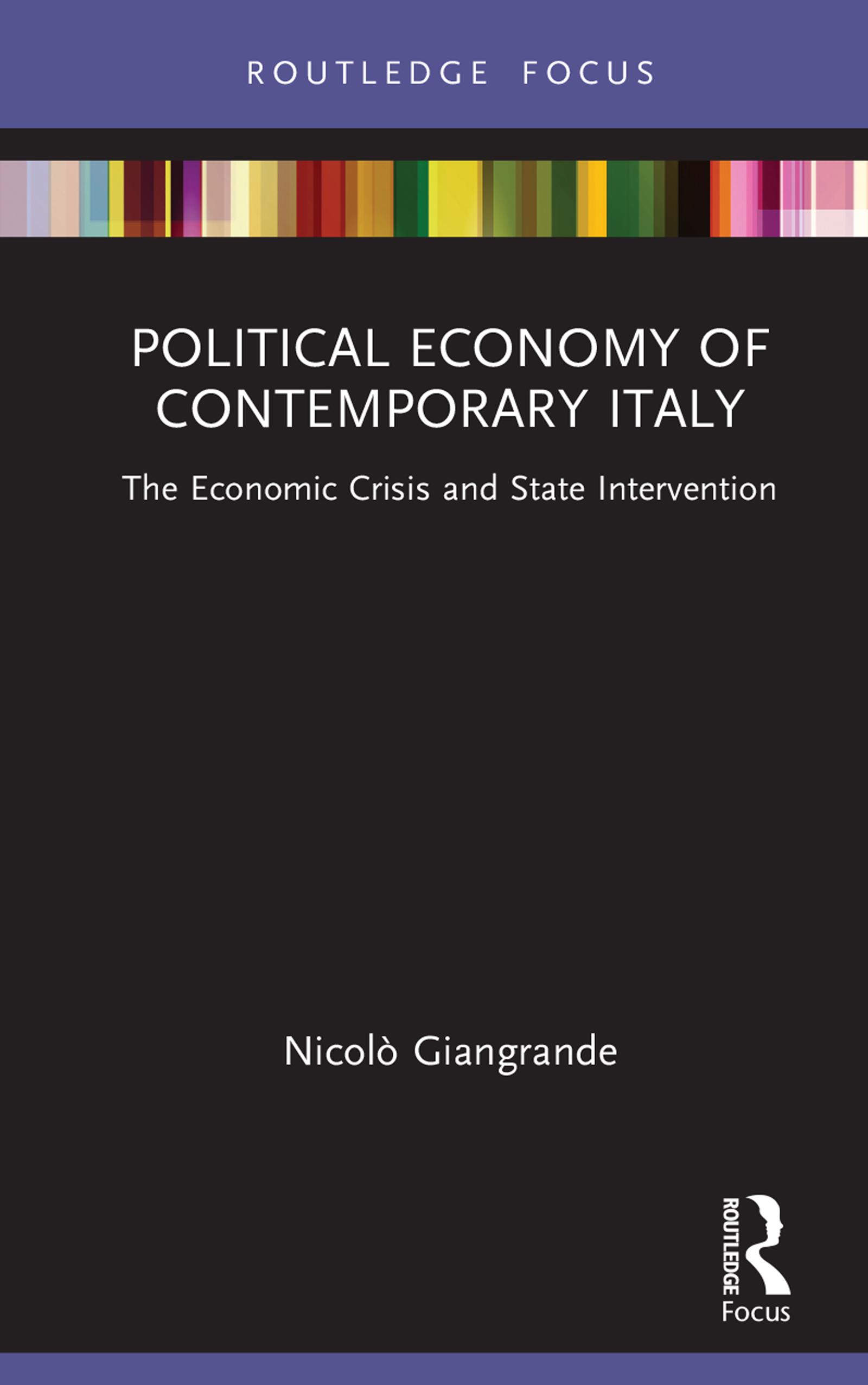
Drawing on Kaleckian and Kaldorian approaches, Political Economy of Contemporary Italy: The Economic Crisis and State Intervention explores the reasons behind the stagnation of the Italian economy from the 1970s and suggests policy solutions to ease the crisis.
The central thesis of the book is that from the early 1990s Italy experienced a constant reduction of both private and public investment which, combined with increasing labour precariousness and wage moderation, contributed to the decline of both labour productivity and economic growth. It is argued that lack of industrial policies amplified the problem of the poor macroeconomic performance, since Italian firms – small-sized and non-innovating – were incapable of staying competitive on the global scene. Net exports did not compensate for the decline of public spending, private investment and consumption. It is also shown that, in these respects, Italy presents an interesting case study with wider ramifications for it was involved in the global process of intensifying the neoliberal agenda but at a faster rate than other OECD countries. The book concludes with a call for an alternative economic policy in order to promote innovation, reduce unemployment and stimulate economic growth.
This book marks a significant contribution to the literature on the recent history of the European economy, Italian studies and the history of economic thought.
Paga facilmente con carta, Klarna, Apple Pay o Google Pay. Non sei soddisfatto? Hai sempre 14 giorni per il rimborso. Leggi di più nei nostri termini. Per qualsiasi domanda, scrivici a hello@memmo.org.
Memmo rende lo studio più facile, ovunque tu sia nel mondo. Qui trovi i tuoi libri di testo e strumenti di studio intelligenti, tutto in un unico posto: riassunti, quiz, podcast e flashcard. E poi c'è Ted, il tuo compagno di studio che risponde a ogni tua domanda. Oltre 50.000 studenti studiano già qui: è stato creato per aiutarti a imparare più velocemente e a stressarti meno.