
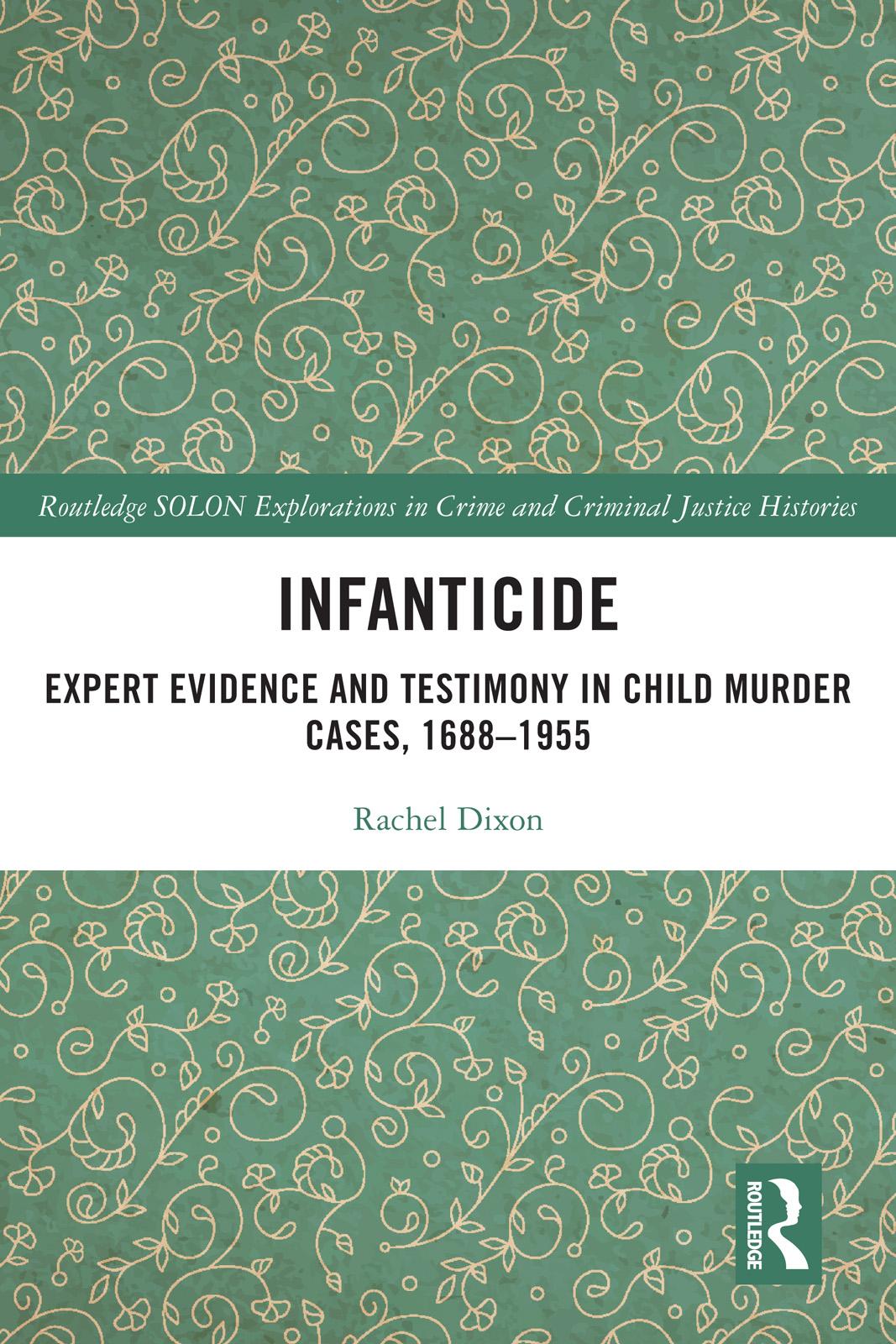
Infanticide examines medical expert evidence in infanticide cases, focusing specifically on the shifting notion of "certainty" in medical testimony. Beginning in the Early Modern period and concluding in the mid-twentieth century, it considers how courts determined whether an infant died from natural causes or other reasons, including violence.
The book explores expert evidence in cases of infanticide and examines the extent of certainty created by medical specialists who founded their testimony on anatomical exploration and science. As the book progresses, it becomes clear that medical specialists were unable to scientifically establish cause of death and in doing so conveyed uncertainty in court proceedings. Rather than being regarded as a professional failing, Dixon argues that the uncertainty created by medical specialists redirected the outcomes of infanticide cases. The combination of uncertainty and the changing perceptions of infanticidal women by the court lead juries to find infanticidal women not guilty of a capital offence in many cases.
This book will be of great interest to students and scholars of Criminology, Law and History.
Paga facilmente con carta, Klarna, Apple Pay o Google Pay. Non sei soddisfatto? Hai sempre 14 giorni per il rimborso. Leggi di più nei nostri termini. Per qualsiasi domanda, scrivici a hello@memmo.org.
Memmo rende lo studio più facile, ovunque tu sia nel mondo. Qui trovi i tuoi libri di testo e strumenti di studio intelligenti, tutto in un unico posto: riassunti, quiz, podcast e flashcard. E poi c'è Ted, il tuo compagno di studio che risponde a ogni tua domanda. Oltre 50.000 studenti studiano già qui: è stato creato per aiutarti a imparare più velocemente e a stressarti meno.