
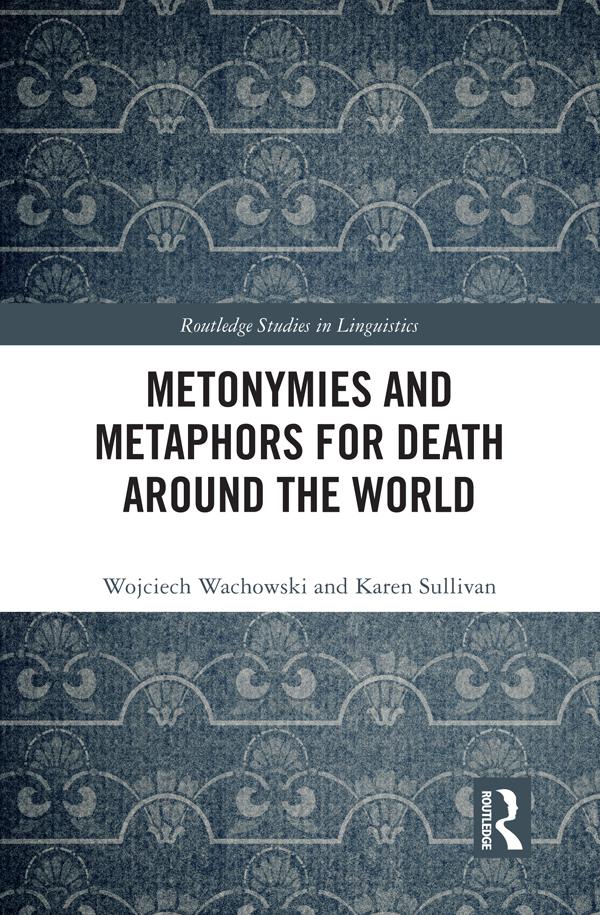
This book reflects on the ways in which metonymy and metaphor are used conceptually and linguistically to mitigate the more difficult dimensions of death and dying, setting out a unique line of research within Conceptual Metaphor Theory.
The volume argues that metonymic and metaphoric descriptions of death and dying reflect taboos, concealment, and other considerations not found in figurative descriptions of life, producing distinct forms of euphemism, frames, and mental spaces particular to conceptualizations of death.
The first part takes a closer look at metonymy to illuminate the ways in which it allows a person to zoom in on death’s more inoffensive dimensions or zoom out from its more troubling aspects. The second part focuses on the more palatable concepts which metaphorically structure and help to better understand death.
A wide range of classical and modern examples from European, Asian, Australian, and African languages and cultures showcase points of overlap and divergence.
Opening up new lines of inquiry into research on death and dying and offering a linguistically focused complement to anthropological and religious studies on the topic, this book will be of interest to scholars in cognitive linguistics, sociolinguistics, cross-cultural communication, and cultural studies.
Paga facilmente con carta, Klarna, Apple Pay o Google Pay. Non sei soddisfatto? Hai sempre 14 giorni per il rimborso. Leggi di più nei nostri termini. Per qualsiasi domanda, scrivici a hello@memmo.org.
Memmo rende lo studio più facile, ovunque tu sia nel mondo. Qui trovi i tuoi libri di testo e strumenti di studio intelligenti, tutto in un unico posto: riassunti, quiz, podcast e flashcard. E poi c'è Ted, il tuo compagno di studio che risponde a ogni tua domanda. Oltre 50.000 studenti studiano già qui: è stato creato per aiutarti a imparare più velocemente e a stressarti meno.