
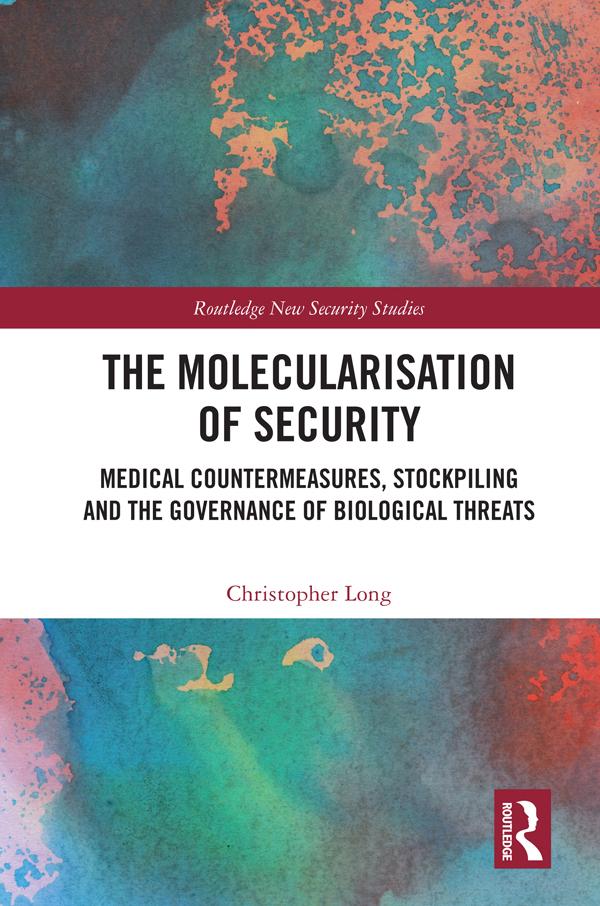
This book investigates the way that the molecular sciences are shaping contemporary security practices in relation to the governance of biological threats.
In response to biological threats, such as pandemics and bioterrorism, governments around the world have developed a range of new security technologies, called medical countermeasures, to protect their populations. This book argues that the molecular sciences’ influence has been so great that security practices have been molecularised. Focusing on the actions of international organisations and governments in the past two decades, this book identifies two contrasting conceptions of the nature or inherent workings of molecular life as driving this turn. On the one hand, political notions of insecurity have been shaped by the contingent or random nature of molecular life. On the other, the identification of molecular life’s constant biological dynamics supports and makes possible the development and stockpiling of effective medical countermeasures. This study is one of the few to take seriously the conceptual implications that the detailed empirical workings of biotechnology have on security practices today.
This book will be of much interest to students of security studies, bio-politics, life sciences, global governance, and International Relations in general.
Paga facilmente con carta, Klarna, Apple Pay o Google Pay. Non sei soddisfatto? Hai sempre 14 giorni per il rimborso. Leggi di più nei nostri termini. Per qualsiasi domanda, scrivici a hello@memmo.org.
Memmo rende lo studio più facile, ovunque tu sia nel mondo. Qui trovi i tuoi libri di testo e strumenti di studio intelligenti, tutto in un unico posto: riassunti, quiz, podcast e flashcard. E poi c'è Ted, il tuo compagno di studio che risponde a ogni tua domanda. Oltre 50.000 studenti studiano già qui: è stato creato per aiutarti a imparare più velocemente e a stressarti meno.