
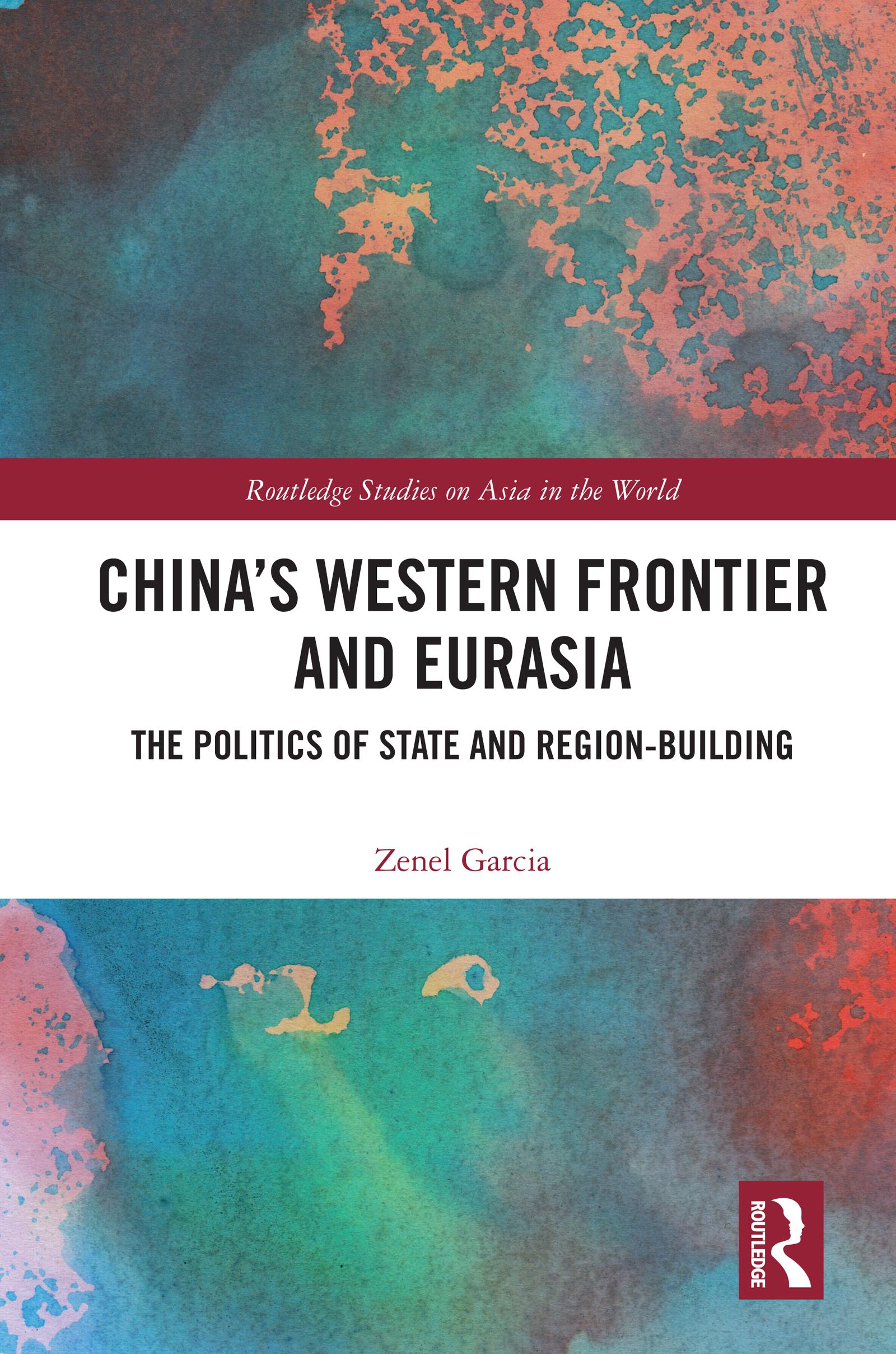
China has emerged as a dominant power in Eurasian affairs that not only exercises significant political and economic power, but increasingly, ideational power too.
Since the founding of the People’s Republic, Chinese Communist Party leaders have sought to increase state capacity and exercise more effective control over their western frontier through a series of state-building initiatives. Although these initiatives have always incorporated an international component, the collapse of the USSR, increasing globalization, and the party’s professed concerns about terrorism, separatism, and extremism have led to a region-building project in Eurasia. Garcia traces how domestic elite-led narratives about security and development generate state-building initiatives, and then region-building projects. He also assesses how region-building projects are promoted through narratives of the historicity of China’s engagement in Eurasia, the promotion of norms of non-interference, and appeals to mutual development. Finally, he traces the construction of regions through formal and informal institutions as well as integrative infrastructure. By presenting three phases of Chinese domestic state-building and region-building from 1988-present, Garcia shows how region-building projects have enabled China to increase state capacity, control, and development in its western frontier.
Recommended for scholars of China’s international relations and development policy.
Paga facilmente con carta, Klarna, Apple Pay o Google Pay. Non sei soddisfatto? Hai sempre 14 giorni per il rimborso. Leggi di più nei nostri termini. Per qualsiasi domanda, scrivici a hello@memmo.org.
Memmo rende lo studio più facile, ovunque tu sia nel mondo. Qui trovi i tuoi libri di testo e strumenti di studio intelligenti, tutto in un unico posto: riassunti, quiz, podcast e flashcard. E poi c'è Ted, il tuo compagno di studio che risponde a ogni tua domanda. Oltre 50.000 studenti studiano già qui: è stato creato per aiutarti a imparare più velocemente e a stressarti meno.