
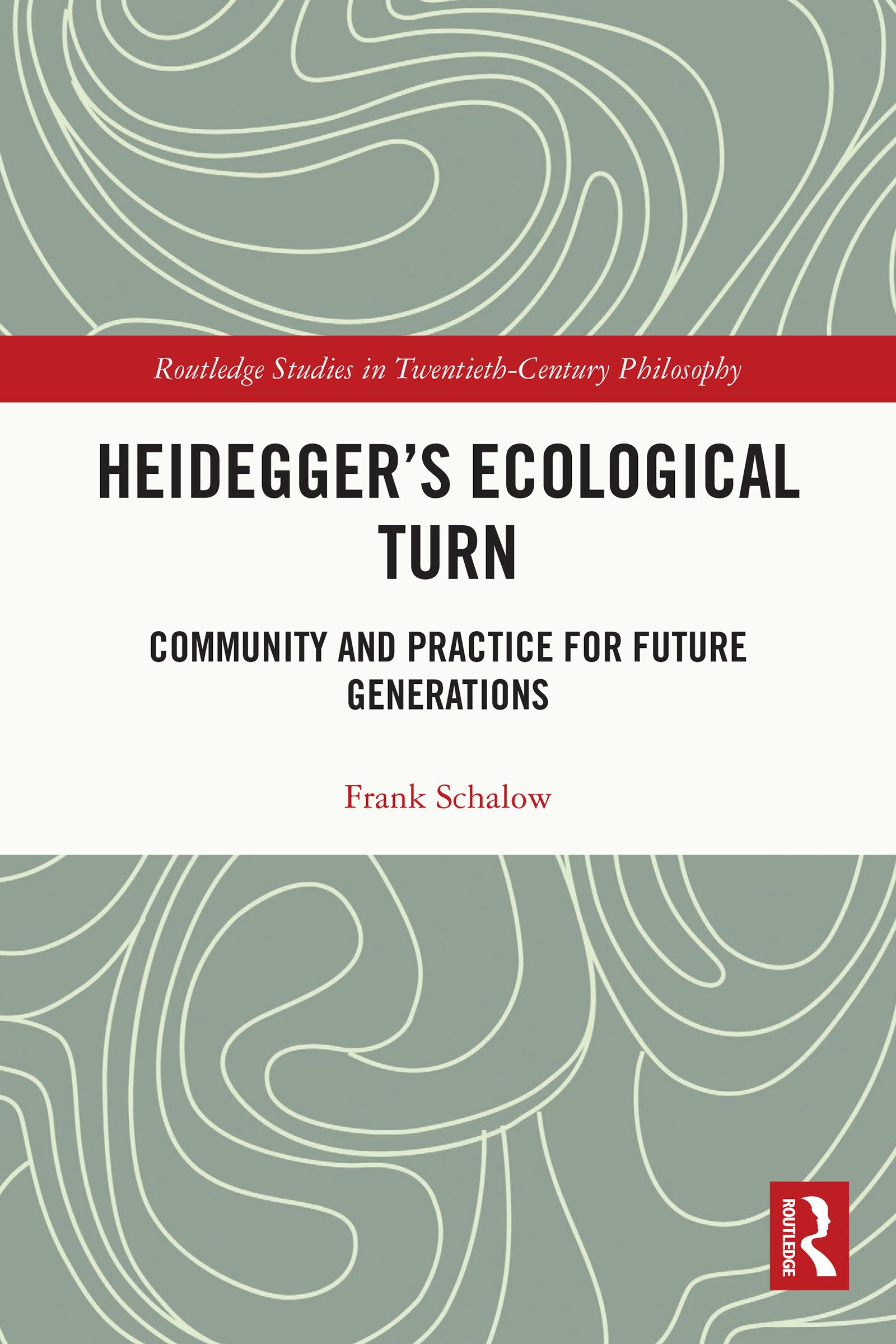
This book makes explicit the ecological implications of Martin Heidegger. It examines how the trajectory of Heidegger’s thinking harbors an "ecological turn," which comes to the forefront in his attempt to anticipate the impending crisis precipitated by modern technology.
Schalow’s emphasis on such key motifs as stewardship, dwelling, and "letting be" (Gelassenheit) serves to coalesce the problem of freedom in a new and innovative way, in order to expand the interpretive or hermeneutic horizon for re-examining Heidegger’s philosophy. By prioritizing a response to today’s environmental crisis and the possible impact upon future generations, the author traverses a divide within Heidegger scholarship by developing a deeper, critical outlook on his philosophy—without either reiterating standard interpretations or rejecting them wholesale. He develops a trans-human approach to ethics, which, by prioritizing the welfare of the earth, nature, and animals, counters the anthropocentric bias and destructive premise of modern technology.
Heidegger’s Ecological Turn will be of interest to Heidegger scholars and researchers working in phenomenology, hermeneutics, continental philosophy, and environmental philosophy.
Paga facilmente con carta, Klarna, Apple Pay o Google Pay. Non sei soddisfatto? Hai sempre 14 giorni per il rimborso. Leggi di più nei nostri termini. Per qualsiasi domanda, scrivici a hello@memmo.org.
Memmo rende lo studio più facile, ovunque tu sia nel mondo. Qui trovi i tuoi libri di testo e strumenti di studio intelligenti, tutto in un unico posto: riassunti, quiz, podcast e flashcard. E poi c'è Ted, il tuo compagno di studio che risponde a ogni tua domanda. Oltre 50.000 studenti studiano già qui: è stato creato per aiutarti a imparare più velocemente e a stressarti meno.