
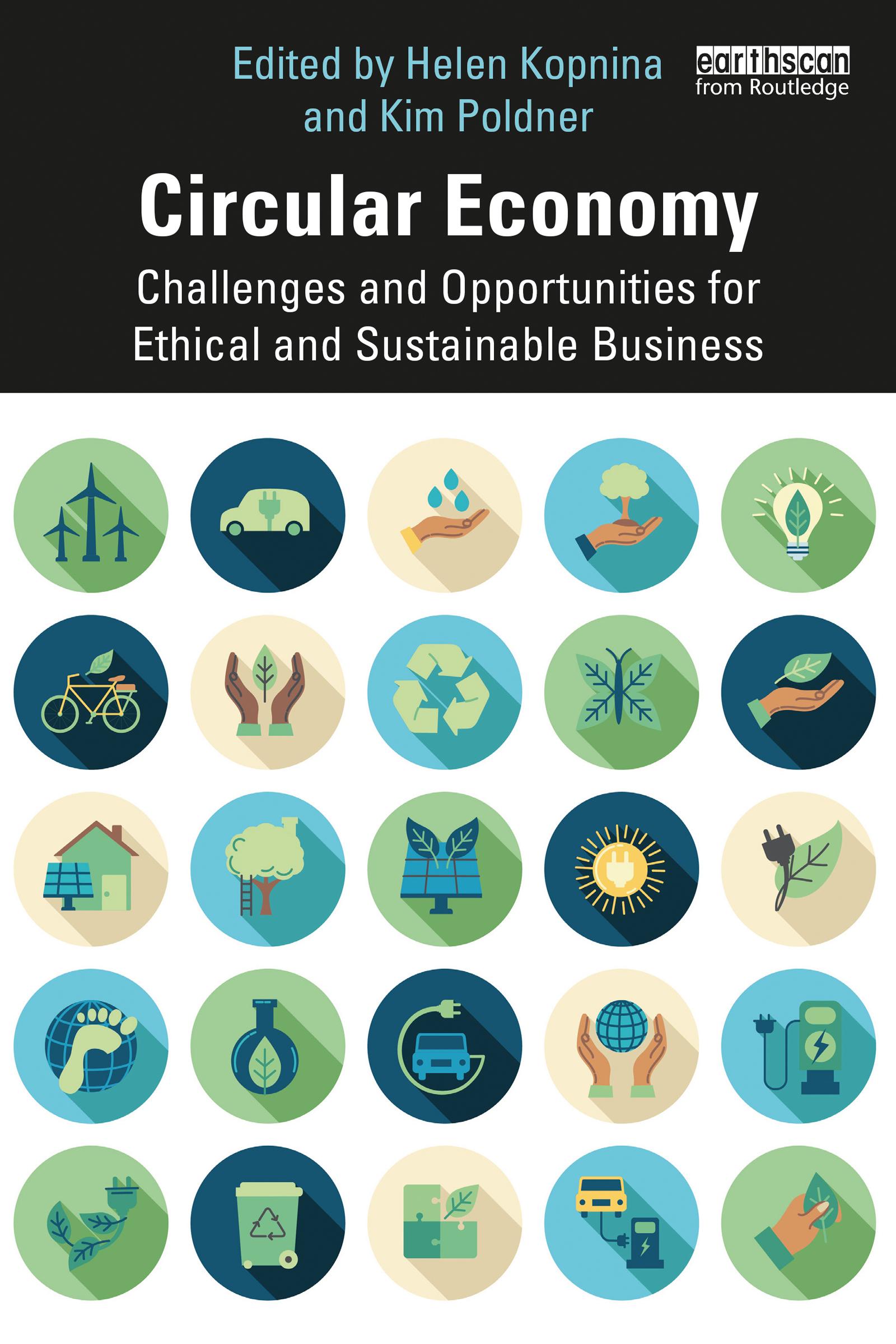
How can we design circular business models? How can we organize the transition from a linear to a circular economy? And how can we imagine circular futures that help us transform current realities? This book aims to provide answers to these questions while addressing the challenges and opportunities of the circular economy.
The authors reflect on why conventional sustainability models – such as the ‘triple P’ (People, Profit and Planet) or eco-efficiency – have failed in addressing environmental challenges, including climate change, biodiversity loss and pollution. They then move on to explore innovative circular business models, which propose to eliminate environmental damage by radically reforming the system of industrial production. Organizing the transition is a collaborative effort: entrepreneurs, consumers, policymakers, multinationals and intermediaries need to work together to foster the emergence of the circular economy as an institutional field. Together with younger generations of learners and equipped with beyond-human-centred values towards awareness of the material and natural world, novel circular futures can be imagined.
Offering points of reference for continued critical discourse and examples of practically applicable sustainability solutions, this book will be of great interest to students, teachers, practitioners and scholars of circular economy.
Paga facilmente con carta, Klarna, Apple Pay o Google Pay. Non sei soddisfatto? Hai sempre 14 giorni per il rimborso. Leggi di più nei nostri termini. Per qualsiasi domanda, scrivici a hello@memmo.org.
Memmo rende lo studio più facile, ovunque tu sia nel mondo. Qui trovi i tuoi libri di testo e strumenti di studio intelligenti, tutto in un unico posto: riassunti, quiz, podcast e flashcard. E poi c'è Ted, il tuo compagno di studio che risponde a ogni tua domanda. Oltre 50.000 studenti studiano già qui: è stato creato per aiutarti a imparare più velocemente e a stressarti meno.