
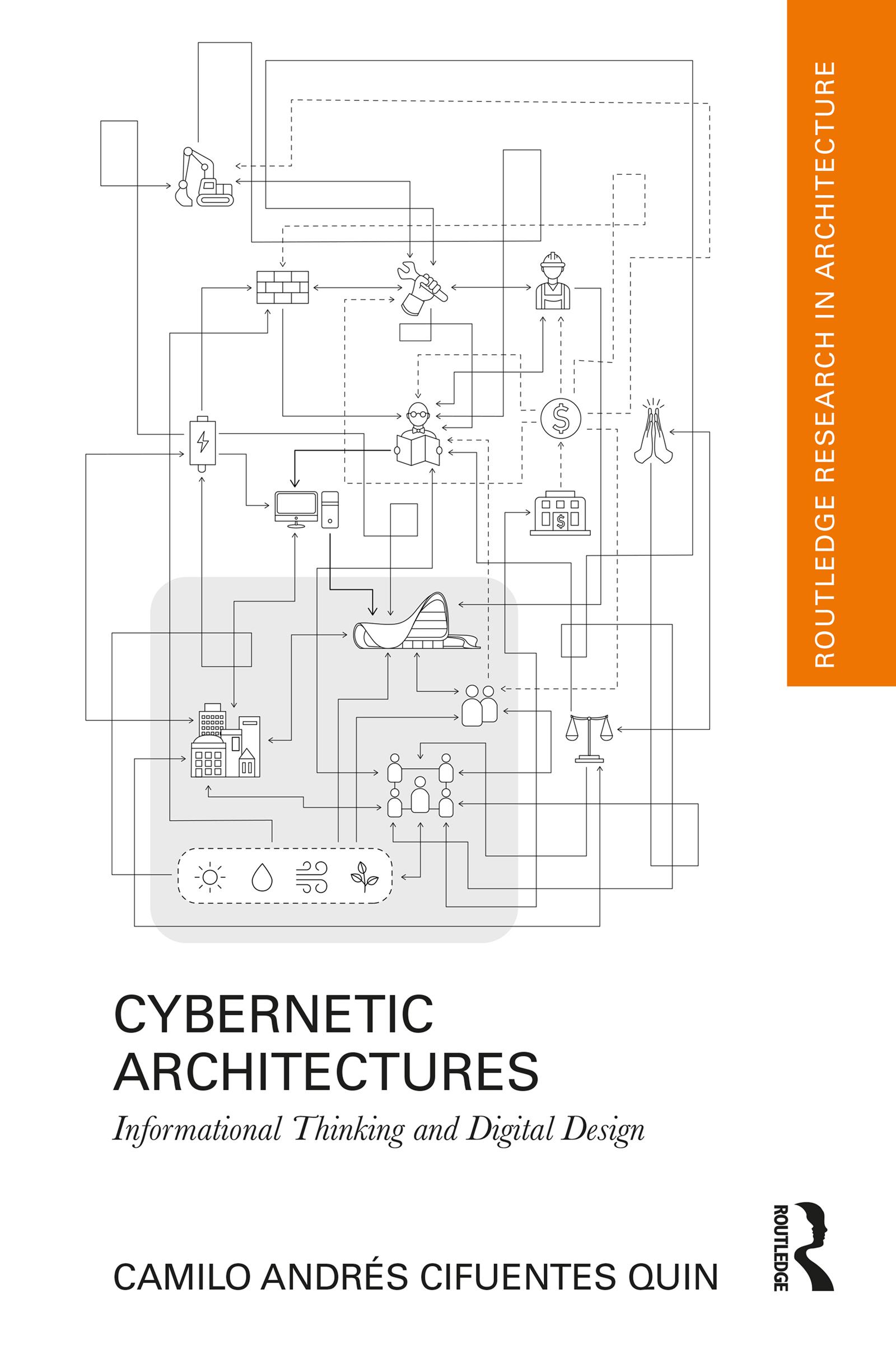
For the past 50 years, the advancements of technology have equipped architects with unique tools that have enabled the development of new computer-mediated design methods, fabrication techniques, and architectural expressions. Simultaneously, in contemporary architecture new frameworks emerged that have radically redefined the traditional conceptions of design, of the built environment, and of the role of architects.
Cybernetic Architectures argues that such frameworks have been constructed in direct reference to cybernetic thinking, a thought model that emerged concurrently with the origins of informatics and that embodies the main assumptions, values, and ideals underlying the development of computer science. The book explains how the evolution of the computational perspective in architecture has been parallel to the construction of design issues in reference to the central ideas fostered by the cybernetic model. It unpacks and explains this crucial relationship, in the work of digital architects, between the use of information technology in design and the conception of architectural problems around an informational ontology.
This book will appeal to architecture students and scholars interested in understanding the recent transformations in the architectural landscape related to the advent of computer-based design paradigms.
Paga facilmente con carta, Klarna, Apple Pay o Google Pay. Non sei soddisfatto? Hai sempre 14 giorni per il rimborso. Leggi di più nei nostri termini. Per qualsiasi domanda, scrivici a hello@memmo.org.
Memmo rende lo studio più facile, ovunque tu sia nel mondo. Qui trovi i tuoi libri di testo e strumenti di studio intelligenti, tutto in un unico posto: riassunti, quiz, podcast e flashcard. E poi c'è Ted, il tuo compagno di studio che risponde a ogni tua domanda. Oltre 50.000 studenti studiano già qui: è stato creato per aiutarti a imparare più velocemente e a stressarti meno.