
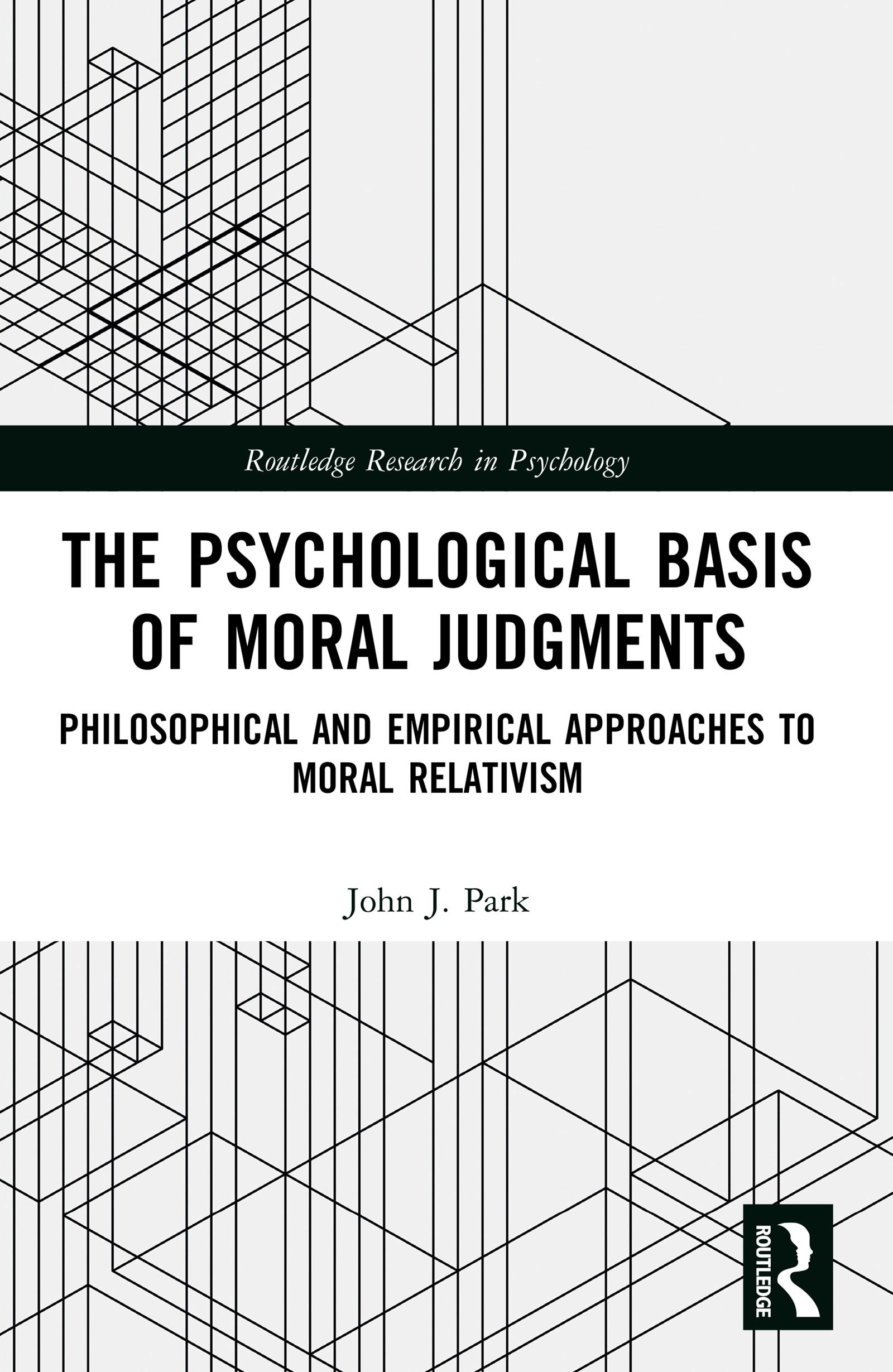
This volume examines the psychological basis of moral judgments and asks what theories of concepts apply to moral concepts. By combining philosophical reasoning and empirical insights from the fields of moral psychology, cognitive science, evolutionary psychology, and neuroscience, it considers what mental states not only influence, but also constitute our moral concepts and judgments. On this basis, Park proposes a novel pluralistic theory of moral concepts which includes three different cognitive structures and emotions. Thus, our moral judgments are shown to be a hybrid that express both cognitive and conative states.
In part through analysis of new empirical data on moral semantic intuitions, gathered via cross-cultural experimental research, Park reveals that the referents of individuals’ moral judgments and concepts vary across time, contexts, and groups. On this basis, he contends for moral relativism, where moral judgments cannot be universally true across time and location but only relative to groups.
This powerfully argued text will be of interest to researchers, academics, and educators with an interest in cognitive science, moral theory, philosophy of psychology, and moral psychology more broadly. Those interested in ethics, applied social psychology, and moral development will also benefit from the volume.
Paga facilmente con carta, Klarna, Apple Pay o Google Pay. Non sei soddisfatto? Hai sempre 14 giorni per il rimborso. Leggi di più nei nostri termini. Per qualsiasi domanda, scrivici a hello@memmo.org.
Memmo rende lo studio più facile, ovunque tu sia nel mondo. Qui trovi i tuoi libri di testo e strumenti di studio intelligenti, tutto in un unico posto: riassunti, quiz, podcast e flashcard. E poi c'è Ted, il tuo compagno di studio che risponde a ogni tua domanda. Oltre 50.000 studenti studiano già qui: è stato creato per aiutarti a imparare più velocemente e a stressarti meno.