
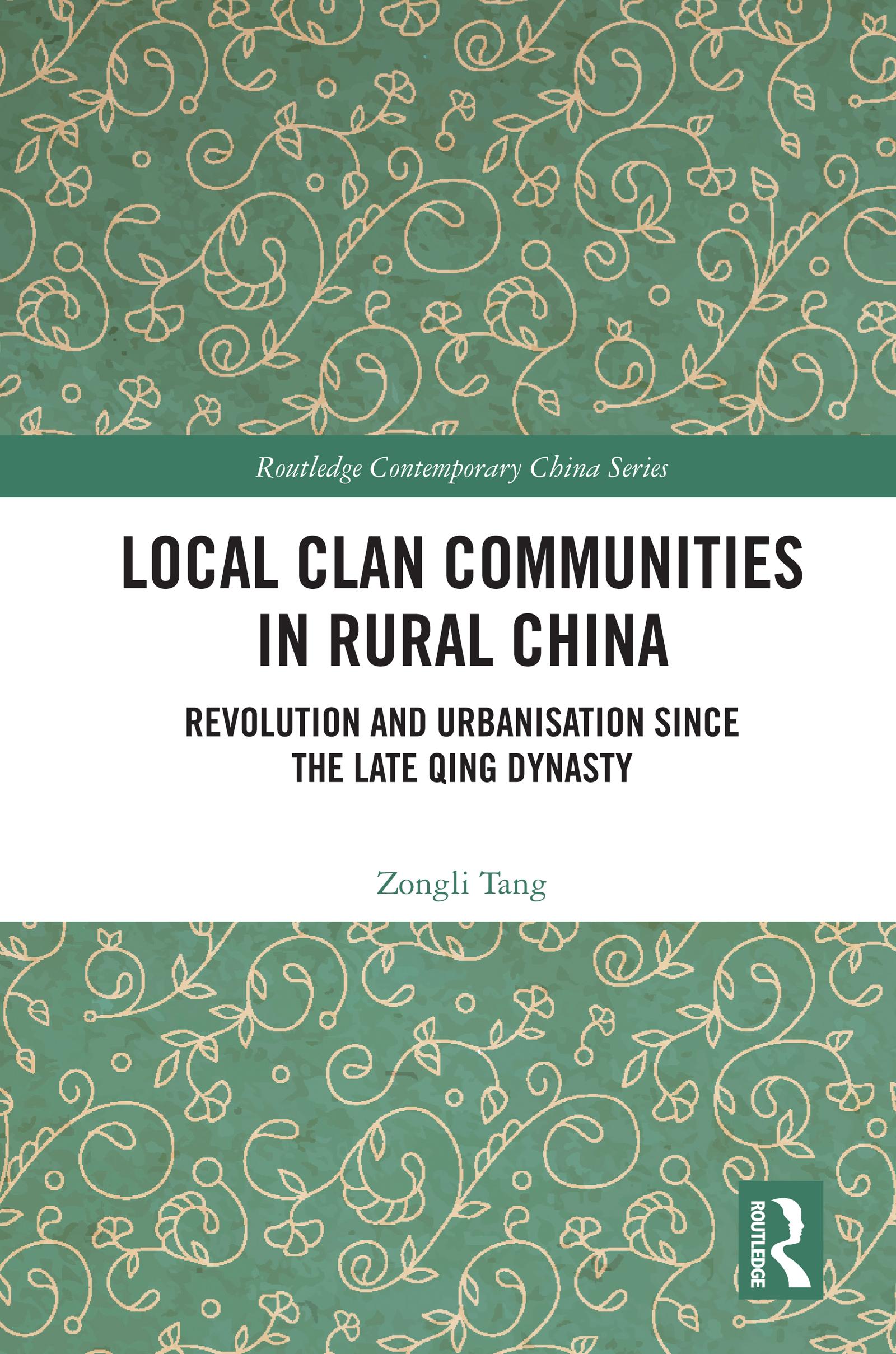
Using data collected in fieldwork and surveys, this book examines China’s clan system and local clan communities in rural Anhui, covering events in two periods: the imperial pattern as seen in the first half of the twentieth century and changes since 1949. Revealed by this research, during the late Qing and the Republic Era, a local clan in the investigated areas was run as a highly autonomous community with a strong religious focus, which challenges the corporate model raised by Maurice Freedman. Through examining single-surname villages, citang constructions, and updating of genealogies, local clans in Huadong, Huizhou and the lower Yangtze River plains in particular, developed earlier than those in the Pearl River Delta Region. Taking a cross-disciplinary viewpoint, this book analyses changes in local clan communities and clan culture as brought by the Chinese Revolution, Mao’s political campaigns, and Deng’s reforms. Starting with the late 1990s, a large migration from villages to cities has rapidly altered rural China. This geographic mobility would undermine the common residence that serves as part of a clan’s foundation. Under such situation, what transformations have taken place or will affect China’s clan system? Will the system continue to revitalise or die out? Local Clan Communities in Rural China reports these events/transformations and attempts to answer these questions. Placing a special emphasis on issues that have been overlooked by prior studies, this book brings to light many new facts and interpretations and provides a valuable reference to scholars in fields of sociology, anthropology, history, economics, cultural studies, urban studies, and population studies.
Paga facilmente con carta, Klarna, Apple Pay o Google Pay. Non sei soddisfatto? Hai sempre 14 giorni per il rimborso. Leggi di più nei nostri termini. Per qualsiasi domanda, scrivici a hello@memmo.org.
Memmo rende lo studio più facile, ovunque tu sia nel mondo. Qui trovi i tuoi libri di testo e strumenti di studio intelligenti, tutto in un unico posto: riassunti, quiz, podcast e flashcard. E poi c'è Ted, il tuo compagno di studio che risponde a ogni tua domanda. Oltre 50.000 studenti studiano già qui: è stato creato per aiutarti a imparare più velocemente e a stressarti meno.