
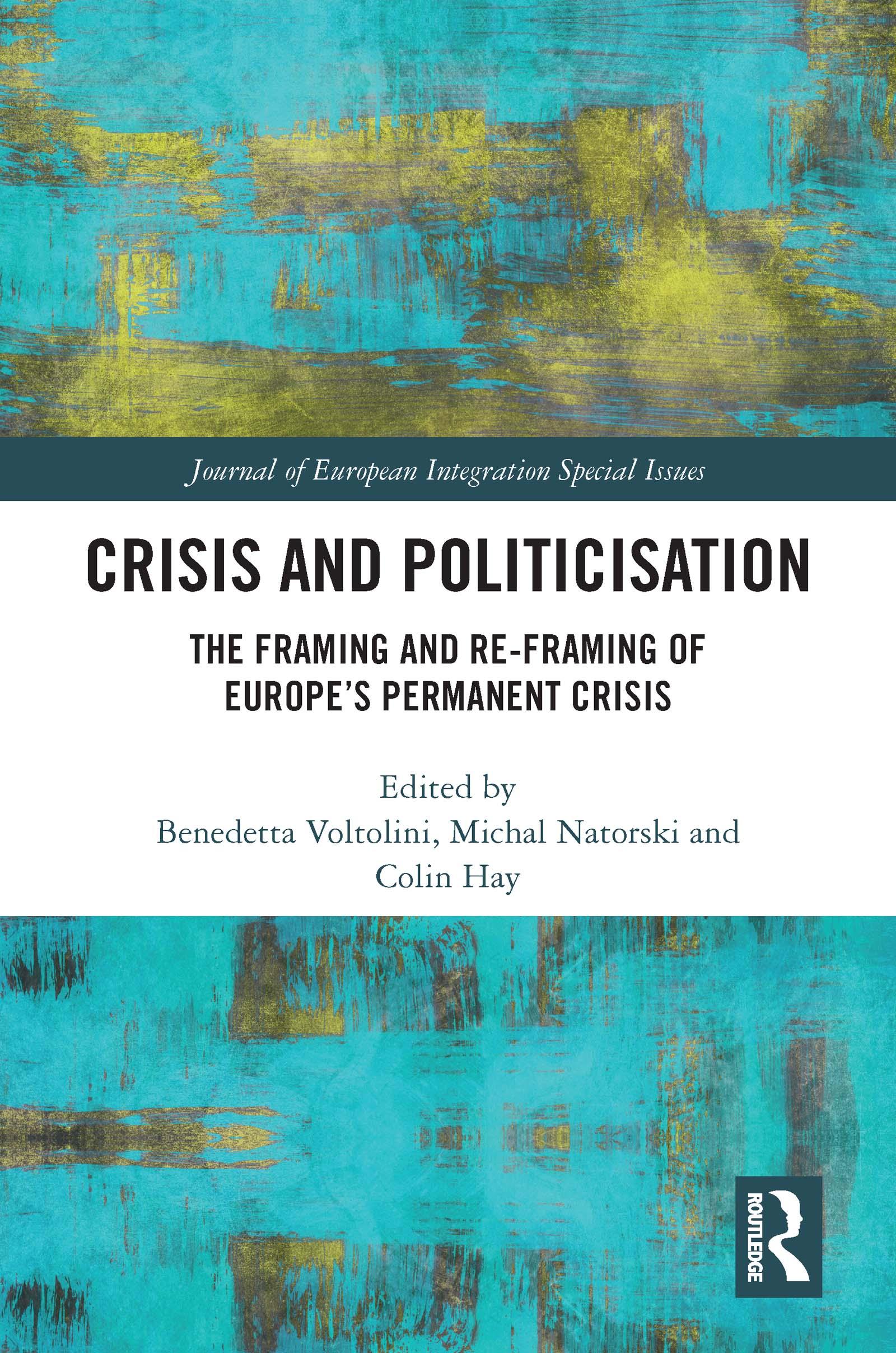
This book elucidates the link between the politics of a now seemingly permanent crisis in Europe and the politicisation of European integration. Looking at the epistemic dimension of crises, it suggests that the way in which a crisis is framed and contested determines its potential impact on the level of politicisation of European integration.
Europe is more challenged and contested today than it has even been, facing crisis of an almost existential kind. Yet, political crises are manufactured and narrated, so Europe has the possibility to intervene and ‘bring about her recovery’, instead of letting these crises prove terminal. This book explores the political process in and through which certain events come to be framed as constitutive of a moment that requires a decisive intervention. It shows that crises require a double framing: a situation needs to be identified as one of crisis in the first place and, subsequently, the nature and character of the crisis need to be specified. By examining a wide range of policy areas, the book demonstrates that framing of crises, i.e., identifying one situation both as a crisis and a crisis of a particular kind, contributes to the politicisation (or depoliticisation) of the process of European integration.
The chapters in this book were originally published as special issue of Journal of European Integration.
Paga facilmente con carta, Klarna, Apple Pay o Google Pay. Non sei soddisfatto? Hai sempre 14 giorni per il rimborso. Leggi di più nei nostri termini. Per qualsiasi domanda, scrivici a hello@memmo.org.
Memmo rende lo studio più facile, ovunque tu sia nel mondo. Qui trovi i tuoi libri di testo e strumenti di studio intelligenti, tutto in un unico posto: riassunti, quiz, podcast e flashcard. E poi c'è Ted, il tuo compagno di studio che risponde a ogni tua domanda. Oltre 50.000 studenti studiano già qui: è stato creato per aiutarti a imparare più velocemente e a stressarti meno.