
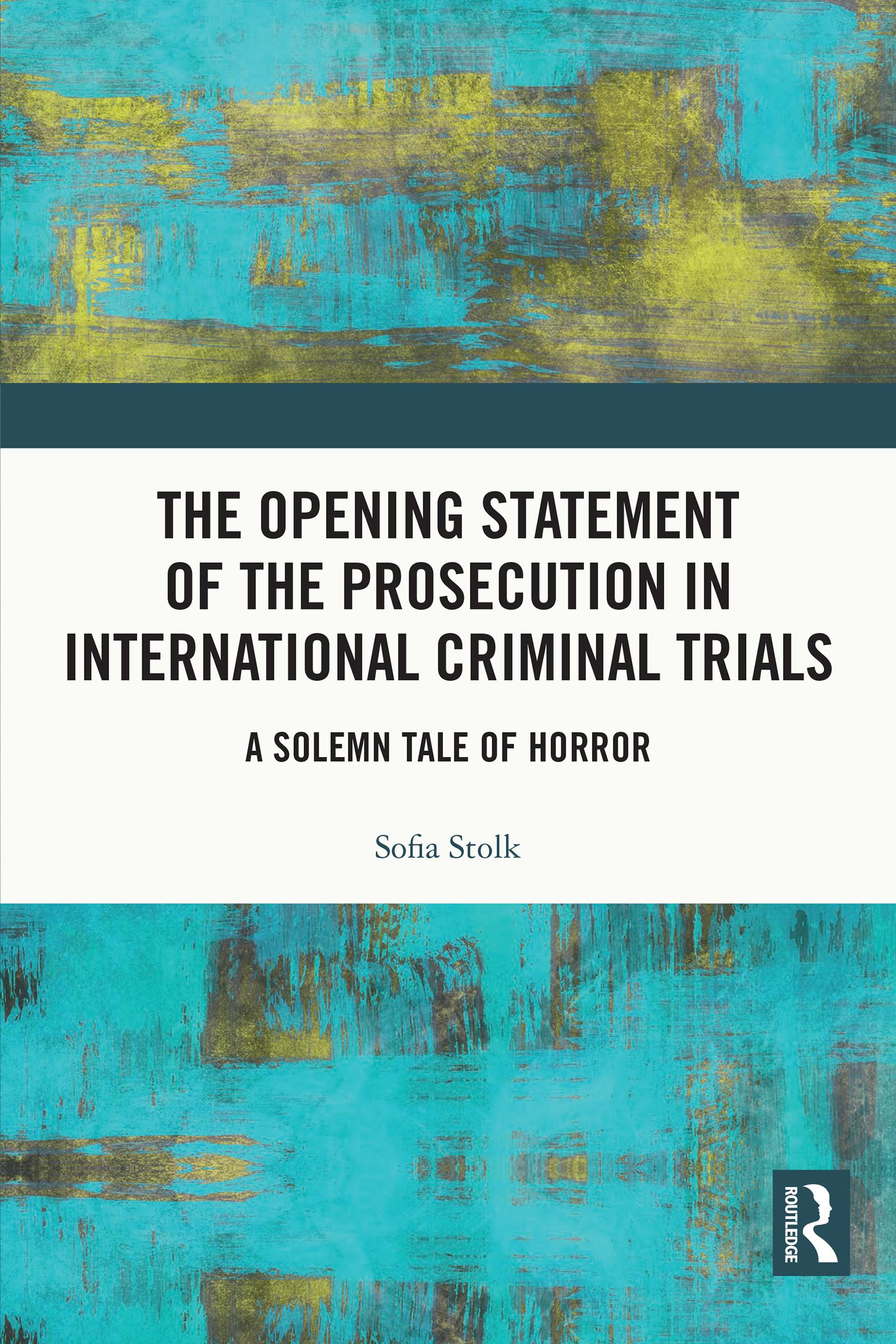
This book addresses the discursive importance of the prosecution’s opening statement before an international criminal tribunal. Opening statements are considered to be largely irrelevant to the official legal proceedings but are simultaneously deployed to frame important historical events. They are widely cited in international media as well as academic texts; yet have been ignored by legal scholars as objects of study in their own right. This book aims to remedy this neglect, by analysing the narrative that is articulated in the opening statements of different prosecutors at different tribunals in different times.
It takes an interdisciplinary approach and looks at the meaning of the opening narrative beyond its function in the legal process in a strict sense, discussing the ways in which the trial is situated in time and space and how it portrays the main characters. It shows how perpetrators and victims, places and histories, are juridified in a narrative that, whilst purporting to legitimise the trial, the tribunal and international criminal law itself, is beset with tensions and contradictions.
Providing an original perspective on the operation of international criminal law, this book will be of considerable interest to those working in this area, as well as those with relevant interests in International/Transnational Law more generally, Critical Legal Studies, Law and Literature, Socio-Legal Studies, Law and Geography and International Relations.
Paga facilmente con carta, Klarna, Apple Pay o Google Pay. Non sei soddisfatto? Hai sempre 14 giorni per il rimborso. Leggi di più nei nostri termini. Per qualsiasi domanda, scrivici a hello@memmo.org.
Memmo rende lo studio più facile, ovunque tu sia nel mondo. Qui trovi i tuoi libri di testo e strumenti di studio intelligenti, tutto in un unico posto: riassunti, quiz, podcast e flashcard. E poi c'è Ted, il tuo compagno di studio che risponde a ogni tua domanda. Oltre 50.000 studenti studiano già qui: è stato creato per aiutarti a imparare più velocemente e a stressarti meno.