
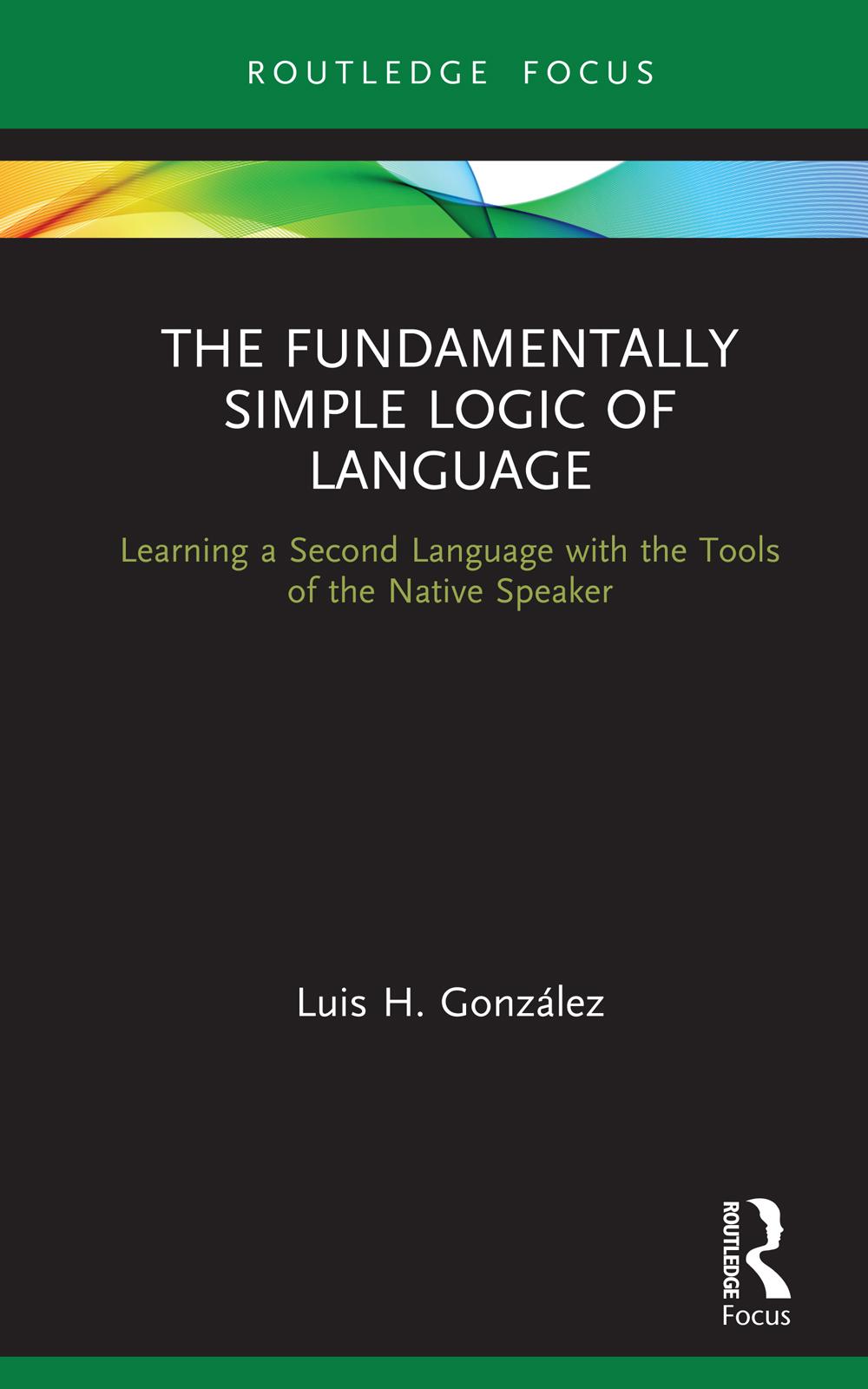
The Fundamentally Simple Logic of Language: Learning a Second Language with the Tools of the Native Speaker presents a data-driven approach to understanding how native speakers do not use subject and direct object to process language.
Native speakers know who does what in a sentence by applying intuitively two simple inferences that are argued to be part of universal grammar. The book explains and exemplifies these two inferences throughout. These two inferences explain the native speaker’s ease of acquisition and use, and answer difficult questions for linguistics (transitivity, case, semantic roles) in such a way that undergraduate students and second language learners can understand these concepts and apply them to their own language acquisition. While Spanish is used as the primary example, the theory can be applied to many other languages.
This book will appeal to teachers and learners of any second language, as well as linguists interested in second language acquisition, in second language teaching, and in argument structure.
Paga facilmente con carta, Klarna, Apple Pay o Google Pay. Non sei soddisfatto? Hai sempre 14 giorni per il rimborso. Leggi di più nei nostri termini. Per qualsiasi domanda, scrivici a hello@memmo.org.
Memmo rende lo studio più facile, ovunque tu sia nel mondo. Qui trovi i tuoi libri di testo e strumenti di studio intelligenti, tutto in un unico posto: riassunti, quiz, podcast e flashcard. E poi c'è Ted, il tuo compagno di studio che risponde a ogni tua domanda. Oltre 50.000 studenti studiano già qui: è stato creato per aiutarti a imparare più velocemente e a stressarti meno.