
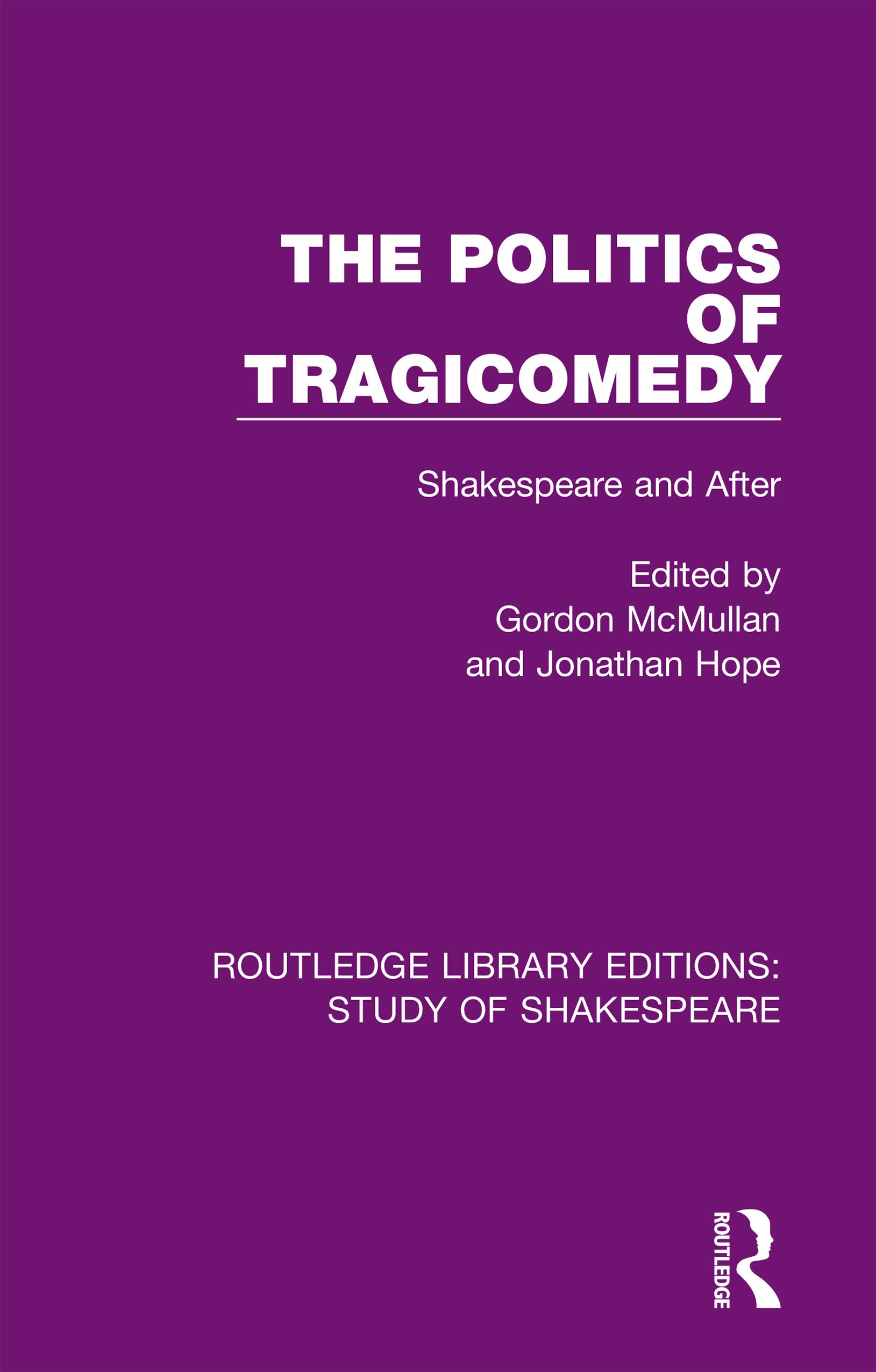
The Politics of Tragicomedy: Shakespeare and After offers a series of sophisticated and powerful readings of tragicomedy from Shakespeare’s late plays to the drama of the Interregnum. Rejecting both the customary chronological span bounded by the years 1603-42 (which presumes dramatic activity stopped with the closing of the theatres) and the negative critical attitudes that have dogged the study of tragicomedy, the essays in this collection examine a series of issues central to the possibility of a politics for the genre.
Individual essays offer important contributions to continuing debates over the role of the drama in the years preceding the Civil War, the colonial contexts of The Tempest, the political character of Jonson’s late plays, and the agency of women as public and theatre actors. The introduction presents a strong challenge to previous definitions of tragicomedy in the English context, and the collection as a whole is characterized by its rejection of absolutist strategies for reading tragicomedy.
This collection will prove essential reading for all with an interest in the politics of Renaissance drama; for specialists in the work of Shakespeare, Fletcher, and Jonson; for those interested in genre and dramatic forms; and for historians of early Stuart England.
Paga facilmente con carta, Klarna, Apple Pay o Google Pay. Non sei soddisfatto? Hai sempre 14 giorni per il rimborso. Leggi di più nei nostri termini. Per qualsiasi domanda, scrivici a hello@memmo.org.
Memmo rende lo studio più facile, ovunque tu sia nel mondo. Qui trovi i tuoi libri di testo e strumenti di studio intelligenti, tutto in un unico posto: riassunti, quiz, podcast e flashcard. E poi c'è Ted, il tuo compagno di studio che risponde a ogni tua domanda. Oltre 50.000 studenti studiano già qui: è stato creato per aiutarti a imparare più velocemente e a stressarti meno.