
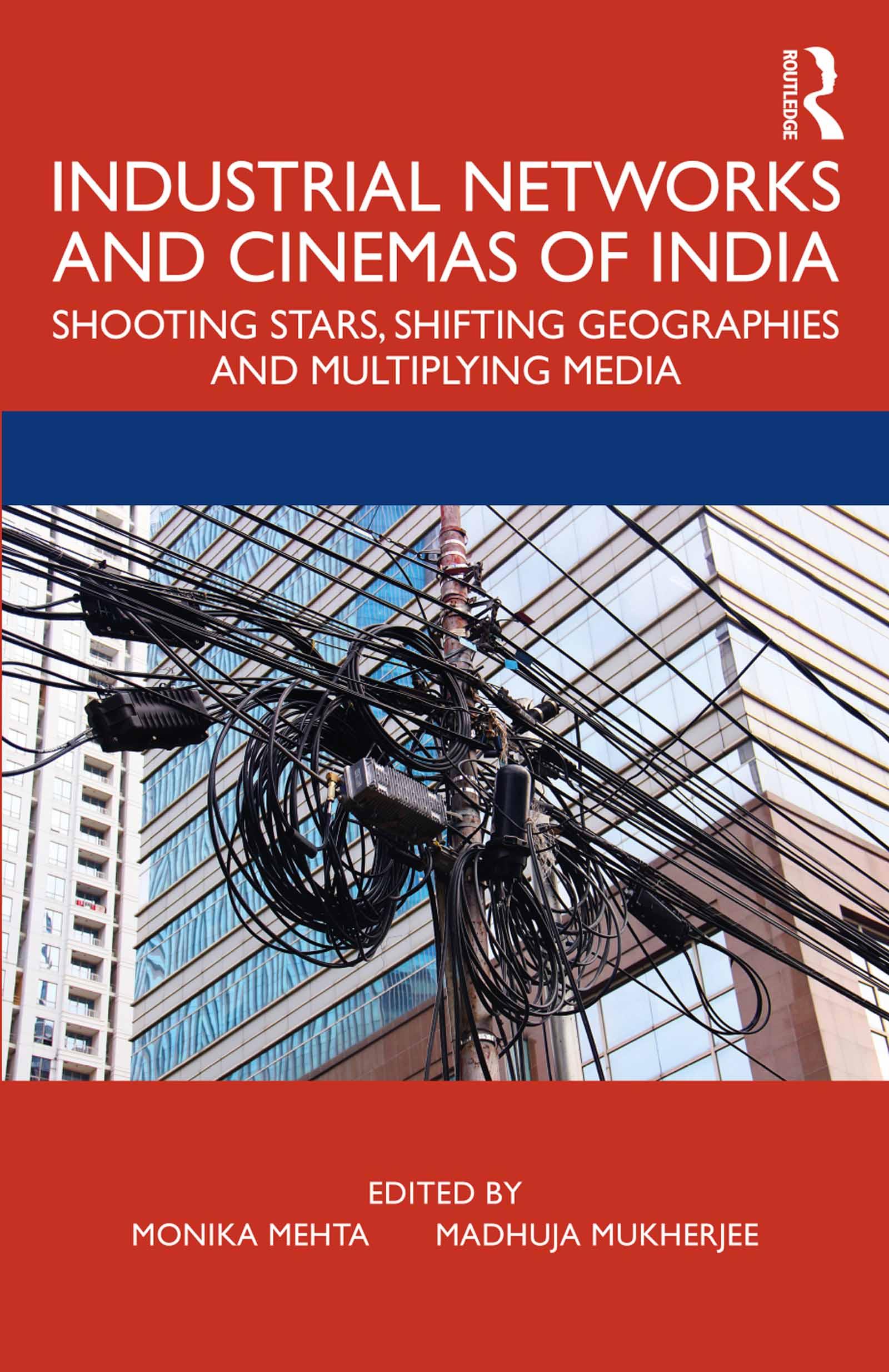
This volume points to the limits of models such as regional, national, and transnational, and develops ‘network’ as a conceptual category to study cinemas of India. Through grounded and interdisciplinary research, it shows how film industries located in disparate territories have not functioned as isolated units and draws attention to the industrial traffic – of filmic material, actors, performers, authors, technicians, genres, styles, sounds, expertise, languages, and capital, across trans-regional contexts -- since the inception of cinema. It excavates histories of film production, distribution and exhibition, and their connections beyond regional and national boundaries, and between places, industrial practices, and multiple media.
The chapters in this volume address a range of themes such as transgressive female figures; networks of authors and technicians; trans-regional production links and changing technologies, and new media geographies. By tracking manifold changes in the contexts of transforming media, and inter-connections between diverse industrial nodal points, this book expands the critical vocabulary in media and production studies and foregrounds new methods for examining cinema.
A generative account of industrial networks, this volume will be useful for scholars and researchers of film studies, cinema studies, media studies, production studies, media sociology, gender studies, South Asian studies, and cultural studies.
Paga facilmente con carta, Klarna, Apple Pay o Google Pay. Non sei soddisfatto? Hai sempre 14 giorni per il rimborso. Leggi di più nei nostri termini. Per qualsiasi domanda, scrivici a hello@memmo.org.
Memmo rende lo studio più facile, ovunque tu sia nel mondo. Qui trovi i tuoi libri di testo e strumenti di studio intelligenti, tutto in un unico posto: riassunti, quiz, podcast e flashcard. E poi c'è Ted, il tuo compagno di studio che risponde a ogni tua domanda. Oltre 50.000 studenti studiano già qui: è stato creato per aiutarti a imparare più velocemente e a stressarti meno.