
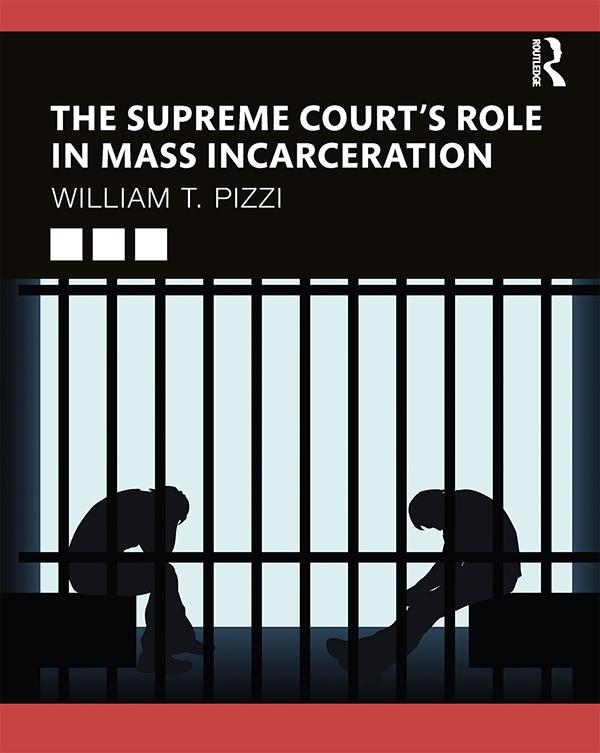
The Supreme Court’s Role in Mass Incarceration illuminates the role of the United States Supreme Court’s criminal procedure revolution as a contributing factor to the rise in U.S. incarceration rates. Noting that the increase in mass incarceration began climbing just after the Warren Court years and continued to climb for the next four decades—despite the substantial decline in the crime rate—the author posits that part of the explanation is the Court’s failure to understand that a trial system with robust rights for defendants is not a strong trial system unless it is also reliable and efficient.
There have been many explanations offered for the sudden and steep escalation in the U.S. incarceration rate, such as "it was the war on drugs" to "it was our harsh sentencing statutes." Those explanations have been shown to be inadequate. This book contends that we have overlooked a more powerful force in the rise of our incarceration rate—the long line of Supreme Court decisions, starting in the Warren Court era, that made the criminal justice system so complicated and expensive that it no longer serves to protect defendants. For the vast majority of defendants, their constitutional rights are irrelevant, as they are forced to accept plea bargains or face the prospect of a comparatively harsh sentence, if convicted. The prospect of a trial, once an important restraint on prosecutors in charging, has disappeared and plea-bargaining rules.
This book is essential reading for both graduate and undergraduate students in corrections and criminal justice courses as well as judges, attorneys, and others working in the criminal justice system.
Paga facilmente con carta, Klarna, Apple Pay o Google Pay. Non sei soddisfatto? Hai sempre 14 giorni per il rimborso. Leggi di più nei nostri termini. Per qualsiasi domanda, scrivici a hello@memmo.org.
Memmo rende lo studio più facile, ovunque tu sia nel mondo. Qui trovi i tuoi libri di testo e strumenti di studio intelligenti, tutto in un unico posto: riassunti, quiz, podcast e flashcard. E poi c'è Ted, il tuo compagno di studio che risponde a ogni tua domanda. Oltre 50.000 studenti studiano già qui: è stato creato per aiutarti a imparare più velocemente e a stressarti meno.