
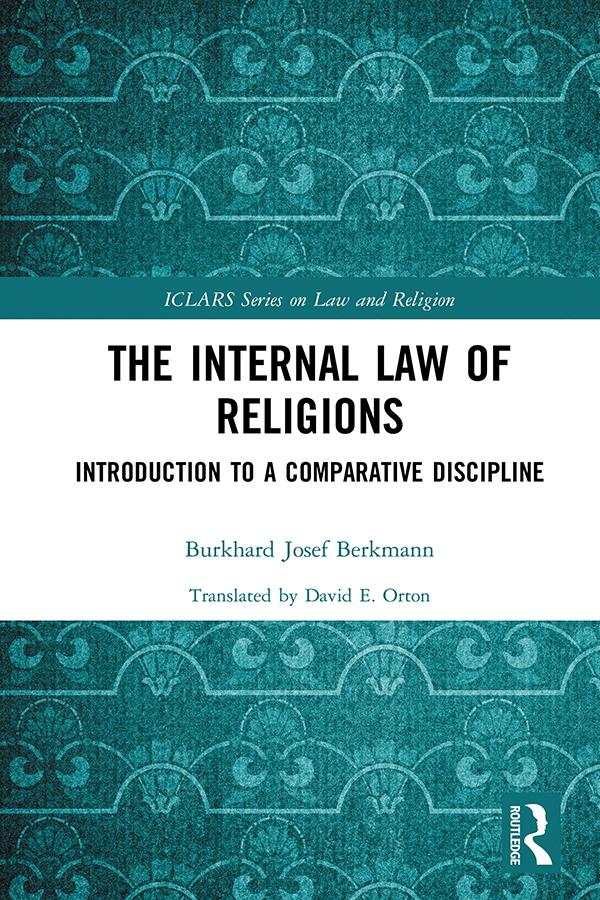
Comparative law of religions has developed in recent years as a new discipline at the intersection of legal and religious science, of theology and anthropology. This book presents a systematic theoretical basis for this new discipline.
While law is mostly associated with the state, many religions also have their own internal law. These internal legal norms are aimed at a particular form of behaviour on the part of believers. They therefore play a particular role in conflicts arising today between certain religious forms of behaviour. The comparison of the internal law of religions serves to establish and explain the commonalities and differences between various religious legal traditions. The religions examined here include: the law of Christian denominations, Jewish law, Islamic law, Hindu law, Buddhist law, and other religious legal systems. The work assesses six current approaches to the comparative law of religions, evaluating their strengths and weaknesses, leading to the development of a new approach. The book discusses the role of religious law in state law and looks to likely future developments.
The work will be essential for those interested in the administration of justice and politics, for those professions where intercultural competence is required, and for interreligious dialogue.
Paga facilmente con carta, Klarna, Apple Pay o Google Pay. Non sei soddisfatto? Hai sempre 14 giorni per il rimborso. Leggi di più nei nostri termini. Per qualsiasi domanda, scrivici a hello@memmo.org.
Memmo rende lo studio più facile, ovunque tu sia nel mondo. Qui trovi i tuoi libri di testo e strumenti di studio intelligenti, tutto in un unico posto: riassunti, quiz, podcast e flashcard. E poi c'è Ted, il tuo compagno di studio che risponde a ogni tua domanda. Oltre 50.000 studenti studiano già qui: è stato creato per aiutarti a imparare più velocemente e a stressarti meno.