
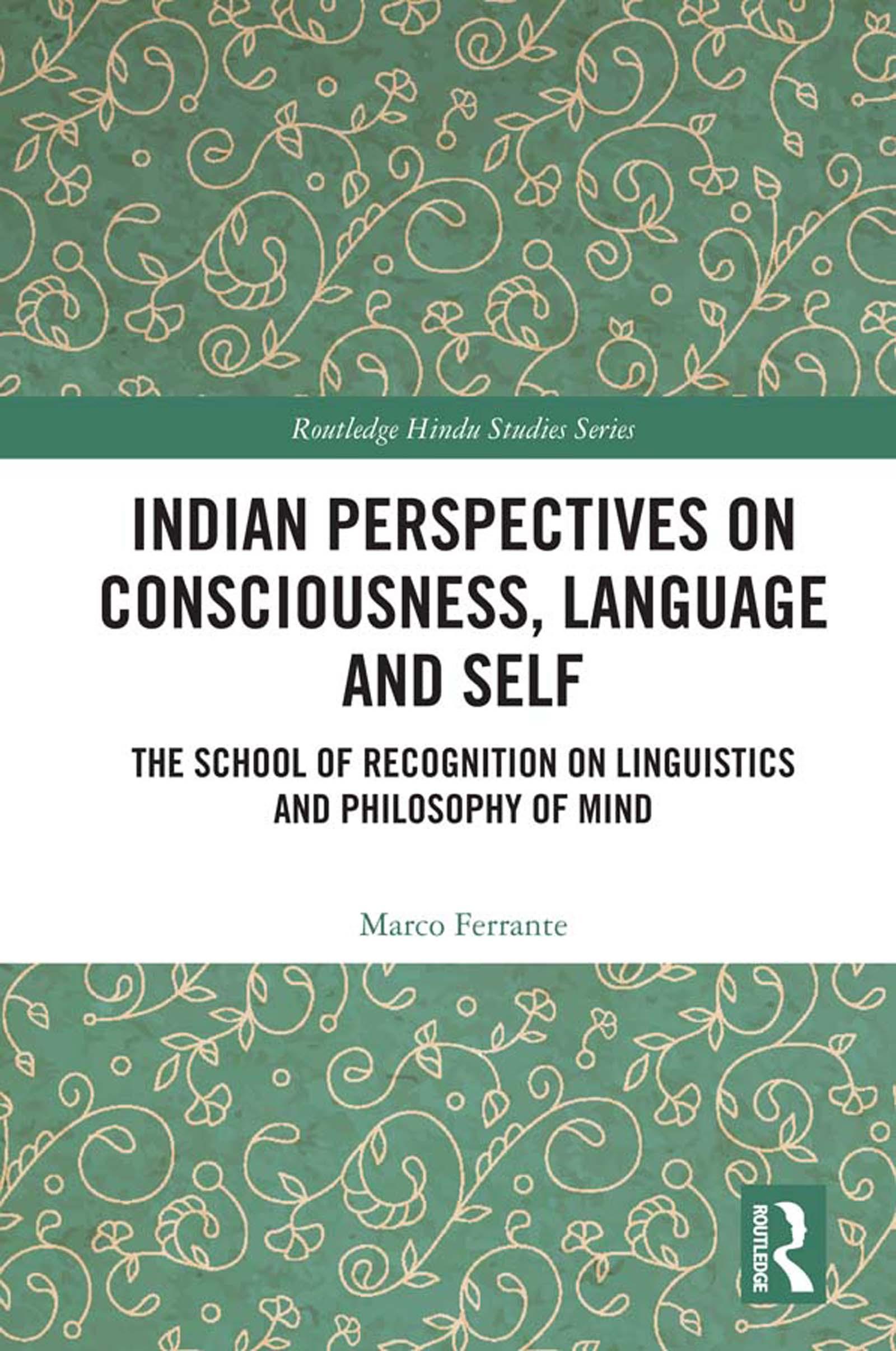
This book examines the theory of consciousness developed by the school of Recognition, an Indian philosophical tradition that thrived around the tenth c. CE in Kashmir, and argues that consciousness has a linguistic nature. It situates the doctrines of the tradition within the broader Indian philosophical context and establishes connections with the contemporary analytic debate.
The book focuses on Utpaladeva and Abhinavagupta (tenth c. CE), two Hindu intellectuals belonging to the school of Recognition, Pratyabhijñā in Sanskrit. It argues that these authors promoted ideas that bear a strong resemblance with contemporary ‘higher–order theories’ of consciousness. In addition, the book explores the relationship between the thinkers of the school of Recognition and the thought of the grammarian/philosopher Bhartṛhari (fifth c. CE). The book bridges a gap that still exists between scholars engaged with Western traditions and Sanskrit specialists focused on textual materials. In doing so, the author uses concepts from contemporary philosophy of mind to illustrate the Indian arguments and an interdisciplinary approach with abundant reference to the original sources.
Offering fresh information to historians of Indian thought, the book will also be of interest to academics working on Non-Western Philosophy, Comparative Philosophy, Indian Philosophy, Religion, Hinduism, Tantric Studies and South Asian Studies.
Paga facilmente con carta, Klarna, Apple Pay o Google Pay. Non sei soddisfatto? Hai sempre 14 giorni per il rimborso. Leggi di più nei nostri termini. Per qualsiasi domanda, scrivici a hello@memmo.org.
Memmo rende lo studio più facile, ovunque tu sia nel mondo. Qui trovi i tuoi libri di testo e strumenti di studio intelligenti, tutto in un unico posto: riassunti, quiz, podcast e flashcard. E poi c'è Ted, il tuo compagno di studio che risponde a ogni tua domanda. Oltre 50.000 studenti studiano già qui: è stato creato per aiutarti a imparare più velocemente e a stressarti meno.