
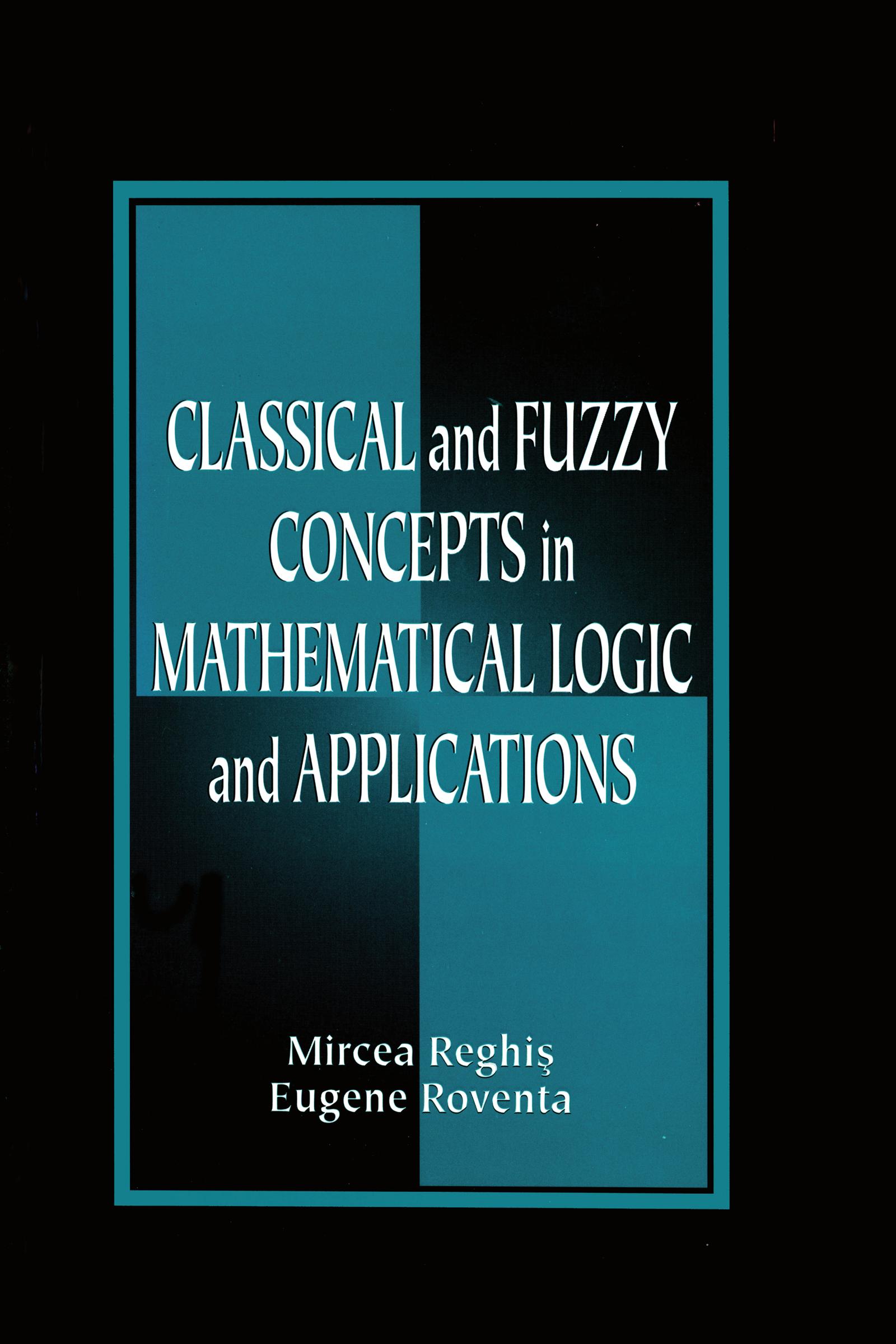
Classical and Fuzzy Concepts in Mathematical Logic and Applications provides a broad, thorough coverage of the fundamentals of two-valued logic, multivalued logic, and fuzzy logic.
Exploring the parallels between classical and fuzzy mathematical logic, the book examines the use of logic in computer science, addresses questions in automatic deduction, and describes efficient computer implementation of proof techniques.
Specific issues discussed include:
The authors consider that the teaching of logic for computer science is biased by the absence of motivations, comments, relevant and convincing examples, graphic aids, and the use of color to distinguish language and metalanguage. Classical and Fuzzy Concepts in Mathematical Logic and Applications discusses how the presence of these facts trigger a stirring, decisive insight into the understanding process. This view shapes this work, reflecting the authors' subjective balance between the scientific and pedagogic components of the textbook.
Usually, problems in logic lack relevance, creating a gap between classroom learning and applications to real-life problems. The book includes a variety of application-oriented problems at the end of almost every section, including programming problems in PROLOG III. With the possibility of carrying out proofs with PROLOG III and other software packages, readers will gain a first-hand experience and thus a deeper understanding of the idea of formal proof.
Paga facilmente con carta, Klarna, Apple Pay o Google Pay. Non sei soddisfatto? Hai sempre 14 giorni per il rimborso. Leggi di più nei nostri termini. Per qualsiasi domanda, scrivici a hello@memmo.org.
Memmo rende lo studio più facile, ovunque tu sia nel mondo. Qui trovi i tuoi libri di testo e strumenti di studio intelligenti, tutto in un unico posto: riassunti, quiz, podcast e flashcard. E poi c'è Ted, il tuo compagno di studio che risponde a ogni tua domanda. Oltre 50.000 studenti studiano già qui: è stato creato per aiutarti a imparare più velocemente e a stressarti meno.