
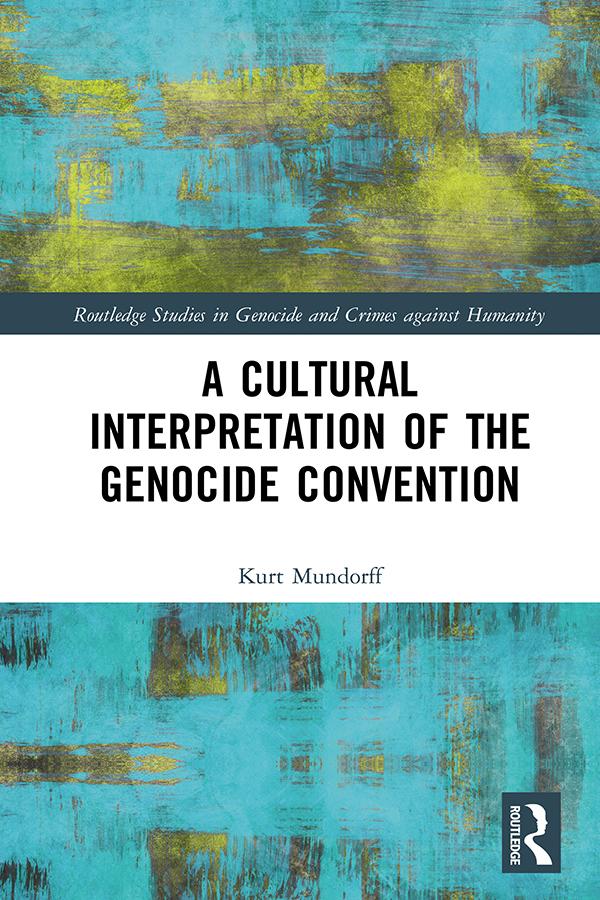
This book critiques the dominant physical and biological interpretation of the Genocide Convention and argues that the idea of "culture" is central to properly understanding the crime of genocide.
Using Raphael Lemkin’s personal papers, archival materials from the State Department and the UN, as well as the mid-century secondary literature, it situates the convention in the longstanding debate between Enlightenment notions of universality and individualism, and Romantic notions of particularism and holism. The author conducts a thorough review of the treaty and its preparatory work to show that the drafters brought strong culturalist ideas to the debate and that Lemkin’s ideas were held widely in the immediate postwar period. Reconstructing the mid-century conversation on genocide and situating it in the much broader mid-century discourse on justice and society he demonstrates that culture is not a distraction to be read out of the Genocide Convention; it is the very reason it exists.
This volume poses a forceful challenge to the materialist interpretation and calls into question decades of international case law. It will be of interest to scholars of genocide, human rights, international law, the history of international law and human rights, and treaty interpretation.
Paga facilmente con carta, Klarna, Apple Pay o Google Pay. Non sei soddisfatto? Hai sempre 14 giorni per il rimborso. Leggi di più nei nostri termini. Per qualsiasi domanda, scrivici a hello@memmo.org.
Memmo rende lo studio più facile, ovunque tu sia nel mondo. Qui trovi i tuoi libri di testo e strumenti di studio intelligenti, tutto in un unico posto: riassunti, quiz, podcast e flashcard. E poi c'è Ted, il tuo compagno di studio che risponde a ogni tua domanda. Oltre 50.000 studenti studiano già qui: è stato creato per aiutarti a imparare più velocemente e a stressarti meno.