
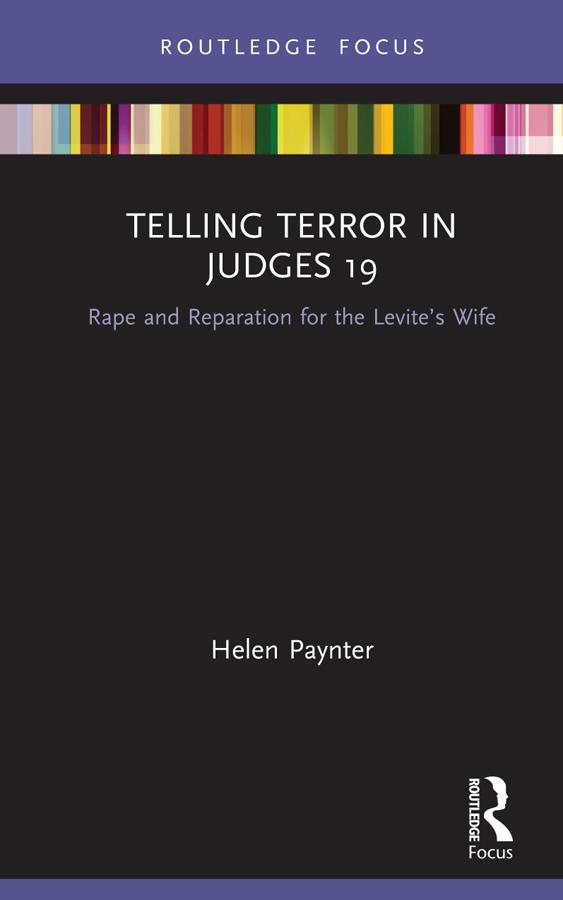
Telling Terror in Judges 19 explores the value of performing a ‘reparative reading’ of the terror-filled story of the Levite’s pilegesh (commonly referred to as the Levite’s concubine) in Judges 19, and how such a reparative reading can be brought to bear upon elements of modern rape culture. Historically, the story has been used as a morality tale to warn young women about what constitutes appropriate behaviour. More recently, (mainly male) commentators have tended to write the woman out of the story, by making claims about its purpose and theme which bear no relation to her suffering. In response to this, feminist critics have attempted to write the woman back into the story, generally using the hermeneutics of suspicion. This book begins by surveying some of the traditional commentators, and the three great feminist commentators of the text (Bal, Exum and Trible). It then offers a reparative reading by attending to the pilegesh’s surprising prominence, her moral and marital agency, and her speaking voice. In the final chapter, there is a detailed comparison of the story with elements of modern rape culture.
Paga facilmente con carta, Klarna, Apple Pay o Google Pay. Non sei soddisfatto? Hai sempre 14 giorni per il rimborso. Leggi di più nei nostri termini. Per qualsiasi domanda, scrivici a hello@memmo.org.
Memmo rende lo studio più facile, ovunque tu sia nel mondo. Qui trovi i tuoi libri di testo e strumenti di studio intelligenti, tutto in un unico posto: riassunti, quiz, podcast e flashcard. E poi c'è Ted, il tuo compagno di studio che risponde a ogni tua domanda. Oltre 50.000 studenti studiano già qui: è stato creato per aiutarti a imparare più velocemente e a stressarti meno.