
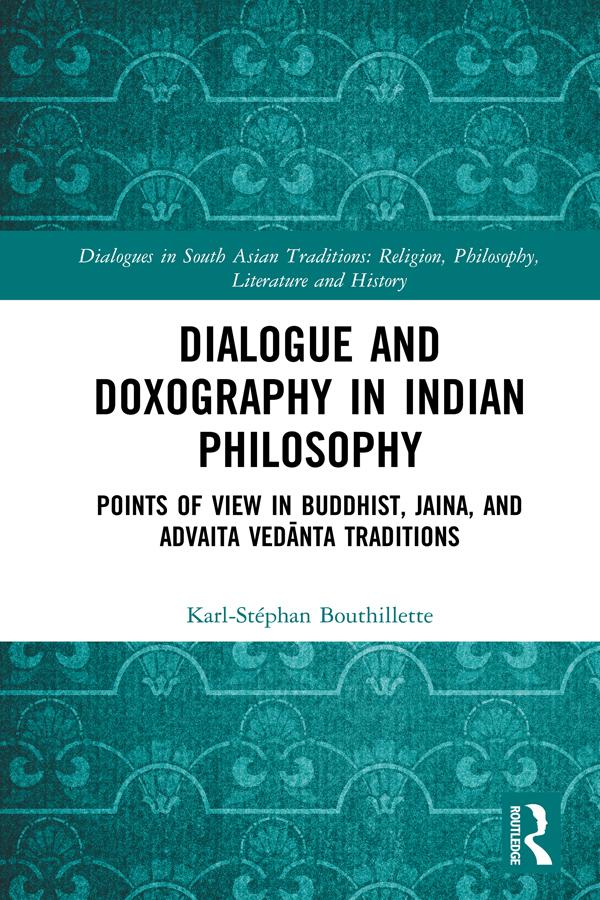
This is the first book fully dedicated to Indian philosophical doxography. It examines the function such dialectical texts were intended to serve in the intellectual and religious life of their public. It looks at Indian doxography both as a witness of inter- and intra-sectarian dialogues and as a religious phenomenon. It argues that doxographies represent dialectical exercises, indicative of a peculiar religious attitude to plurality, and locate these ‘exercises’ within a known form of ‘yoga’ dedicated to the cultivation of ‘knowledge’ or ‘gnosis’ (jñāna).
Concretely, the book presents a critical examination of three Sanskrit doxographies: the Madhyamakahṛdayakārikā of the Buddhist Bhāviveka, the Ṣaḍdarśanasamuccaya of the Jain Haribhadra, and the Sarvasiddhāntasaṅgraha attributed to the Advaitin Śaṅkara, focusing on each of their respective presentation of the Mīmāṃsā view.
It is the first time that the genre of doxography is considered beyond its literary format to ponder its performative dimension, as a spiritual exercise. Theoretically broad, the book reaches out to academics in religious studies, Indian philosophy, Indology, and classical studies.
Paga facilmente con carta, Klarna, Apple Pay o Google Pay. Non sei soddisfatto? Hai sempre 14 giorni per il rimborso. Leggi di più nei nostri termini. Per qualsiasi domanda, scrivici a hello@memmo.org.
Memmo rende lo studio più facile, ovunque tu sia nel mondo. Qui trovi i tuoi libri di testo e strumenti di studio intelligenti, tutto in un unico posto: riassunti, quiz, podcast e flashcard. E poi c'è Ted, il tuo compagno di studio che risponde a ogni tua domanda. Oltre 50.000 studenti studiano già qui: è stato creato per aiutarti a imparare più velocemente e a stressarti meno.