
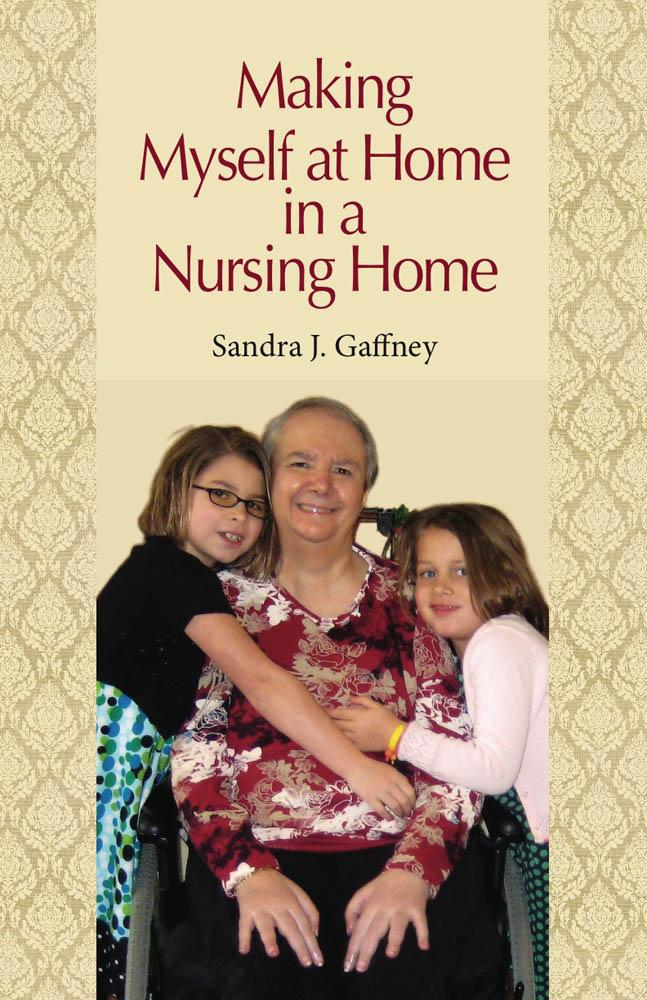
Sandra Gaffney entered her first nursing home for long-term care at the unusually young age of fifty. Fourteen years earlier she had been diagnosed with amyotrophic lateral sclerosis (ALS), also known as Lou Gehrig's disease. Over the next sixteen years, Gaffney lived in nursing homes in Florida, Virginia, and Minnesota, as the ways she could be close to family changed.
She describes her situation in these words: "As a nursing home resident, I require total or maximum care. I have limited use of my hands and arms. With special splints, I am able to turn the pages of my books, use the telephone and TV/VCR/FM radio remote control. When my cup is positioned properly, I can drink independently. I am able to walk with a platform walker and the help of two nursing assistants. My walking is not functional; it is only for exercise. After I moved into my third nursing home, I learned to operate a power wheelchair by using an adaptive switch between my knees. ... All other areas of physical care have to be done for me. My speech is impaired. If people listen carefully, they can understand what I am saying. ... I am able to eat regular food and breathe on my own."
Gaffney became an acute observer and strategist about how to live in a nursing home. Her first-person account, dictated to family members and assistants, covers making the decision to enter a nursing home, choosing the right one, and understanding its culture. She talks about how to furnish your room and about all the issues that arise in a resident's typical day. She has much to say about communication with staff and family about "how to help others help me." Gaffney's daughters, Amy and Bridget, and her friend Ellen Potter provide additional perspectives on the caregiving experience.
She describes her situation in these words: "As a nursing home resident, I require total or maximum care. I have limited use of my hands and arms. With special splints, I am able to turn the pages of my books, use the telephone and TV/VCR/FM radio remote control. When my cup is positioned properly, I can drink independently. I am able to walk with a platform walker and the help of two nursing assistants. My walking is not functional; it is only for exercise. After I moved into my third nursing home, I learned to operate a power wheelchair by using an adaptive switch between my knees. ... All other areas of physical care have to be done for me. My speech is impaired. If people listen carefully, they can understand what I am saying. ... I am able to eat regular food and breathe on my own."
Gaffney became an acute observer and strategist about how to live in a nursing home. Her first-person account, dictated to family members and assistants, covers making the decision to enter a nursing home, choosing the right one, and understanding its culture. She talks about how to furnish your room and about all the issues that arise in a resident's typical day. She has much to say about communication with staff and family about "how to help others help me." Gaffney's daughters, Amy and Bridget, and her friend Ellen Potter provide additional perspectives on the caregiving experience.
Pagine: 204
Categoria: Biografi & Memoarer
e-ISBN: 9780826502797
Peso di spedizione: 1.2 kg
Spedito in: 1-2 giorni
Paga facilmente con carta, Klarna, Apple Pay o Google Pay. Non sei soddisfatto? Hai sempre 14 giorni per il rimborso. Leggi di più nei nostri termini. Per qualsiasi domanda, scrivici a hello@memmo.org.
Memmo rende lo studio più facile, ovunque tu sia nel mondo. Qui trovi i tuoi libri di testo e strumenti di studio intelligenti, tutto in un unico posto: riassunti, quiz, podcast e flashcard. E poi c'è Ted, il tuo compagno di studio che risponde a ogni tua domanda. Oltre 50.000 studenti studiano già qui: è stato creato per aiutarti a imparare più velocemente e a stressarti meno.
Potrebbe interessarti anche
Acquista il libro0