
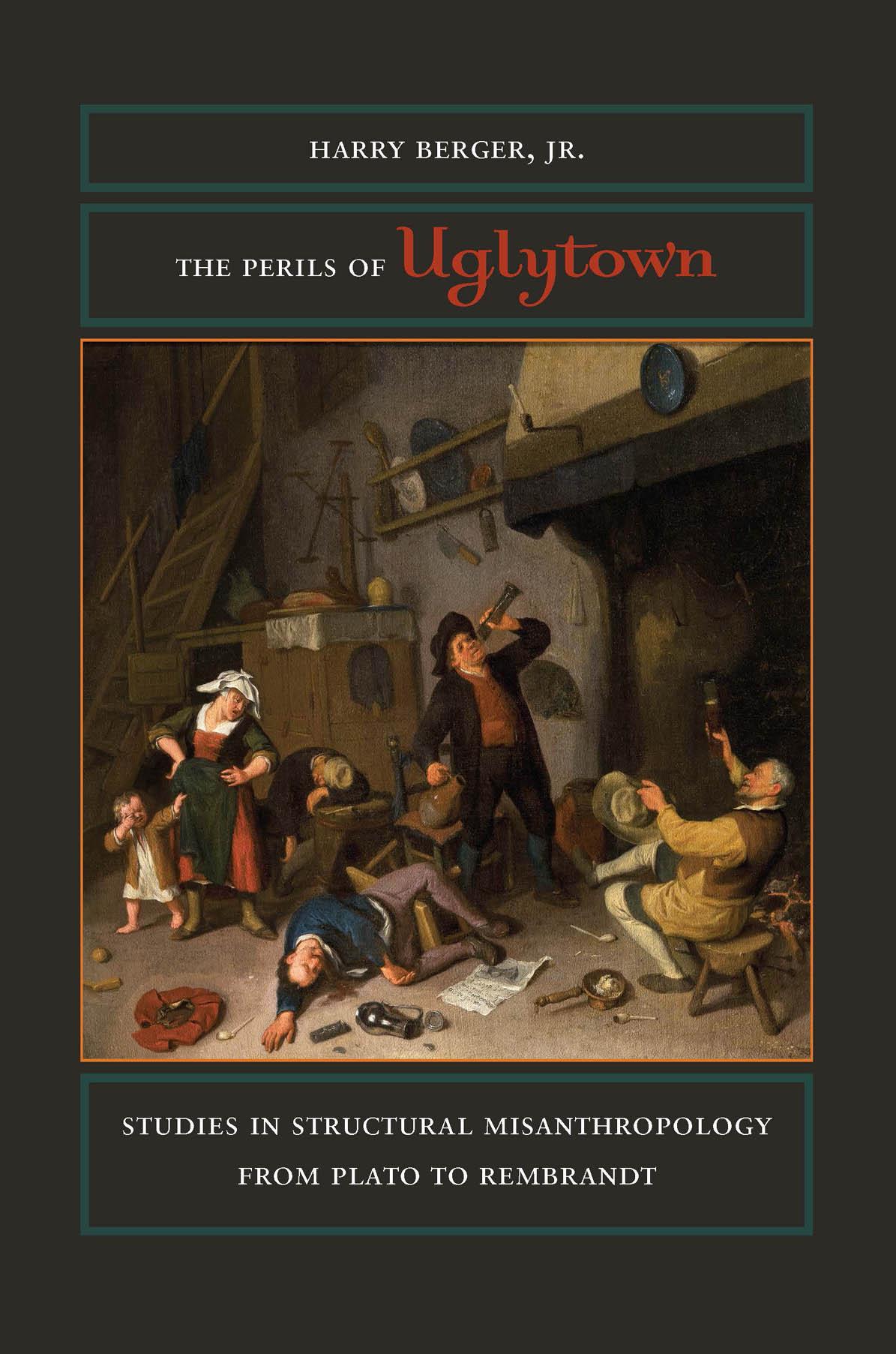
With characteristic wit, Harry Berger, Jr., brings his flair for close reading to texts and images across two millennia that illustrate what he calls “structural misanthropology.” Beginning with a novel reading of Plato, Berger emphasizes Socrates’s self-acknowledged failures. The dialogues, he shows, offer up, only to dispute, a misanthropic polis. The Athenian city-state, they worry, is founded on a social order motivated by apprehension—both the desire to take and the fear of being taken. In addition to suggesting new political
and philosophical dimensions to Platonic thought, Berger’s attention to rhetorical practice offers novel ways of parsing the dialogic method itself.
In the book’s second half, Berger revisits and revises his earlier accounts of Italian humanism, Elizabethan drama, and Dutch painting. Berger shows how structural misanthropology helps us to read the competitive practices that characterize Renaissance writing and art, whether in Machiavelli’s constitutional prostheses, Shakespeare’s pageants of humiliation, or the elbow jabs of Dutch portraiture.
Paga facilmente con carta, Klarna, Apple Pay o Google Pay. Non sei soddisfatto? Hai sempre 14 giorni per il rimborso. Leggi di più nei nostri termini. Per qualsiasi domanda, scrivici a hello@memmo.org.
Memmo rende lo studio più facile, ovunque tu sia nel mondo. Qui trovi i tuoi libri di testo e strumenti di studio intelligenti, tutto in un unico posto: riassunti, quiz, podcast e flashcard. E poi c'è Ted, il tuo compagno di studio che risponde a ogni tua domanda. Oltre 50.000 studenti studiano già qui: è stato creato per aiutarti a imparare più velocemente e a stressarti meno.