
Winner, 2023 SAH Alice Davis Hitchcock Book Award
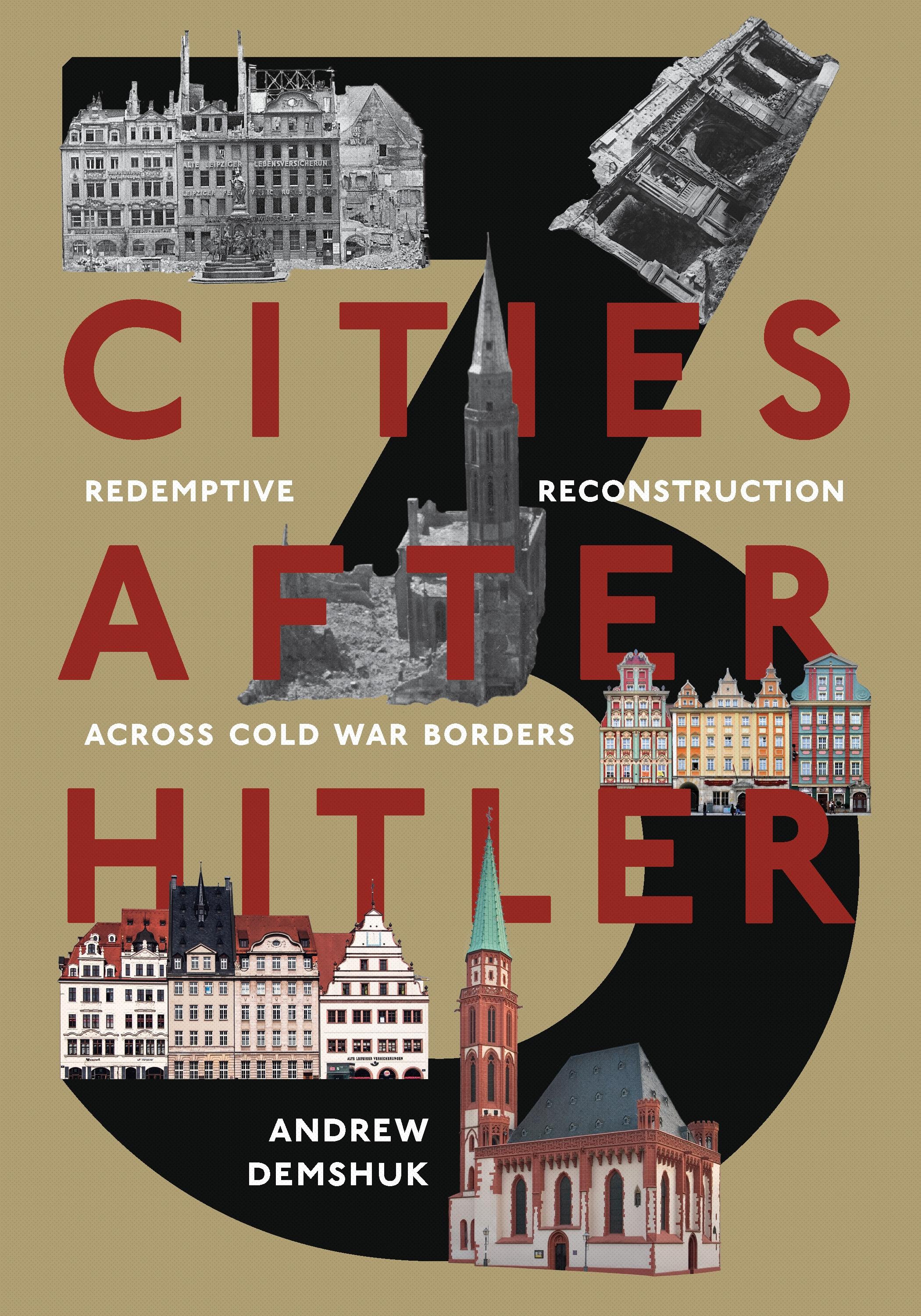
Three Cities after Hitler compares how three prewar German cities shared decades of postwar development under three competing post-Nazi regimes: Frankfurt in capitalist West Germany, Leipzig in communist East Germany, and Wrocław (formerly Breslau) in communist Poland. Each city was rebuilt according to two intertwined modern trends. First, certain local edifices were chosen to be resurrected as “sacred sites” to redeem the national story after Nazism. Second, these tokens of a reimagined past were staged against the hegemony of modernist architecture and planning, which wiped out much of whatever was left of the urban landscape that had survived the war. All three cities thus emerged with simplified architectural narratives, whose historically layered complexities only survived in fragments where this twofold “redemptive reconstruction” after Nazism had proven less vigorous, sometimes because local citizens took action to save and appropriate them. Transcending both the Iron Curtain and freshly homogenized nation-states, three cities under three rival regimes shared a surprisingly common history before, during, and after Hitler—in terms of both top-down planning policies and residents’ spontaneous efforts to make home out of their city as its shape shifted around them.
Three Cities after Hitler compares how three prewar German cities shared decades of postwar development under three competing post-Nazi regimes: Frankfurt in capitalist West Germany, Leipzig in communist East Germany, and Wrocław (formerly Breslau) in communist Poland. Each city was rebuilt according to two intertwined modern trends. First, certain local edifices were chosen to be resurrected as “sacred sites” to redeem the national story after Nazism. Second, these tokens of a reimagined past were staged against the hegemony of modernist architecture and planning, which wiped out much of whatever was left of the urban landscape that had survived the war. All three cities thus emerged with simplified architectural narratives, whose historically layered complexities only survived in fragments where this twofold “redemptive reconstruction” after Nazism had proven less vigorous, sometimes because local citizens took action to save and appropriate them. Transcending both the Iron Curtain and freshly homogenized nation-states, three cities under three rival regimes shared a surprisingly common history before, during, and after Hitler—in terms of both top-down planning policies and residents’ spontaneous efforts to make home out of their city as its shape shifted around them.
Categoria: Arkitektur & Stadsplanering
e-ISBN: 9780822988571
Paga facilmente con carta, Klarna, Apple Pay o Google Pay. Non sei soddisfatto? Hai sempre 14 giorni per il rimborso. Leggi di più nei nostri termini. Per qualsiasi domanda, scrivici a hello@memmo.org.
Memmo rende lo studio più facile, ovunque tu sia nel mondo. Qui trovi i tuoi libri di testo e strumenti di studio intelligenti, tutto in un unico posto: riassunti, quiz, podcast e flashcard. E poi c'è Ted, il tuo compagno di studio che risponde a ogni tua domanda. Oltre 50.000 studenti studiano già qui: è stato creato per aiutarti a imparare più velocemente e a stressarti meno.
Potrebbe interessarti anche
Acquista il libro0