
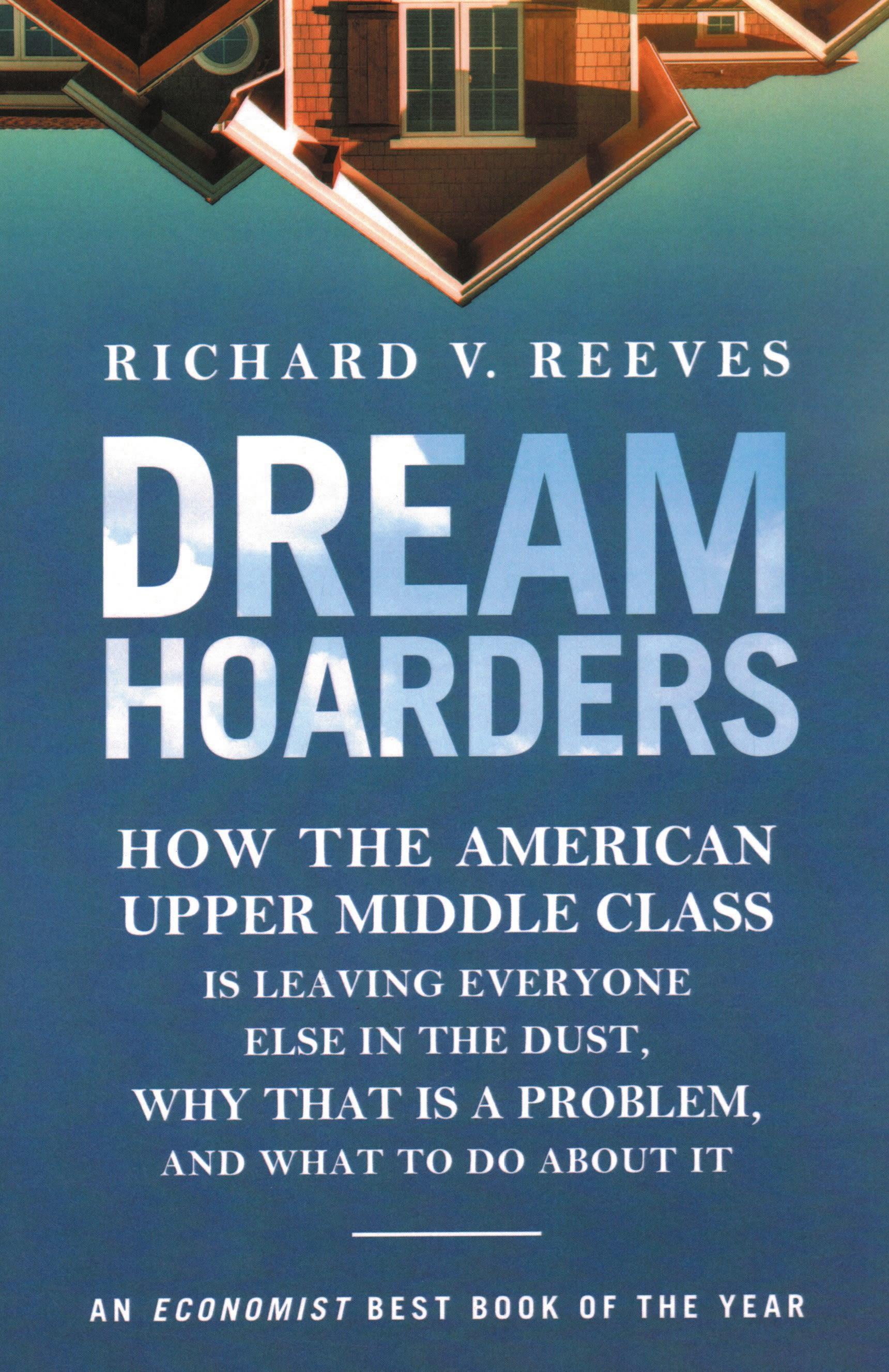
Dream Hoarders sparked a national conversation on the dangerous separation between the upper middle class and everyone else. Now in paperback and newly updated for the age of Trump, Brookings Institution senior fellow Richard Reeves is continuing to challenge the class system in America.
In America, everyone knows that the top 1 percent are the villains. The rest of us, the 99 percentwe are the good guys. Not so, argues Reeves. The real class divide is not between the upper class and the upper middle class: it is between the upper middle class and everyone else.
The separation of the upper middle class from everyone else is both economic and social, and the practice of opportunity hoardinggaining exclusive access to scarce resourcesis especially prevalent among parents who want to perpetuate privilege to the benefit of their children. While many families believe this is just good parenting, it is actually hurting others by reducing their chances of securing these opportunities. There is a glass floor created for each affluent child helped by his or her wealthy, stable family. That glass floor is a glass ceiling for another child.
Throughout Dream Hoarders, Reeves explores the creation and perpetuation of opportunity hoarding, and what should be done to stop it, including controversial solutions such as ending legacy admissions to school. He offers specific steps toward reducing inequality and asks the upper middle class to pay for it.
Convinced of their merit, members of the upper middle class believes they are entitled to those tax breaks and hoarded opportunities. After all, they aren't the 1 percent. The national obsession with the super rich allows the upper middle class to convince themselves that they are just like the rest of America. In Dream Hoarders, Reeves argues that in many ways, they are worse, and that changes in policy and social conscience are the only way to fix the broken system.
In America, everyone knows that the top 1 percent are the villains. The rest of us, the 99 percentwe are the good guys. Not so, argues Reeves. The real class divide is not between the upper class and the upper middle class: it is between the upper middle class and everyone else.
The separation of the upper middle class from everyone else is both economic and social, and the practice of opportunity hoardinggaining exclusive access to scarce resourcesis especially prevalent among parents who want to perpetuate privilege to the benefit of their children. While many families believe this is just good parenting, it is actually hurting others by reducing their chances of securing these opportunities. There is a glass floor created for each affluent child helped by his or her wealthy, stable family. That glass floor is a glass ceiling for another child.
Throughout Dream Hoarders, Reeves explores the creation and perpetuation of opportunity hoarding, and what should be done to stop it, including controversial solutions such as ending legacy admissions to school. He offers specific steps toward reducing inequality and asks the upper middle class to pay for it.
Convinced of their merit, members of the upper middle class believes they are entitled to those tax breaks and hoarded opportunities. After all, they aren't the 1 percent. The national obsession with the super rich allows the upper middle class to convince themselves that they are just like the rest of America. In Dream Hoarders, Reeves argues that in many ways, they are worse, and that changes in policy and social conscience are the only way to fix the broken system.
Pagine: 204
Categoria: Samhällsvetenskap
e-ISBN: 9780815735496
Peso di spedizione: 1.2 kg
Spedito in: 1-2 giorni
Paga facilmente con carta, Klarna, Apple Pay o Google Pay. Non sei soddisfatto? Hai sempre 14 giorni per il rimborso. Leggi di più nei nostri termini. Per qualsiasi domanda, scrivici a hello@memmo.org.
Memmo rende lo studio più facile, ovunque tu sia nel mondo. Qui trovi i tuoi libri di testo e strumenti di studio intelligenti, tutto in un unico posto: riassunti, quiz, podcast e flashcard. E poi c'è Ted, il tuo compagno di studio che risponde a ogni tua domanda. Oltre 50.000 studenti studiano già qui: è stato creato per aiutarti a imparare più velocemente e a stressarti meno.