
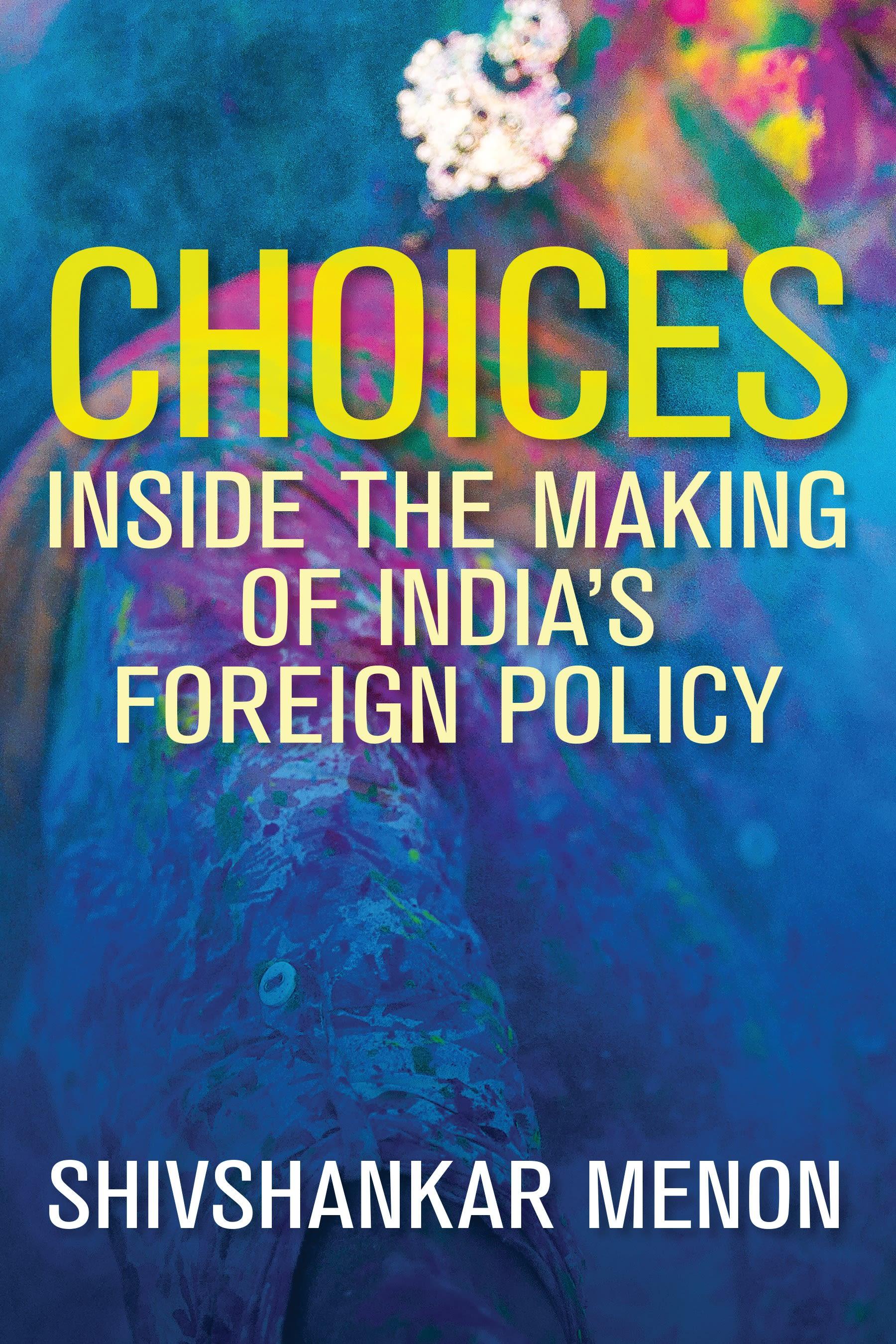
A look behind the scenes of some of India’s most critical foreign policy decisions by the country’s former foreign secretary and national security adviser.
Every country must make choices about foreign policy and national security. Sometimes those choices turn out to have been correct, other times not. In this insider's account, Shivshankar Menon describes some of the most crucial decisions India has faced during his long career in governmentand how key personalities often had to make choices based on incomplete information under the pressure of fast-moving events.
Menon either participated directly in or was associated with all the major Indian foreign policy decisions he describes in Choices. These include the 200508 U.S.India nuclear agreement; the first-ever boundary-related agreement between India and China; India's decision not to use overt force against Pakistan in response to the 2008 terrorist attacks in Mumbai; the 2009 defeat of the Tamil rebellion in Sri Lanka; and India's disavowal of the first-use of nuclear weapons. Menon examines what these choices reveal about India's strategic culture and decisionmaking, its policies toward the use of force, its long-term goals and priorities, and its future behavior.
Choices will be of interest to anyone searching for answers to questions about how one of the world's great, rising powers makes its decisions on the world stage, and the difficult choices that sometimes had to be made.
Every country must make choices about foreign policy and national security. Sometimes those choices turn out to have been correct, other times not. In this insider's account, Shivshankar Menon describes some of the most crucial decisions India has faced during his long career in governmentand how key personalities often had to make choices based on incomplete information under the pressure of fast-moving events.
Menon either participated directly in or was associated with all the major Indian foreign policy decisions he describes in Choices. These include the 200508 U.S.India nuclear agreement; the first-ever boundary-related agreement between India and China; India's decision not to use overt force against Pakistan in response to the 2008 terrorist attacks in Mumbai; the 2009 defeat of the Tamil rebellion in Sri Lanka; and India's disavowal of the first-use of nuclear weapons. Menon examines what these choices reveal about India's strategic culture and decisionmaking, its policies toward the use of force, its long-term goals and priorities, and its future behavior.
Choices will be of interest to anyone searching for answers to questions about how one of the world's great, rising powers makes its decisions on the world stage, and the difficult choices that sometimes had to be made.
Pagine: 176
Categoria: Statsvetenskap & Politik
e-ISBN: 9780815729112
Peso di spedizione: 1.2 kg
Spedito in: 1-2 giorni
Paga facilmente con carta, Klarna, Apple Pay o Google Pay. Non sei soddisfatto? Hai sempre 14 giorni per il rimborso. Leggi di più nei nostri termini. Per qualsiasi domanda, scrivici a hello@memmo.org.
Memmo rende lo studio più facile, ovunque tu sia nel mondo. Qui trovi i tuoi libri di testo e strumenti di studio intelligenti, tutto in un unico posto: riassunti, quiz, podcast e flashcard. E poi c'è Ted, il tuo compagno di studio che risponde a ogni tua domanda. Oltre 50.000 studenti studiano già qui: è stato creato per aiutarti a imparare più velocemente e a stressarti meno.